

Protecting Denver’s Schools: Security Strategies for Summer Programs

Schools can strengthen summer security by adjusting access control for reduced schedules, limiting entry points to monitored areas, and increasing perimeter checks during off-hours. Staff training should address summer-specific scenarios, while communication plans need updating for smaller teams. Regular security audits help identify vulnerabilities when buildings operate at partial capacity or sit empty for extended periods.
Denver Schools Face Different Risks Once Summer Programs Begin
Denver Public Schools serves thousands of students in summer camps, credit recovery, and enrichment sessions each year. Summer changes the security picture entirely. Fewer staff work on site, campuses run partial schedules, and buildings sit empty for long stretches.
School security planning built for the fall semester rarely fits summer operations. A campus designed for 800 students may host 120 during a June robotics camp. That gap creates blind spots most administrators overlook until something goes wrong.
This post breaks down the real risks Denver schools face during summer programs. It covers access control, empty-building monitoring, and staffing shortages, with practical steps you can act on now.
Why Summer Programs Create Security Gaps in Denver Schools
Summer scheduling leaves parts of a building active and other parts dark. A single wing might run day camp from 8 a.m. to 3 p.m. The rest of the campus sits unmonitored.
Denver property crime data shows theft and vandalism climb during warmer months. Copper wiring, HVAC units, and unattended computer labs become targets. Empty portions of a school make easy marks.
Staffing Drops When Risk Stays the Same
Custodial teams shrink over summer. Front-office staff take vacation. The adults who normally spot a stranger in the hallway may not be there.
That reduced headcount matters most at arrival and dismissal. Summer programs frequently use side entrances instead of the main lobby. Propped doors and unmonitored side lots become the weakest points.
Mixed-Use Buildings Add Confusion
Many Denver schools rent space to outside groups in summer. Community leagues, tutoring companies, and church programs share the building. Each group brings people who do not belong to the school.
Without clear check-in rules, staff cannot tell an approved contractor from a trespasser. This is where access control breaks down first.
Access Control Steps for Denver Summer Programs
Access control is the fastest fix for most summer campuses. It costs little and closes the largest gaps. Follow these steps before your first session starts.
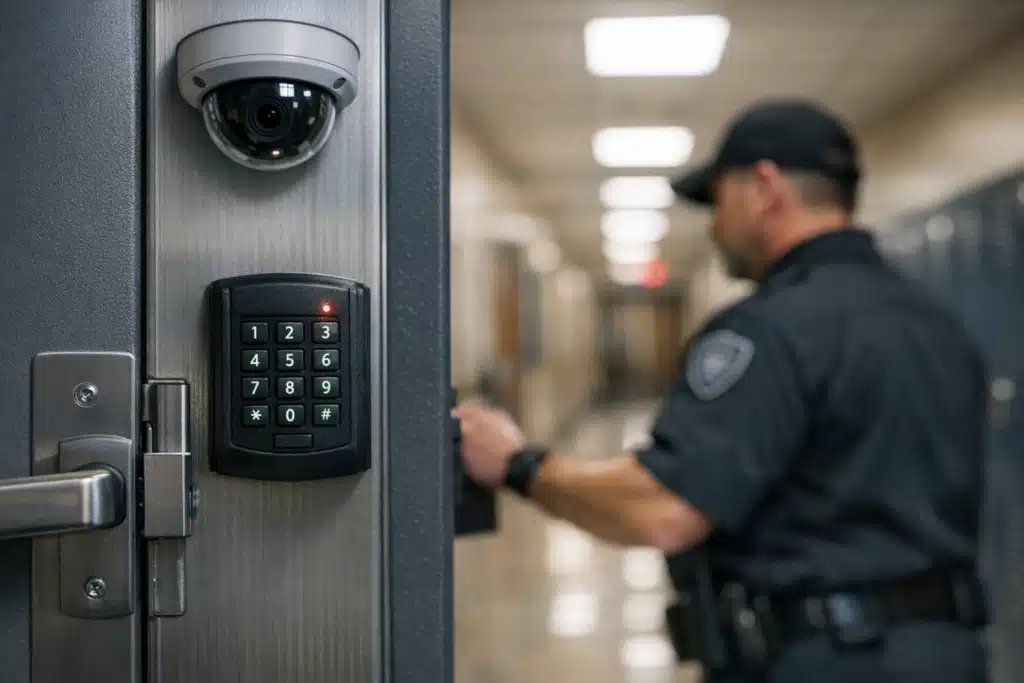
- Designate one entry point. Route all summer traffic through a single monitored door. Lock every other exterior entrance from the outside.
- Assign a check-in station. Place a staffed desk or camera intercom at that entrance. Log every adult who enters.
- Issue visible credentials. Give staff, campers, and vendors color-coded badges or wristbands. Anyone without one gets stopped.
- Audit your keys and fobs. Summer contractors sometimes keep access after their program ends. Reset codes and collect fobs weekly.
- Secure interior zones. Lock off wings not in use. Do not let a small camp roam an entire building.
These steps work for a Capitol Hill charter school and a large campus in Aurora alike. The principle stays the same: one way in, everyone accounted for.
Remote Video Surveillance for Empty School Zones
Remote video monitoring covers the parts of your building no one watches in summer. Cameras paired with live agents catch problems before they escalate. This matters most for wings and lots that sit idle.
A live monitoring agent can see someone climbing a fence at 2 a.m. The agent issues a voice warning and calls Denver police. Recorded-only cameras cannot do that.
What Remote Monitoring Catches on a Summer Campus
- After-hours trespassing on athletic fields and parking areas
- Metal and equipment theft from rooftop HVAC units
- Vandalism and graffiti on exterior walls and portables
- Loitering near side entrances during program hours
- Propped doors that staff forgot to close
Remote coverage also fills the overnight and weekend hours. Summer programs run Monday to Friday. The building still needs eyes the other 128 hours each week.
Weather and Altitude Affect Camera Placement
Denver summer storms roll in fast during afternoon hours. Hail and high winds damage poorly mounted cameras. Equipment rated for Front Range conditions holds up where consumer gear fails.
High-altitude sun also washes out cheap sensors. Camera placement must account for glare on east and west walls. Local knowledge matters when positioning hardware.
On-Site Guards Versus Remote Monitoring for Schools
Both models protect summer programs, and many Denver schools use them together. The right mix depends on your program size and building layout.
When On-Site Guards Make Sense
A staffed guard fits campuses with active foot traffic. Guards handle check-in, walk the halls, and respond to medical events. They also reassure parents dropping off young campers.
Guards work best during program hours when people fill the building. Their presence stops most problems before they start.
When Remote Monitoring Wins
Remote monitoring covers dead hours at lower cost. Overnight, weekends, and long holiday gaps get full coverage without a guard on payroll around the clock.
A blended plan often works best. Use a guard during camp hours. Switch to remote monitoring after the last child leaves.

 Posted on Google
Building a Summer Security Plan for Your Denver School
A written plan turns scattered precautions into a system. Draft it before your first summer session and review it each May. Include these elements.
- Map active and inactive zones. Mark which rooms and wings each program uses.
- Set daily open and close routines. Assign one person to lock down each night.
- List outside groups and their access rights. Document who may enter and when.
- Post emergency contacts. Include local Denver police precinct and your security provider.
- Schedule a walkthrough. Have a security assessor inspect entrances, lighting, and camera coverage.
Lighting deserves attention. Burned-out fixtures in a Highlands parking lot invite after-dark activity. A quick spring audit catches these before summer.
What Denver School Administrators Should Ask a Security Provider
Not every security company knows how educational facilities run. Ask direct questions before signing anything.
- Have you worked with Denver-area schools or youth programs?
- Are your guards trained for campuses with children present?
- Can you combine daytime guards with overnight remote monitoring?
- How fast do your agents respond to a live alert?
- Is your equipment rated for Colorado weather?
Clear answers separate a real security partner from a vendor selling hardware. Summer programs deserve a provider who understands the setting.
Protect Your Summer Program Before It Starts
Denver schools face reduced staff, open buildings, and higher warm-weather crime during summer programs. Access control, remote monitoring, and a written plan close the gaps that fall-semester systems miss. The time to act is before the first camper arrives.
Twin City Security Denver helps schools protect campuses during summer operations. Call 303‑574‑0000, email Denver@TwinCitySecurity.com, or visit https://www.twincitysecuritydenver.com for a summer security assessment.
Sources
- Denver Police Department – Crime Statistics and Maps
- Cybersecurity and Infrastructure Security Agency – School Safety and Security
- U.S. Department of Education – Readiness and Emergency Management for Schools (REMS)
Denver Public Schools face unique security challenges during summer programs due to reduced staff, partial building use, and increased property crime in warmer months. Twin City Security Denver outlines practical strategies to protect campuses before summer sessions begin.
- Summer programs create security gaps because fewer staff monitor buildings, side entrances get propped open, and outside groups share space without clear check-in rules.
- Access control fixes include using one monitored entry point, issuing visible badges, auditing keys weekly, and locking off unused building sections.
- Remote video monitoring with live agents covers overnight and weekend hours at lower cost than guards, catching trespassing and theft before damage occurs.
