

Navigating Denver’s Security Regulations for Fall Construction Projects
Construction sites in Denver can prevent fall theft by installing motion-activated lighting to counter shorter daylight hours, using GPS tracking on heavy equipment, securing copper wire and power tools in locked storage containers, and implementing regular security patrols during extended evening idle periods. Fencing with anti-climb features and surveillance cameras also help deter criminals targeting vulnerable jobsites.
Fall Construction in Denver Brings Rising Theft Risk
Copper wire, power tools, and heavy equipment vanish from Denver jobsites every fall. Theft climbs as daylight shrinks and sites sit idle longer each evening.
Metal theft alone costs Colorado contractors millions annually. Construction security planning matters most between September and December, when early sunsets extend the window for break-ins.
This post explains Denver’s local rules for jobsite protection. You get practical steps for staying compliant and keeping your site locked down before winter hits.
Denver Construction Security Starts With Permit Compliance
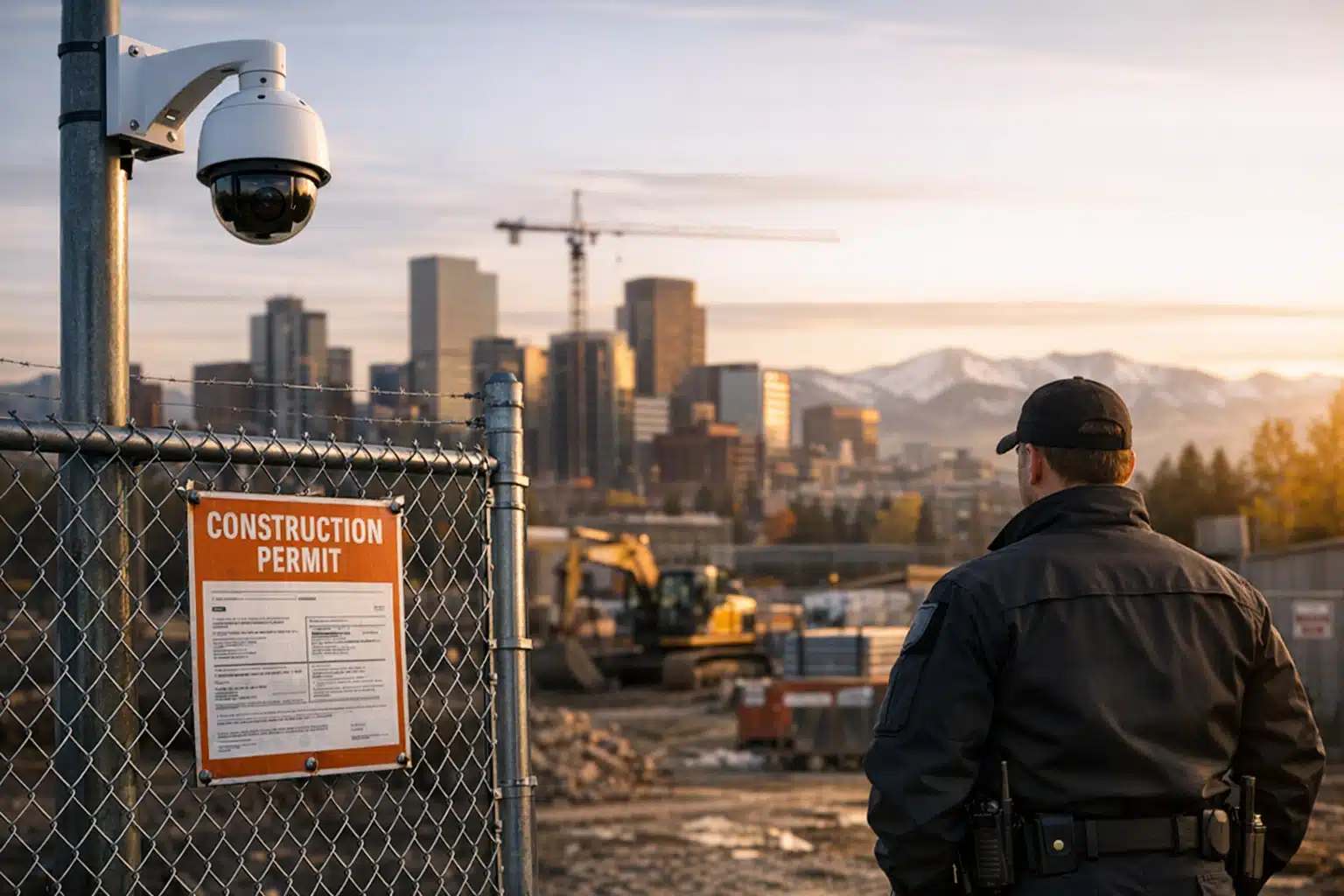
Denver requires active permits posted and visible at every jobsite. Inspectors check for compliance, but criminals read these signs too.
A posted permit tells thieves a site has value and schedule gaps. Smart site managers pair permit visibility with monitoring to offset that exposure.
What Denver Requires at the Fence Line
Denver’s zoning code sets rules for temporary construction fencing. Most downtown and residential projects must meet minimum height and containment standards.
- Perimeter fencing: Six-foot minimum height on most commercial sites
- Right-of-way permits: Required when fencing extends onto sidewalks in LoDo or Capitol Hill
- Dust and debris containment: Mandated during active grading and demolition
- Clear sightlines: Fencing cannot block traffic visibility at intersections
Fencing keeps you compliant and creates your first barrier against intrusion. Pair it with cameras for coverage that fencing alone cannot provide.
Colorado Lighting Rules Affect Your Security Setup
Denver enforces outdoor lighting standards under its zoning code. Fall projects run into conflict when security lighting meets dark-sky and glare limits.
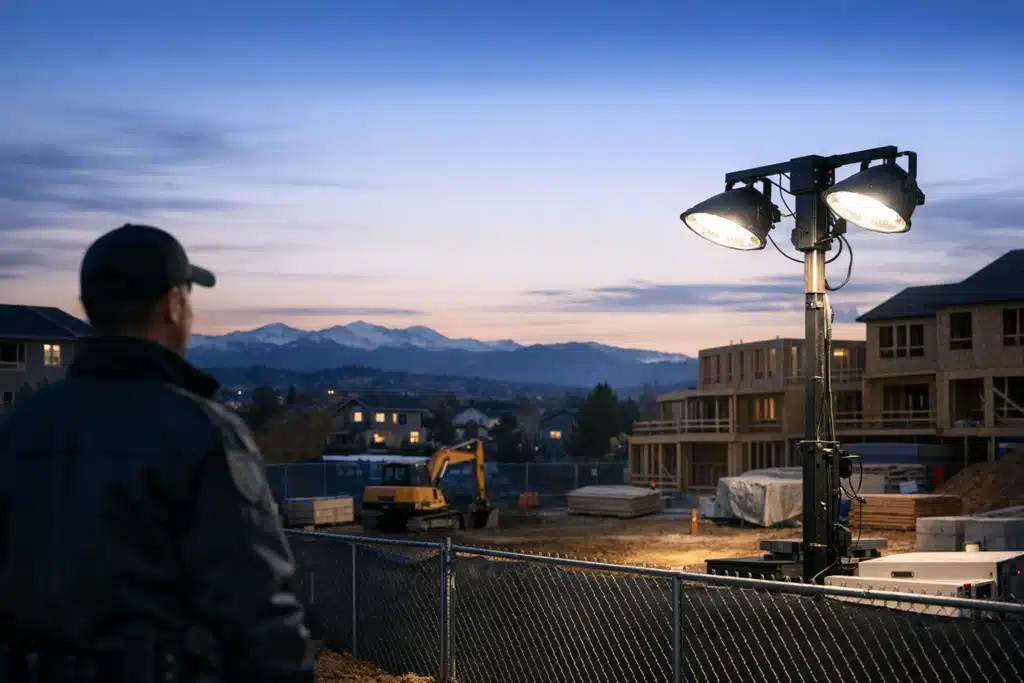
Your floodlights must point downward and avoid spilling onto neighboring lots. Highlands and Aurora residential zones apply stricter light-trespass limits than downtown commercial districts.
Balancing Visibility and Compliance
Bright lighting deters theft but risks code violations if aimed wrong. Remote surveillance fills the gap where lighting rules restrict you.
- Use shielded fixtures that direct light down onto the work zone
- Add infrared cameras that see in darkness without visible light
- Position motion lights at entry points rather than the full perimeter
- Document your setup to show inspectors you meet light-trespass rules
Infrared remote monitoring works when code limits your floodlights. Your site stays dark to neighbors but fully visible to monitoring staff.
Why Denver Construction Sites Need 24/7 Remote Monitoring
On-site guards cover one view at a time. Remote cameras watch every corner of a sprawling jobsite at once.
Fall weather in Denver shifts fast. An October cold snap can drop temperatures 30 degrees overnight, pushing guards indoors and leaving blind spots.
Remote monitoring runs in snow, wind, and freezing temperatures without interruption. Operators verify alarms and dispatch response the moment motion triggers a camera.
What Remote Surveillance Catches That Guards Miss
- Multiple access points monitored at the same moment
- After-hours activity flagged instantly by motion analytics
- Live voice warnings that scare off intruders before loss occurs
- Recorded footage for police reports and insurance claims
Many Denver contractors pair one roving guard with remote cameras. This combination covers large sites without the cost of a full guard team.
Cannabis Construction Sites Face Extra Regulations
Cannabis facility buildouts carry stricter rules than standard commercial work. Colorado’s Marijuana Enforcement Division mandates security standards before a license activates.
Construction crews work in spaces that soon hold regulated product. Camera placement and access logs must meet MED standards during the buildout, not just after opening.
Security Steps for Cannabis Buildouts in Denver
- Install MED-compliant cameras early to match final facility requirements
- Control site access with logged entry for every worker and vendor
- Retain footage for the 40-day minimum Colorado requires
- Document your coverage to speed license inspection
Starting security during construction saves rework later. The cameras you install now carry forward into the operating facility.

 Posted on Google
Winter Jobsite Protection in the Rocky Mountains
Denver sits at 5,280 feet, where winter arrives early and bites hard. Snow and ice create hazards that affect both safety and security.
Idle winter sites attract theft because crews pause work during storms. Vacant jobsites with stored materials become easy targets over long weekends.
Cold-Weather Security Checklist
- Secure stored copper and wire in locked containers or trailers
- Verify camera heaters keep lenses clear of frost and snow
- Check battery backups rated for sub-freezing performance
- Schedule remote checks during holiday shutdowns when sites sit empty
High-altitude cold drains standard batteries fast. Monitoring equipment built for Colorado winters keeps watching when temperatures plunge.
How to Build a Compliant Denver Security Plan
Start your plan before breaking ground, not after the first theft. Early planning keeps you compliant and covered from day one.
- Review your permit requirements with Denver Community Planning and Development
- Map your perimeter for fencing and camera placement
- Check lighting limits for your specific zone and neighborhood
- Choose a monitoring model that fits your site size and budget
- Document everything for inspectors and insurers
Each Denver neighborhood brings different rules and risks. A Capitol Hill infill project needs a different plan than an Aurora warehouse build.
Protect Your Denver Jobsite This Fall
Denver construction security means meeting local permit, fencing, and lighting rules while stopping theft. Remote monitoring fills the gaps that guards and code limits leave open.
Twin City Security Denver builds site-specific plans for contractors, cannabis operators, and property managers across the metro. Call 303‑574‑0000 or email Denver@TwinCitySecurity.com for a fall jobsite security assessment.
Sources
- City and County of Denver – Community Planning and Development
- Colorado Department of Revenue – Marijuana Enforcement Division
- Denver Police Department – Crime Statistics and Reporting
Fall construction in Denver faces rising theft risk as daylight shrinks, making security planning between September and December a priority. Twin City Security Denver offers site-specific plans for contractors and cannabis operators across the metro.
- Denver requires visible permits, six-foot minimum fencing on commercial sites, and right-of-way permits when fencing extends onto sidewalks in areas like LoDo or Capitol Hill.
- Outdoor lighting must meet dark-sky and glare limits, so remote surveillance with infrared cameras can fill gaps where code restricts floodlights.
- Cannabis facility buildouts must meet Marijuana Enforcement Division standards during construction, including camera placement, access logs, and 40-day footage retention.


