

Enhancing Security for Denver’s Public Parks During Fall Events
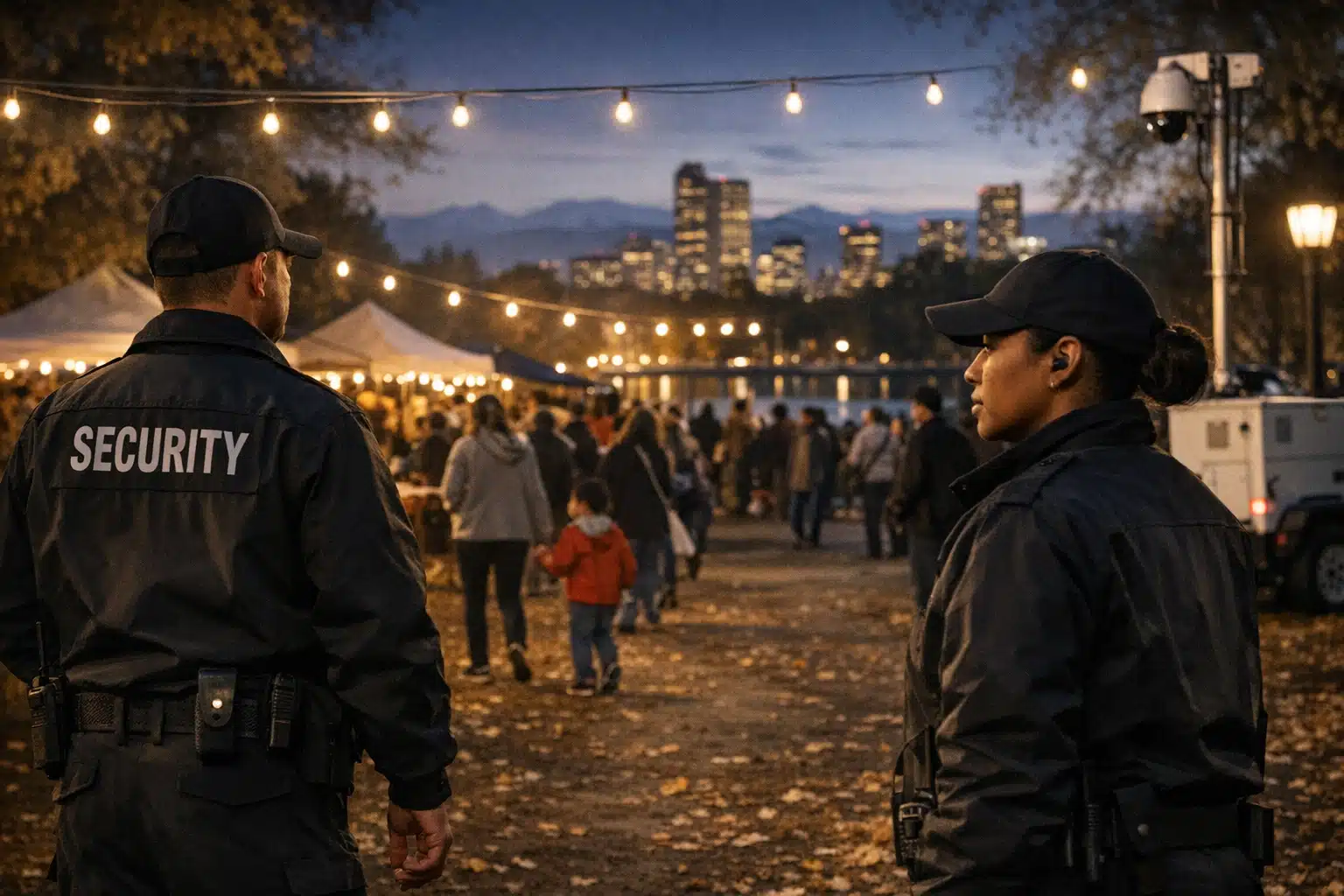
Enhancing security for public parks during fall events involves coordinating with local law enforcement, deploying trained security personnel at entry points, installing temporary lighting in high-traffic areas, and establishing clear emergency response protocols. Event organizers should also implement crowd management strategies, set up visible security stations, and use communication systems to monitor activities throughout the park grounds.
Fall Events Put Denver’s Public Parks Under Pressure
Denver hosts more than 250 public parks across 6,000 acres of city-managed land. Many become gathering points for autumn festivals, markets, and seasonal celebrations.
Park security grows harder each fall as daylight shrinks and crowds grow. Sunset in Denver moves from 7:30 p.m. in September to under 5:00 p.m. by November.
That shift creates dark gaps during peak event hours. This post breaks down the real risks, the measures that work, and how to plan coverage for fall events in Denver parks.
Why Park Security Gets Complicated in Denver’s Fall
Denver parks face a mix of pressures between September and November. Weather, crowd size, and reduced lighting all collide during event season.
Shorter Days Mean Longer Dark Hours
By late October, parks sit in darkness during evening events. Washington Park and City Park both have large open areas with uneven lighting.
Low light raises risk for theft, vandalism, and vehicle break-ins near event lots.
Fall Events Draw Dense, Mobile Crowds
Harvest festivals, Halloween gatherings, and food truck nights pull hundreds into open spaces. Crowd density makes it hard to spot one bad actor among families.
Event perimeters in parks like Cheesman and Sloan’s Lake shift as attendance grows through the evening.
Rocky Mountain Weather Changes Fast
An early snow or temperature drop can scatter crowds within minutes. Staff need a plan for sudden exits and slick walkways.
Denver has recorded measurable September snow in past years. Cold-weather readiness is part of any fall park plan.
The Main Security Risks at Denver Park Events
Each fall event carries predictable threats. Naming them early helps organizers plan coverage before gates open.
- Vehicle break-ins in overflow and street parking near park edges
- Theft of vendor cash and equipment during setup and teardown
- Unauthorized entry after dark in unlit park sections
- Medical incidents tied to altitude, cold, and large crowds
- Lost children in wide open grounds without clear sightlines
- Conflict escalation near alcohol service or closing time
Denver property crime stays higher than the national average. Open public events make easy targets without on-site presence.
How to Plan Park Security for Fall Events in Denver
Park security for a fall event works best when planned in stages. Follow these steps to cover the full event timeline.
- Map the grounds early. Walk the park at the same hour your event ends. Note dark zones, blind corners, and weak fencing.
- Define the perimeter. Mark entry and exit points. Limit access to controlled gates where crowds allow.
- Place guards by risk zone. Assign posts to parking lots, vendor rows, and stage areas.
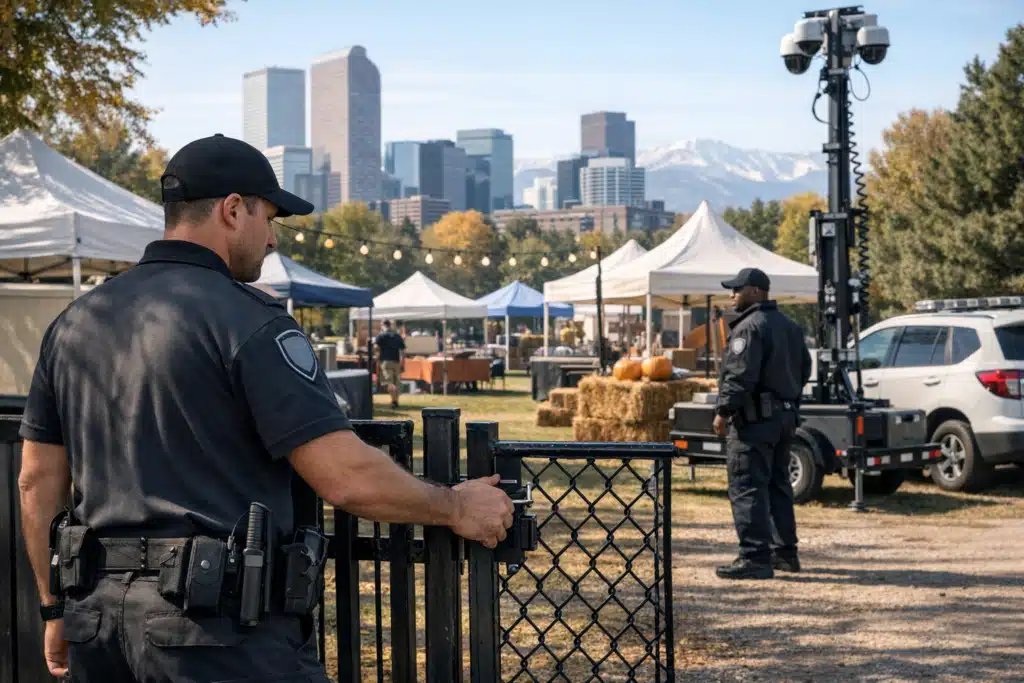
- Add remote cameras for coverage gaps. Mobile units watch areas guards cannot reach at once.
- Set a weather trigger. Decide in advance when cold or snow ends the event.
- Brief vendors and volunteers. Share radio channels and the point of contact for incidents.
Plan for teardown, too. Many thefts happen after crowds leave and attention drops.
On-Site Guards Versus Remote Surveillance for Parks
Both coverage types matter for park events. The right mix depends on park size, crowd count, and budget.
When On-Site Guards Work Best
Uniformed guards prevent problems before they start. A visible post near a vendor row deters grab-and-run theft.
Guards also handle lost children, crowd questions, and conflict on the spot. Human judgment matters in dense fall crowds.
When Remote Video Surveillance Adds Value
Remote cameras cover wide park ground that guards cannot patrol alone. Mobile surveillance trailers watch overflow parking at Sloan’s Lake or City Park.
Video gives a record for police if an incident follows the event. Live monitoring flags issues in dark corners fast.
The Combined Model for Large Parks
Large events need both. Guards hold key posts. Cameras watch the edges and empty stretches between them.
This pairing covers a 50-acre park without doubling staff count.
Neighborhood Factors That Shape Park Coverage
Denver parks differ by location. Security plans should match the surrounding area.
- Capitol Hill parks like Cheesman sit near dense housing and heavy foot traffic.
- LoDo and downtown green spaces draw late-night crowds and nearby bar activity.
- Highlands parks mix family events with tight street parking.
- Aurora park venues often cover larger acreage with fewer entry controls.
A plan built for Washington Park will not fit a small Highlands lot. Site-level detail drives real protection.

 Posted on Google
Cold-Weather Readiness for Fall Park Teams
Security staff must stay effective in dropping temperatures. A cold guard loses focus fast.
- Rotate outdoor posts every 60 to 90 minutes in freezing conditions
- Provide warming points near command stations
- Equip teams with high-visibility cold-weather clothing
- Pre-mark icy walkways and slope hazards before gates open
Altitude adds strain. Visitors from lower elevations may struggle with cold and exertion combined.
What to Ask Before Hiring Park Security in Denver
Event organizers should vet any provider before fall. Ask direct questions about local work.
- Have you covered Denver public park events before?
- Can you supply both guards and remote cameras?
- How do you handle sudden weather shutdowns?
- Are your guards licensed under Colorado requirements?
- What is your response plan for a medical or missing-person call?
Clear answers separate a prepared team from a last-minute fill.
How Twin City Security Denver Supports Fall Park Events
Twin City Security Denver covers public park events across the metro area. Our teams plan for dark hours, crowd flow, and fast weather shifts.
We pair licensed on-site guards with remote video surveillance for full-ground coverage. Each plan matches the park, the crowd size, and the event schedule.
We know Denver parks. From Washington Park to Aurora venues, we build coverage around the actual site.
Secure Your Fall Park Event in Denver
Park security during fall events comes down to planning for darkness, crowds, and cold. The right mix of guards and cameras protects visitors and vendors.
Contact Twin City Security Denver for a park security assessment or monitoring quote. Call 303‑574‑0000 or email Denver@TwinCitySecurity.com to plan your fall event coverage.
Sources
- City and County of Denver – Parks & Recreation
- Denver Police Department – Crime Information
- National Weather Service – Denver/Boulder Forecast Office
- Colorado Department of Regulatory Agencies – Private Security
Twin City Security Denver explains how fall events in the city's 250+ public parks face increased security challenges due to shorter daylight hours, dense crowds, and unpredictable weather. The company offers combined on-site guards and remote surveillance to address these risks.
- Denver parks lose significant daylight between September and November, with sunset dropping from 7:30 p.m. to under 5:00 p.m., creating dark periods during peak event hours.
- Common risks include vehicle break-ins near parking areas, vendor theft during setup and teardown, lost children in open spaces, and conflicts near alcohol service or closing time.
- Effective coverage combines uniformed guards at high-risk posts with remote cameras monitoring parking lots and unpatrolled areas, adjusted for each park's size and neighborhood factors.


