

The Impact of Denver’s Late Summer Weather on Security Patrols
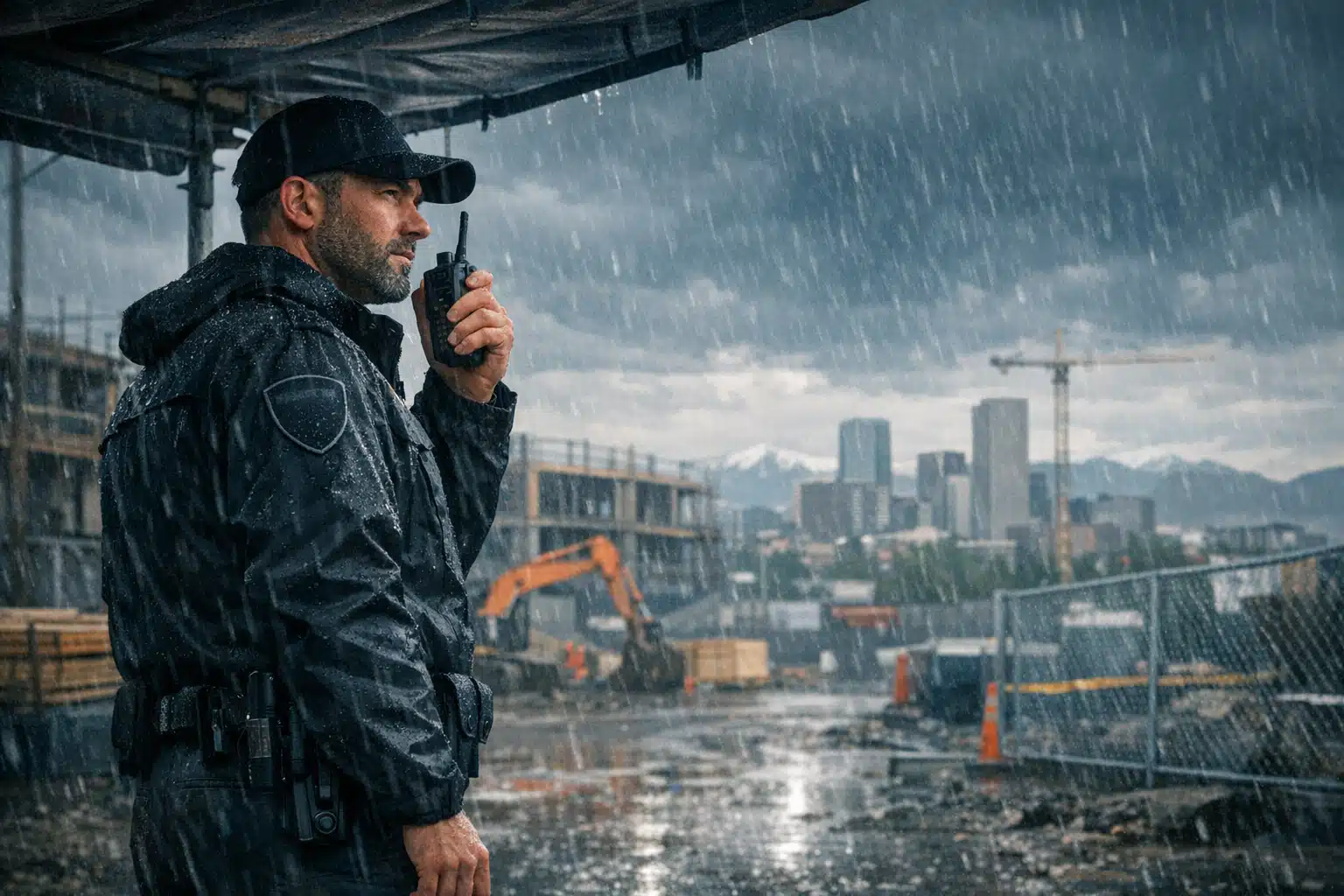
Denver's late summer weather, driven by the North American Monsoon from July through September, brings frequent afternoon thunderstorms that directly impact security patrol operations. These storms create coverage gaps at construction sites, cannabis facilities, and apartment communities across the metro area, forcing patrol teams to adjust their routines and schedules to maintain effective property protection during unpredictable weather conditions.
Denver’s late summer brings the North American Monsoon, pushing afternoon thunderstorms across the Front Range from July into September. Those storms directly affect security patrols at construction sites, cannabis facilities, and apartment communities across the metro area. This post breaks down how August and September weather changes patrol routines, where coverage gaps appear, and what property owners can do about it.
If you manage a site in Aurora, LoDo, or the Highlands, the weather impact on your security coverage is measurable. Here is what late summer actually does to patrol effectiveness.
How Late Summer Weather Impacts Security Patrols in Denver
Denver sits at 5,280 feet, and that altitude shapes late summer weather patterns. Afternoon storms build fast over the foothills, then roll east across the city.
For foot and vehicle patrols, this creates three recurring problems:
- Reduced visibility during heavy rain and hail squalls
- Lightning risk that forces guards indoors or into vehicles
- Flash flooding in low-lying lots and underpasses
A guard walking a 10-acre construction perimeter in Commerce City cannot maintain the same pace during a 4 p.m. hailstorm. Coverage slows, and blind spots open.
Heat Changes Patrol Timing
Early September afternoons still hit the mid-90s in Denver. High heat affects guard stamina on long outdoor shifts.
Patrol schedules shift toward dawn and dusk during heat spikes. The midday window becomes the weakest point in many on-site plans.
Smart operators adjust rounds to cover high-risk hours. Theft at construction sites rises when crews leave and heat keeps patrols shorter.
Monsoon Storms Create Predictable Gaps
Denver’s monsoon storms follow a daily rhythm. They form between 2 p.m. and 7 p.m., then clear by nightfall.
Criminals who watch a site learn this pattern. A 30-minute lightning delay in patrol rounds gives a window for copper theft or equipment grabs.
Why Remote Video Surveillance Covers Weather Gaps
Remote video monitoring holds steady when foot patrols slow down. Cameras keep watching during lightning, hail, and flash floods.
Weather does not send a camera indoors. That makes remote surveillance the backbone of late summer coverage for many Denver sites.
Here is how the two approaches compare during a monsoon storm:
- On-site guards pause outdoor rounds during lightning for safety
- Remote cameras continue recording and flagging motion
- Monitoring agents verify alerts and dispatch response
- Combined coverage closes the gap storms create
For a cannabis grow facility in north Denver, this layering matters. Colorado’s Marijuana Enforcement Division requires continuous video coverage of limited-access areas.
Cannabis Facilities and Weather-Proof Compliance
Colorado cannabis rules demand 24-hour recorded surveillance at licensed sites. Storms cannot be an excuse for a coverage lapse.
Remote systems with battery backup keep running during the brief power flickers that summer storms cause. A guard-only plan risks a compliance gap when lightning forces staff inside.
Cannabis security in Denver requires both physical presence and uninterrupted video. Late summer storms test whether a plan has that redundancy.
Weather Impact on Specific Denver Property Types
Different sites feel the weather impact in different ways. Patrol planning should match the property.
Construction Sites
Denver’s building season peaks in summer. Exposed materials, copper wiring, and idle equipment attract theft.
Storms wash out access roads and slow guard response. Elevated camera towers with solar backup watch the full lot when a guard cannot reach a far corner.
Apartment Communities
Covered parking garages flood at the entrance during flash storms. Residents gather there, and so do opportunistic thieves.
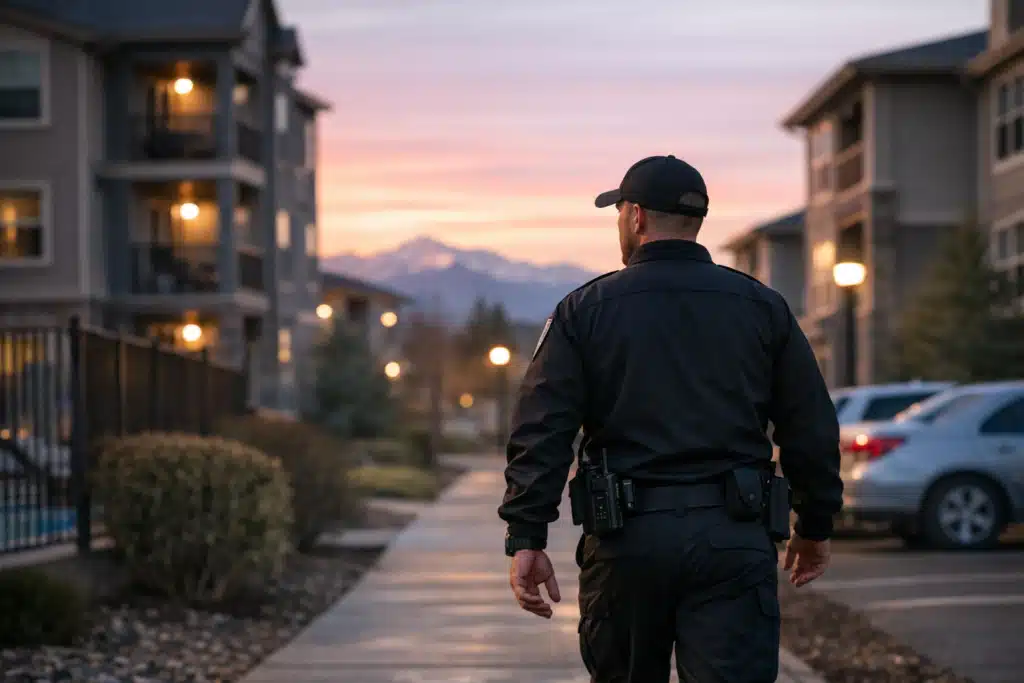
Patrols should focus on garage entries and mailrooms during storm windows. These are the points where package theft spikes after rain.
Event Venues
Late summer festivals across Denver draw crowds to outdoor spaces. A sudden storm scatters attendees and strains crowd control.
Guards trained for weather evacuations keep exits clear. A storm plan written before the event prevents panic at the gates.
How to Adjust Your Denver Security Plan for Late Summer
Adjusting patrol coverage for monsoon season takes a few concrete steps. Property managers can act on each before August.
- Map your storm-hour risk. Identify which assets sit exposed between 2 p.m. and 7 p.m.
- Add remote cameras to blind spots. Cover corners that guards reach last during rain.
- Shift patrol timing. Weight rounds toward dawn, dusk, and overnight hours.
- Confirm backup power. Verify cameras run during brief storm outages.
- Write a lightning protocol. Define where guards shelter and how monitoring takes over.
Each step costs little and closes a real gap. The sites that skip them lose coverage exactly when risk climbs.
Match Coverage to Denver’s Weather Calendar
Monsoon activity runs strongest from mid-July to mid-September. Hail risk peaks in the same window.
Plan your heaviest remote coverage for those weeks. Pull back slightly once drier October days arrive and storm windows shrink.

 Posted on Google
What Denver Property Owners Should Ask Before Hiring
Before signing a security contract, ask how the provider handles weather. The answer reveals whether a plan is built for Denver.
Strong questions include:
- How do patrols continue during lightning and hail?
- Do cameras run on backup power during outages?
- How fast do monitoring agents verify and respond to alerts?
- Does the plan shift timing during heat waves and storm hours?
A provider who answers with Denver-specific detail knows the local weather impact. A vague answer signals a template plan.
Conclusion
Denver’s late summer storms, heat, and hail create real gaps in outdoor security patrols. Pairing on-site guards with remote video monitoring keeps your site covered when lightning forces staff inside. Adjust patrol timing, confirm backup power, and map your storm-hour risk before monsoon season peaks.
Twin City Security Denver builds patrol and monitoring plans around Front Range weather patterns. Call 303‑574‑0000, email Denver@TwinCitySecurity.com, or visit https://www.twincitysecuritydenver.com for a Denver security assessment.
Sources
- National Weather Service – Denver/Boulder Forecast Office
- Colorado Department of Revenue – Marijuana Enforcement Division
- Denver Police Department – Official City Page
- NOAA – What Is the North American Monsoon
Denver's late summer monsoon season from July through September creates measurable gaps in security patrol coverage due to lightning, hail, flash flooding, and extreme heat. Twin City Security Denver recommends pairing on-site guards with remote video monitoring to maintain protection when weather forces patrols indoors.
- Afternoon storms between 2 p.m. and 7 p.m. follow a predictable pattern that criminals can exploit, with 30-minute lightning delays opening windows for copper theft or equipment grabs at construction sites.
- Cannabis facilities face compliance risks during storms since Colorado requires 24-hour recorded surveillance, making battery-backed remote cameras a necessity when guards must shelter indoors.
- Property managers should map storm-hour risks, add cameras to blind spots, shift patrol timing toward dawn and dusk, and confirm backup power before monsoon season peaks in mid-July through mid-September.


