

How to Maintain High Security Standards in Denver’s High-Rise Apartments
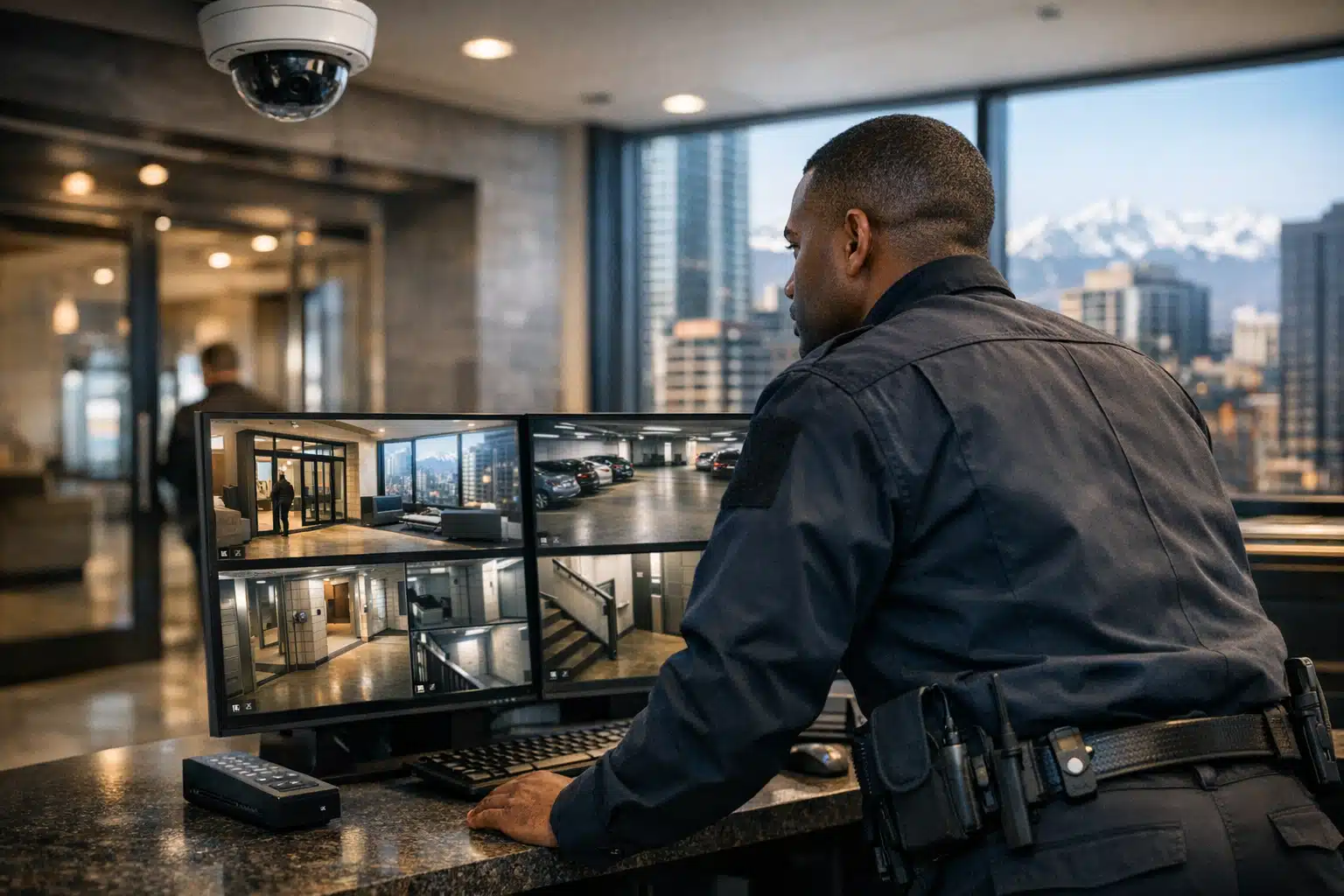
Maintaining high security in Denver's high-rise apartments requires a layered approach combining access control systems, 24-hour surveillance cameras, secure entry points with key fobs or biometric readers, and trained on-site security personnel. Regular security audits, visitor management protocols, and well-lit common areas also help protect residents in these rapidly growing urban residential towers.
Why High-Rise Apartment Security Demands More Than a Front Door Lock
Denver added thousands of high-rise units downtown over the past decade. LoDo, the Golden Triangle, and RiNo now hold residential towers that didn’t exist in 2015.
More vertical living means more entry points, elevators, and shared spaces to watch. High-rise apartment security works differently than protecting a townhome or garden-style complex.
This post walks property managers through the practical steps for keeping residents safe. You get concrete tactics for access control, monitoring, and staffing built for Denver towers.
What Makes High-Rise Apartment Security Different in Denver
A single tower can house 300 residents across 25 floors. That density changes how threats move inside a building.
Package theft, tailgating at the lobby, and garage break-ins top the list of complaints. Denver police reported over 40,000 property crimes in recent years, and apartment communities feel that pressure.
The Vertical Problem
Intruders who pass the lobby gain access to every floor by elevator or stairwell. One breach at the entrance exposes the whole building.
This is why strong security standards start at the ground floor and extend upward. Each layer slows an unauthorized person down.
Denver’s Winter Factor
Cold snaps push foot traffic indoors and tempt residents to prop open heavy exterior doors. A propped garage door during a January storm invites trespassers out of the cold.
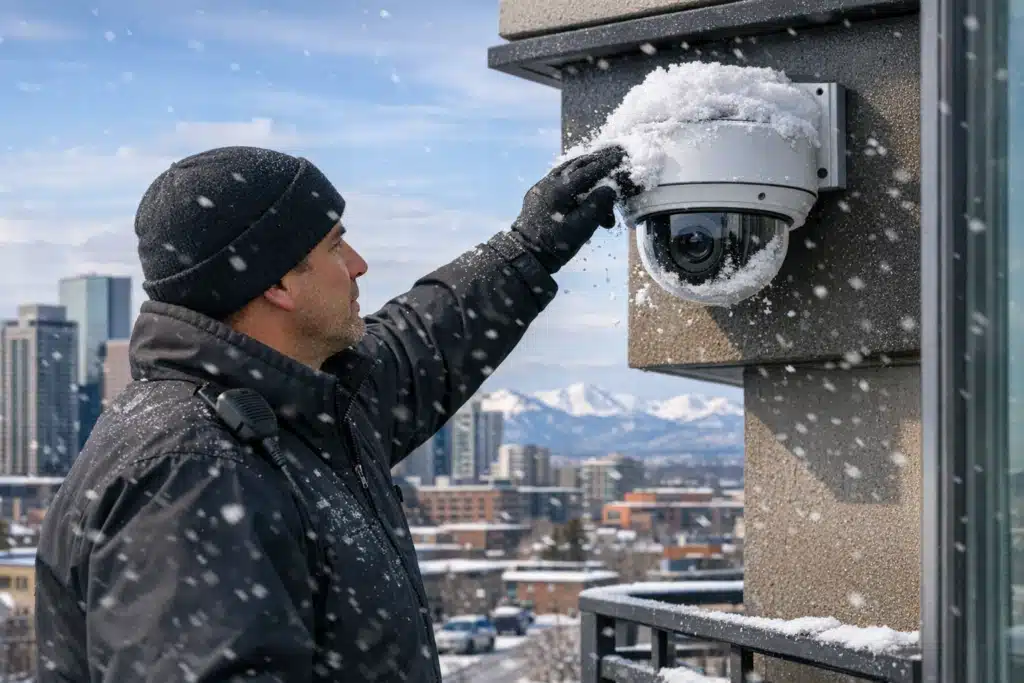
Snow also obscures camera lenses on exterior mounts. Lenses facing west toward the Rockies ice over fastest during afternoon storms.
Step-by-Step: Building Strong High-Rise Apartment Security
Follow these steps to cover a Denver tower from garage to rooftop.
- Audit every entry point. Count exterior doors, garage gates, loading docks, and stairwell exits. Most towers have more than managers expect.
- Install access control at each one. Key fobs or mobile credentials log who enters and when. Replace lost fobs within 24 hours.
- Add remote video surveillance. Cameras cover lobbies, elevators, garages, mailrooms, and amenity decks.
- Staff the lobby during peak hours. A guard between 4 p.m. and midnight stops tailgating when traffic spikes.
- Set an incident response plan. Define who gets called for a trespasser, a medical event, or a fire alarm.
How Access Control Protects Denver Towers
Access control is the first barrier in any high-rise. It decides who moves past the lobby and into resident areas.
Credentials That Track Movement
Mobile and fob systems record each door event. If a garage break-in happens at 2 a.m., the log shows which credentials fired that night.
Elevator access control adds a second layer. Residents reach their floor only after scanning a valid credential.
Managing Visitors and Deliveries
Food couriers and package carriers enter towers dozens of times daily. A controlled visitor system issues temporary codes that expire.
- Give couriers time-limited access to mailrooms only
- Route guests through a monitored lobby call box
- Log every contractor with a photo and check-out time
Why 24/7 Remote Video Surveillance Matters for High-Rises
Remote monitoring watches areas no single guard can cover alone. One trained operator views a garage, three elevators, and two lobbies at once.
Live operators act in real time. They can issue a voice-down warning over speakers when someone loiters near the mailroom at night.
Where Cameras Earn Their Keep
Garages generate the most incidents in Denver high-rises. Catalytic converter theft and vehicle break-ins cluster in parking structures.
Place cameras to cover these hot zones:
- Garage ramps and stairwell doors
- Elevator interiors and lobby landings
- Package and mailroom areas
- Rooftop amenity decks and pool gates
- Loading docks and trash enclosures
Beating Denver Weather
Winter storms test outdoor equipment. Use heated camera housings on exterior mounts to stop lens icing.
Position garage cameras away from the ramp mouth where blowing snow drifts inside. Check lens clarity after every major storm.
When On-Site Guards Beat Cameras Alone
Cameras record events. Guards prevent them and respond on the spot.
A lobby officer stops tailgating that a camera only documents after the fact. For towers in Capitol Hill with heavy street traffic, a visible guard deters loitering at the door.
Pairing Guards With Monitoring
The strongest setup combines both. A remote operator spots a problem on camera and radios the on-site guard to respond.
This pairing covers the gap between seeing and acting. One operator watches many cameras; one guard handles the physical confrontation.

 Posted on Google
Common Security Gaps in Denver High-Rises
Many towers share the same weak points. Fixing them raises your security standards fast.
- Unmonitored stairwells let intruders move between floors unseen
- Propped garage doors during cold weather bypass access control
- Shared fob codes that never get revoked after move-outs
- Amenity deck doors left on daytime schedules after dark
- Dead camera zones in corner stairwells and back halls
Walk your building at 11 p.m. once a quarter. Nighttime walks reveal gaps that daytime tours miss.
What Property Managers Should Ask Before Hiring Security
Before you sign a contract, get clear answers. Strong high-rise apartment security depends on asking the right questions.
- Does the provider staff guards who know Denver high-rise layouts?
- Can remote monitoring integrate with your existing camera system?
- What is the average response time to a live incident?
- How does the team handle after-hours lockouts and alarms?
- Are operators trained for medical and fire events?
A provider who answers these in plain terms understands tower work. Vague answers signal a mismatch.
Keeping Costs Reasonable Without Cutting Corners
Full-time guards at every door cost more than most budgets allow. Smart coverage mixes staffing with monitoring.
Run guards during peak evening hours and shift to remote monitoring overnight. This covers the building around the clock at a lower rate than 24-hour staffing.
Prioritize spending on your highest-risk zones first. For most Denver towers, that means the garage and the main lobby.
Conclusion
Strong high-rise apartment security in Denver layers access control, remote monitoring, and on-site guards from the garage up. Fix common gaps like propped doors and stale fob codes, and plan for winter’s effect on exterior cameras.
Twin City Security Denver helps property managers build coverage that fits each tower and budget. Call 303‑574‑0000, email Denver@TwinCitySecurity.com, or visit https://www.twincitysecuritydenver.com for a Denver security assessment.
Sources
- Denver Police Department – Crime Statistics and Data
- Colorado Department of Regulatory Agencies – Private Security
- FBI – Uniform Crime Reporting Program
High-rise apartment security in Denver requires layered protection beyond basic locks, as vertical buildings with hundreds of residents create unique vulnerabilities at multiple entry points, elevators, and shared spaces.
- Denver towers face specific challenges including tailgating at lobbies, garage break-ins, and winter weather that causes residents to prop doors open and ice over camera lenses.
- Effective security combines access control with tracked credentials, remote video surveillance covering garages and stairwells, and on-site guards during peak evening hours to prevent incidents cameras can only record.
- Property managers should audit all entry points quarterly at night, revoke old fob codes after move-outs, and consider pairing remote monitoring with guards to balance coverage and cost.


