

The Impact of Leaf Fall on Denver’s Security Systems
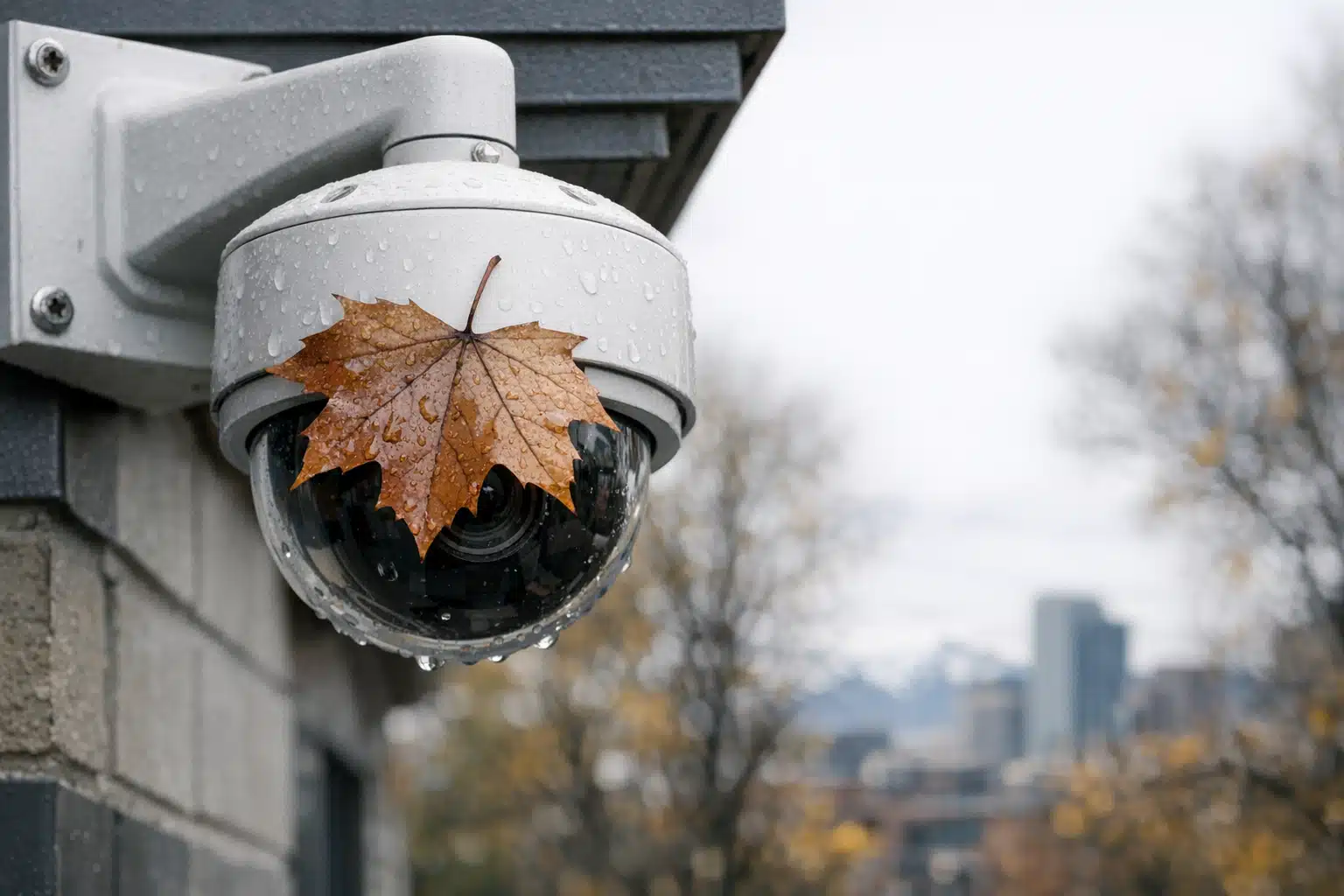
How Autumn Leaves Disrupt Denver Security Systems
Denver’s cottonwoods and maples drop millions of leaves between late September and early November. Those leaves do more than clog gutters. They quietly degrade the security systems protecting your business.
A single leaf clinging to a camera lens can erase a parking lot from view. A pile against a motion sensor can trigger false alarms all night.
This post breaks down how leaf fall affects cameras, sensors, and monitoring across Denver neighborhoods. You get concrete fixes you can apply before the first hard freeze.
Why Falling Leaves Weaken Camera Performance
Outdoor cameras depend on an unobstructed line of sight. Autumn removes that advantage in two ways.
Direct Lens Obstruction
Wind pins wet leaves directly against dome and bullet camera housings. In Highlands and Washington Park, mature trees sit close to building corners where cameras mount.
A leaf covering even a third of the lens blinds the camera to anything behind it. Night footage suffers worse, since infrared light reflects off the leaf surface.
Shifting Fields of View
Summer foliage frames a camera’s view. When those leaves drop, the background changes overnight.
Cameras set to detect motion against a stable backdrop suddenly see swaying bare branches. That shift alone can produce dozens of false triggers each evening.
How Leaf Fall Triggers False Alarms
Motion sensors react to movement and heat changes. Dry autumn leaves create both.
- Blowing debris: Gusts off the foothills push leaves across sensor zones.
- Thermal shifts: Sun-warmed leaf piles cool fast at dusk, confusing passive infrared sensors.
- Accumulation: Leaves gathering against ground-level sensors block their detection field.
Each false alarm costs money and attention. Remote monitoring operators waste time verifying harmless leaf movement instead of watching for real threats.
Repeated false alarms also dull response. Staff start ignoring alerts, and a genuine break-in slips past unnoticed.
Denver Neighborhoods Most Affected by Leaf Fall
Tree density varies across the metro area. Some locations face steeper autumn risk.
Capitol Hill and City Park West
Historic elms and tall cottonwoods line these streets. Apartment communities here see heavy leaf buildup against perimeter cameras and entry sensors.
Wash Park and Highlands
Dense residential canopy drops leaves onto every surface. Property managers report seasonal spikes in nuisance alerts during October.
Construction Sites Near the Platte River
Riverbank cottonwoods shed early and heavily. Job sites in these corridors rely on temporary pole-mounted cameras that sit directly in the leaf path.
Protecting Cannabis Facilities During Leaf Season
Colorado cannabis rules require continuous video coverage. The Marijuana Enforcement Division mandates recorded surveillance of all limited-access areas.
A leaf-blocked camera at a cultivation site risks a compliance violation. That gap in footage can draw regulatory penalties, not only security exposure.
Cannabis operators in Denver should treat autumn camera maintenance as a licensing matter. Keep these steps on a fall checklist:
- Inspect every exterior camera weekly during peak leaf fall.
- Verify footage covers each mandated zone without obstruction.
- Document cleaning dates to show diligence during audits.
- Confirm recording continuity after any wind event.

 Posted on Google
How to Keep Security Systems Working in Autumn
Clear prevention steps stop most leaf-related failures. Apply them before October wind picks up.
Clean and Reposition Cameras
Wipe lenses with a microfiber cloth every week during heavy drop. Angle cameras slightly downward to shed leaves and reduce catch points.
Adjust Motion Detection Zones
Mask out tree areas in your camera software. Narrow detection fields away from branches that stand bare in autumn.
Trim Nearby Branches
Cut back limbs within six feet of any camera or sensor. Fewer overhanging branches means fewer leaves landing on equipment.
Add Human Verification
Remote operators confirm whether an alert shows a person or a leaf gust. Live monitoring filters nuisance triggers before they reach your phone.
At Twin City Security Denver, our monitoring team adjusts detection settings each autumn. We catch failing camera angles before a storm buries them.
Why Winter Planning Starts With Leaf Fall
Autumn leaves signal the start of Denver’s hardest security season. Snow and ice follow within weeks.
Leaves that freeze onto camera housings in a wet October storm turn to ice by November. That ice can stay for days, blinding cameras through the first cold snap.
Clearing leaves early prevents frozen obstructions later. A fall maintenance pass protects your coverage straight into winter.
What Denver Property Owners Should Do Now
Start before the trees finish dropping. A short autumn routine prevents most seasonal gaps.
- Schedule weekly lens checks from late September onward.
- Clear leaf piles away from ground sensors and gates.
- Review night footage to spot obstruction early.
- Request a monitoring audit of your detection zones.
These habits cost little and prevent blind spots during high-risk months. Property crime in Denver climbs as daylight shrinks, making reliable coverage matter more.
Conclusion
Falling leaves quietly undermine Denver security systems by blocking lenses and triggering false alarms. A simple autumn routine of cleaning, trimming, and zone adjustment keeps your coverage sharp into winter.
Twin City Security Denver helps businesses, cannabis operators, and property managers prepare their monitoring for every season. Call 303‑574‑0000 or email Denver@TwinCitySecurity.com for a Denver security assessment.


