

Evaluating Security Needs for Denver’s Outdoor Construction Projects in Autumn
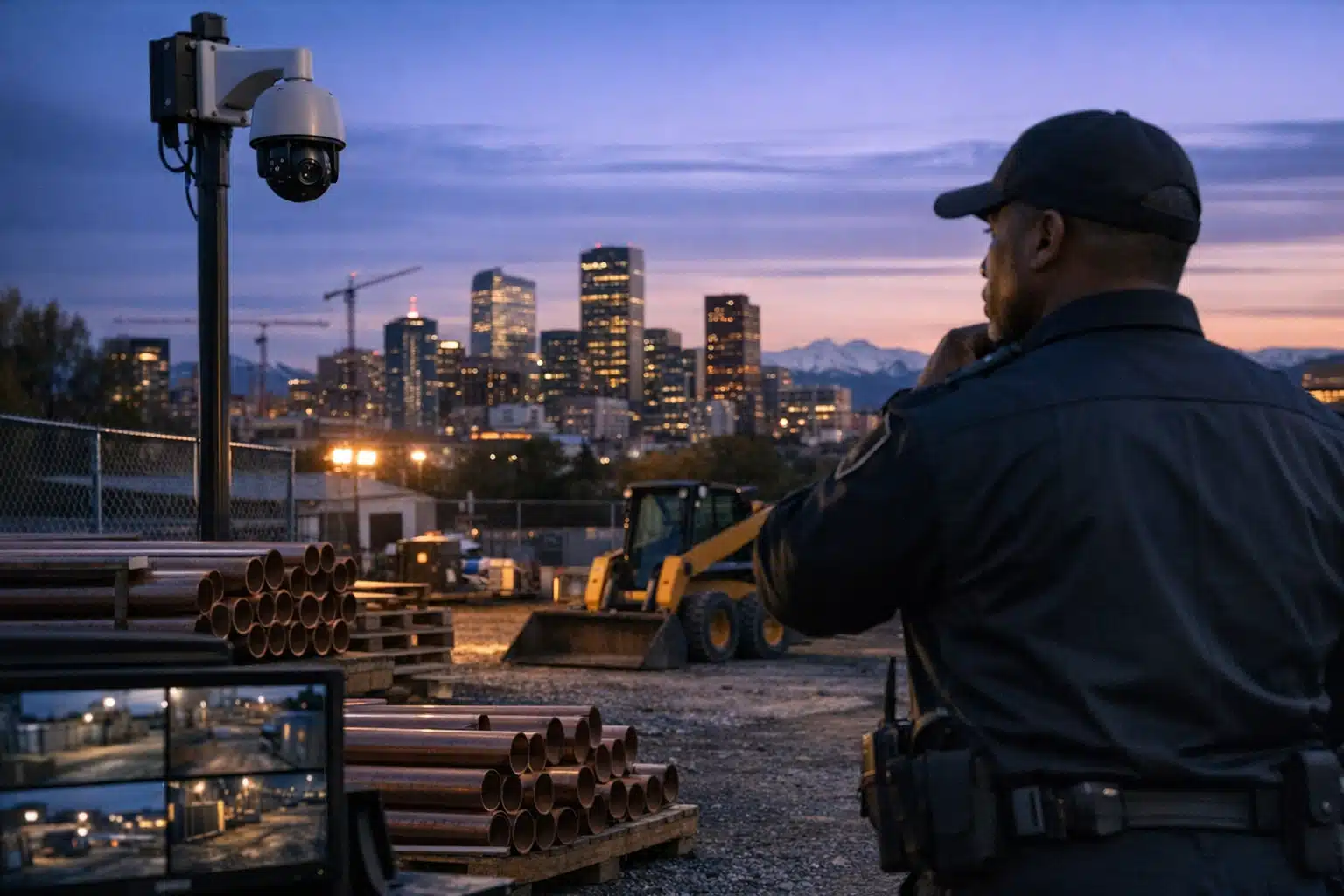
Autumn in Denver brings rapidly decreasing daylight, with the city losing about three minutes of sunlight daily in October. By the end of the month, sunset shifts from 8:30 p.m. to around 6 p.m. This reduced visibility creates longer periods of darkness on job sites, increasing vulnerability to theft, vandalism, and unauthorized access during evening and early morning hours.
Autumn Changes the Risk Picture for Denver Construction Sites
Denver loses roughly three minutes of daylight each day in October. By Halloween, the sun sets near 6 p.m. instead of 8:30 p.m.
That shift matters for construction security. Thieves gain two extra hours of cover before most crews even clock out.
Autumn projects across Denver face a specific mix of risks: earlier darkness, copper and tool theft, and the first snowstorms that can knock out power and cameras. This article breaks down how fall weather reshapes site protection and what steps keep your materials, equipment, and crews safe.
Why Autumn Raises Construction Security Risks in Denver
Fall creates a gap between daylight hours and jobsite activity. Crews finish earlier as temperatures drop, leaving sites empty longer.
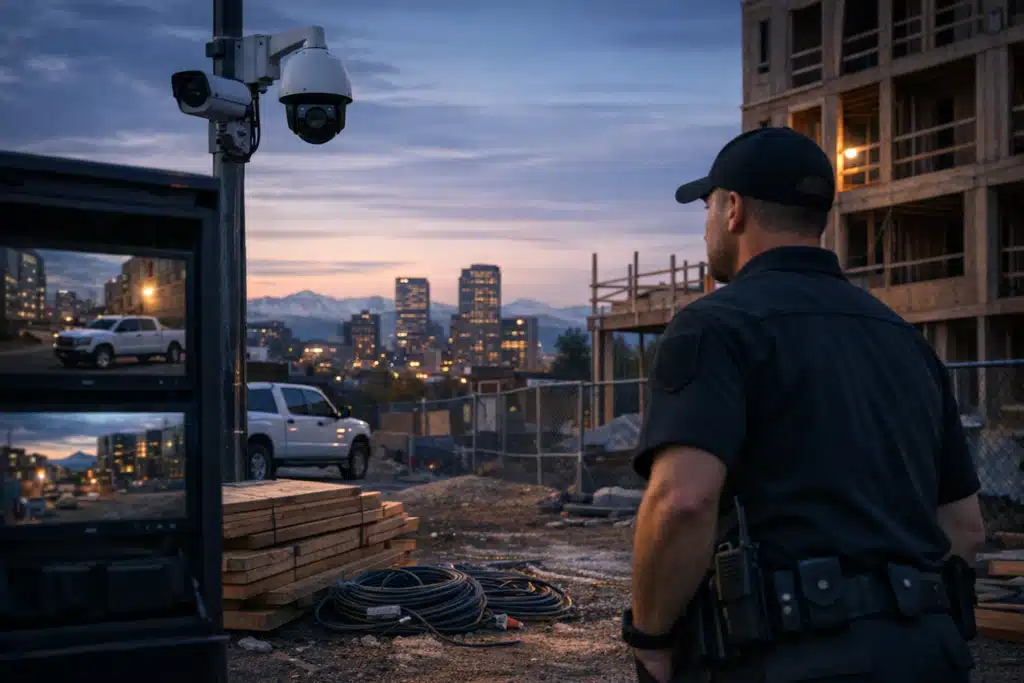
Copper wire, catalytic converters, and power tools top the theft list every autumn. Metal prices stay high, and unfinished buildings hold exposed wiring.
The Specific Threats We See From September to November
- Copper theft: Exposed wiring in framed-but-unfinished structures draws repeat offenders.
- Equipment loss: Skid steers, generators, and compressors sit idle overnight.
- Catalytic converter cuts: Fleet trucks parked on-site get hit in minutes.
- Material grabs: Lumber and copper fittings vanish before inventory counts.
- Trespassing: Vacant lots attract loitering once darkness arrives early.
Sites in LoDo, RiNo, and the Highlands see heavy residential and mixed-use builds. Those neighborhoods draw foot traffic that masks after-hours intruders.
How Early Darkness Extends the Vulnerability Window
A summer site might stay active until 8 p.m. under natural light. An autumn site goes dark by 6 p.m., with crews gone by 4:30.
That leaves a longer unguarded window every single night. Multiply that across a two-month build phase, and exposure adds up fast.
How Rocky Mountain Weather Affects Site Protection
Denver’s first snow often arrives in October. Early storms create security gaps that summer planning never accounts for.
Power and Camera Failures During Storms
Wet, heavy snow snaps limbs and knocks out temporary power poles. When power drops, so do cameras that rely on jobsite feeds.
Battery backups and cellular-connected systems keep remote monitoring running during outages. Hardwired-only setups go blind the moment the grid fails.
Cold Weather and Equipment Reliability
Sub-freezing nights drain camera batteries faster and fog lenses at dawn. Snow buildup can block fixed camera angles entirely.
A fall security assessment checks for these weak points before the first storm. We reposition cameras, add heaters, and confirm backup power holds.
Access and Response Times in Snow
Snow slows everyone, including responders. A site in Aurora or the far southeast metro may sit farther from patrol routes.
Planning response logistics before winter prevents delays when an alarm triggers at 2 a.m.
On-Site Guards Versus Remote Video Monitoring
Both methods protect autumn projects, and many Denver sites use a mix. Choosing depends on site size, budget, and risk level.
When On-Site Guards Make Sense
Physical guards suit active sites with constant deliveries or high-value equipment. A guard verifies credentials and deters confrontation directly.
- Large commercial builds with multiple access points
- Sites storing generators, copper reels, or heavy machinery
- Downtown projects near pedestrian traffic
- Jobs requiring delivery check-ins and gate control
When Remote Monitoring Wins
Remote video monitoring covers wide perimeters at lower cost than round-the-clock guards. Operators watch live feeds and speak through on-site speakers to warn off intruders.
- Fenced lots with clear camera sightlines
- Budget-conscious projects needing overnight coverage
- Sites with recurring after-hours trespassing
- Remote locations where guard staffing costs climb
The Combined Model Most Denver Builds Use
Many fall projects pair a single evening guard with overnight camera monitoring. The guard covers the dusk handoff; cameras hold the line until dawn.
This keeps costs reasonable during the longer autumn night window.
Steps to Evaluate Your Site’s Autumn Security Needs
To protect your Denver construction site this fall, follow these steps:
- Map your daylight gap. Note when crews leave versus when darkness falls. That window is your highest-risk period.
- Inventory high-theft targets. List copper, generators, fuel, and tools. Rank by value and portability.
- Check your perimeter. Walk the fence line. Mark blind spots, weak gates, and low-light corners.
- Test power resilience. Confirm cameras run on backup during an outage. Add cellular feeds where needed.
- Plan for snow. Reposition cameras above expected drift lines. Clear sightlines of branches and signage.
- Set a response protocol. Decide who gets called and how fast patrols can reach the site in snow.
Twin City Security Denver runs this evaluation as a seasonal site assessment. We walk your lot, flag weak points, and build a coverage plan around your schedule.

 Posted on Google
Lighting and Access Control for Fall Jobsites
Lighting does more than help cameras. It removes the darkness that intruders rely on.
Practical Lighting Fixes Before Winter
- Install motion-activated floodlights at entry points
- Add solar-backed lights where temporary power is unreliable
- Light material storage zones and equipment yards first
- Angle lights to avoid camera glare and washout
Controlling Who Gets In
Single-gate entry simplifies monitoring. One controlled access point beats three open ones every time.
Log deliveries, verify subcontractors, and lock gates the moment crews leave. Clear access rules cut internal theft, which accounts for real losses on busy sites.
What a Denver Construction Security Plan Should Cover
A strong fall plan addresses weather, darkness, and local crime patterns together. Here is what we include in a site assessment:
- Risk mapping based on neighborhood and material value
- Camera placement accounting for snow, glare, and blind spots
- Backup power for storm-related outages
- Guard scheduling matched to the autumn daylight gap
- Response protocols for alarms during snowstorms
- Lighting and access upgrades before the first freeze
Every Denver site differs. A Capitol Hill infill project faces different pressures than a sprawling Aurora development.
Protect Your Autumn Projects Before the First Snow
Shorter days, metal theft, and early storms make fall a high-risk stretch for Denver construction sites. A seasonal assessment closes the gaps before winter arrives.
Twin City Security Denver builds site plans that match your schedule, budget, and neighborhood risk. Call 303‑574‑0000, email Denver@TwinCitySecurity.com, or visit https://www.twincitysecuritydenver.com for a construction security assessment.
Sources
- Denver Police Department – Crime Map and Statistics
- National Weather Service – Denver/Boulder Forecast Office
- National Insurance Crime Bureau – Theft and Metal Crime News
Autumn creates higher security risks for Denver construction sites due to earlier darkness, metal theft, and early snowstorms. Twin City Security Denver offers seasonal assessments to address these fall-specific challenges.
- Denver loses about three minutes of daylight daily in October, giving thieves extra hours of cover before crews leave. Copper wire, tools, generators, and catalytic converters are top theft targets during this season.
- Early snowstorms can knock out power and cameras, while cold weather drains batteries and fogs lenses. Backup power and cellular-connected systems help maintain monitoring during outages.
- A combined approach using evening guards with overnight remote video monitoring suits most Denver builds. Sites should map daylight gaps, test power resilience, and set response protocols before winter arrives.


