

How to Implement Seasonal Security Measures for Denver’s Apartment Complexes This Fall
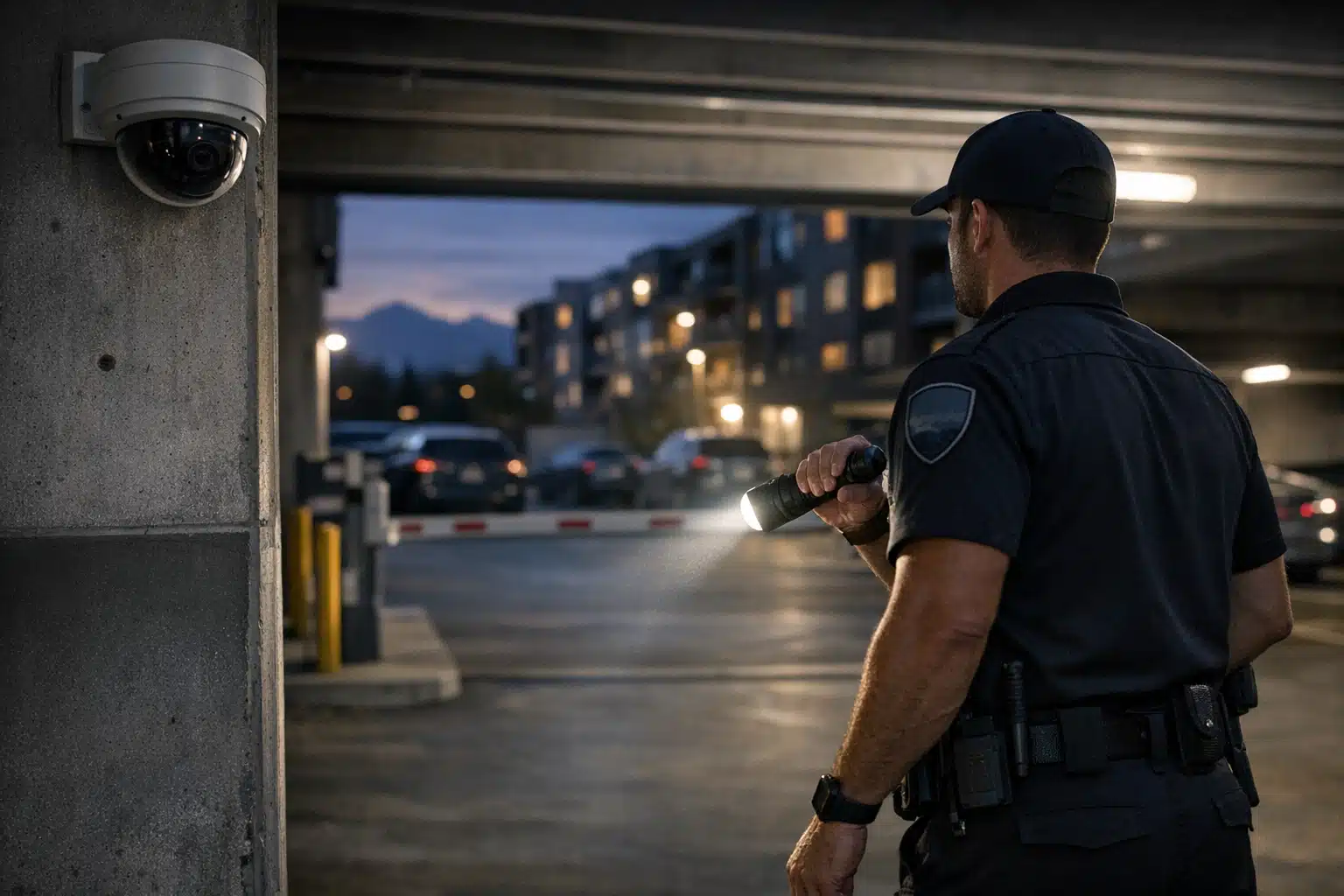
Start by adjusting lighting schedules to match shorter daylight hours, as Denver loses nearly three hours of daylight between September and December. Upgrade exterior lighting in parking areas and walkways, trim overgrown landscaping that creates hiding spots, inspect and maintain surveillance cameras, and coordinate with local law enforcement for increased patrols during early evening hours.
Why Fall Changes the Security Math for Denver Apartment Complexes
Daylight in Denver shrinks by nearly three hours between September and December. That shift alone reshapes how risk moves across your property.
Darker evenings mean more cover for trespassers near entryways, mail rooms, and parking structures. Apartment security plans built for summer rarely hold up once the clocks change.
This post breaks down fall-specific risks for Denver rental communities. You get concrete steps, neighborhood-aware tactics, and a clear picture of where on-site guards and remote cameras earn their keep.
Fall Crime Trends That Hit Denver Apartment Communities Hardest
Three patterns repeat across Denver properties every autumn. Each one has a direct countermeasure.
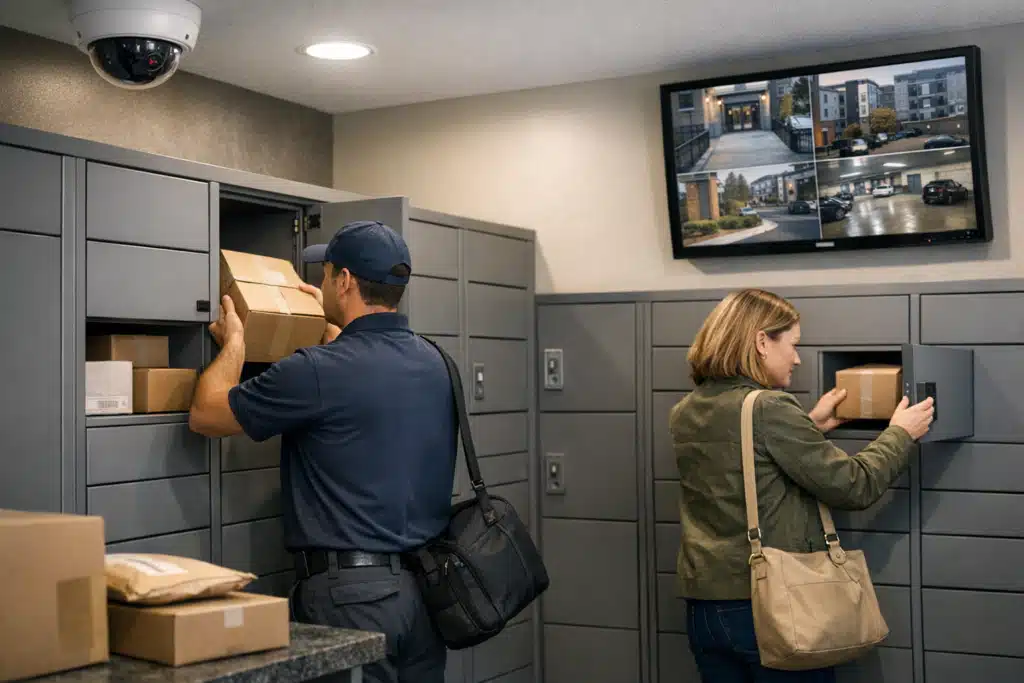
1. Package Theft Climbs With Holiday Shipping
Online orders spike from October onward. Package rooms and lobby drop zones become targets within minutes of a delivery.
Thieves follow delivery trucks into open parking garages. A single propped door can expose dozens of units.
2. Vehicle Break-Ins Rise in Dim Parking Areas
Colorado reported more than 30,000 motor vehicle thefts in recent years, with the Denver metro carrying a heavy share. Covered garages and poorly lit surface lots draw the most activity after sunset.
Catalytic converter theft remains a repeat problem across Aurora and the Highlands. Vehicles parked overnight without camera coverage are easy marks.
3. Trespassing and Loitering Increase as Temperatures Drop
Heated stairwells, laundry rooms, and garage corners attract unauthorized overnight use. Property managers in Capitol Hill see this pattern every November.
Unmonitored common areas turn into shelter points. Residents notice, and complaints follow.
How to Build Seasonal Measures Into Your Apartment Security Plan
Effective fall protection starts with a walk-through before the first freeze. Follow these steps in order.
- Audit lighting by 6 p.m., not noon. Walk the property after dark to find dead zones cameras cannot cover.
- Secure every package touchpoint. Lock mail rooms and add camera coverage on delivery drop areas.
- Map parking blind spots. Note stairwells, corner stalls, and ramp entries with no clear sightline.
- Check all exterior door closers. Fall temperature swings warp frames and leave doors ajar.
- Set a patrol schedule around dusk. The hour after sunset carries the highest trespass risk.
Each step maps to a repeatable fall checklist. Run it again after the first snowfall, when conditions change fast.
Lighting Fixes That Matter in Denver’s Short Days
Motion-activated LED fixtures near entryways cut loitering without raising power bills. Place them at stairwell tops and garage ramps first.
Cold weather dims some older bulbs. Swap failing fixtures before temperatures fall below freezing.
Where Remote Video Surveillance Outperforms Cameras Alone
Recorded footage helps after a crime. Live-monitored cameras stop one in progress.
Remote surveillance pairs trained operators with your camera feeds. When someone enters a restricted garage at 2 a.m., an operator can issue a live voice warning.
That spoken intervention moves people along before they act. For Denver apartment communities with limited overnight staff, this fills the gap between residents and police response.
What Remote Monitoring Covers on a Fall Night
- Package rooms during peak delivery hours
- Parking structures after sunset when break-ins cluster
- Pool and amenity areas closed for the season
- Perimeter gates prone to tailgating entries
Operators log events with timestamps. That record supports both police reports and insurance claims.
On-Site Guards for High-Traffic Denver Properties
Large complexes in LoDo and along the light rail corridor draw foot traffic that cameras cannot fully address. A visible guard changes behavior at the entrance.
On-site officers handle resident lockouts, escort requests, and after-hours disturbances. During fall, they also catch propped doors and failed locks on patrol.
Pairing Guards With Remote Feeds
The strongest fall setup combines both. A single on-site officer backed by remote operators covers more ground than either alone.
Operators direct the guard to the exact location of an alert. Response time drops from minutes to seconds.

 Posted on Google
Preparing for Denver’s High-Altitude Winter Transition
Fall security planning sets up winter readiness. Snow and ice create new access problems fast.
Cameras need housings rated for sub-zero overnight lows along the Front Range. Lenses fog and freeze without proper enclosures.
Check these items before the first heavy snow:
- Camera housings rated for Colorado winter lows
- Backup power for monitoring during outages
- Clear sightlines where snow piles can block views
- De-iced walkways near monitored entry points
A frozen or buried camera protects nothing. Fall is the window to fix it.
Budgeting Seasonal Measures Without Overspending
You do not need coverage everywhere at once. Start with your two highest-risk zones.
For most Denver apartment communities, that means parking areas and package rooms. These two spots account for the bulk of fall incident reports.
Scale coverage as the holiday delivery peak arrives in November. Remote monitoring lets you add watched hours without hiring full-time staff.
Your Fall Apartment Security Action Plan
Shorter days and rising deliveries put Denver apartment communities under new pressure every fall. Package rooms, dim garages, and warm common areas top the risk list from October through December.
Pairing live remote surveillance with on-site patrols closes the gaps that recorded footage alone leaves open. Act before the first freeze, not after the first break-in.
Twin City Security Denver builds fall and winter protection plans around your property’s real risk points. Call 303‑574‑0000 or email Denver@TwinCitySecurity.com for a Denver apartment security assessment. Visit https://www.twincitysecuritydenver.com to request a monitoring quote.
Sources
- Colorado Bureau of Investigation – Colorado Crime Statistics
- Denver Police Department – Crime Information and Data
- National Weather Service – Denver/Boulder Forecast Office
Twin City Security Denver explains how fall's shorter days create new security risks for apartment complexes, including increased package theft, vehicle break-ins, and trespassing in heated common areas.
- Daylight shrinks by nearly three hours between September and December, giving trespassers more cover near entryways, mail rooms, and parking structures. Property managers should audit lighting after dark and secure all package touchpoints before the first freeze.
- Remote video surveillance with live monitoring can stop crimes in progress through voice warnings, while on-site guards handle resident needs and catch propped doors on patrol. Combining both provides the strongest coverage.
- Fall is the time to prepare cameras for winter by checking housings rated for sub-zero temperatures and clearing sightlines where snow can block views. Start with the two highest-risk zones - parking areas and package rooms.


