

Choosing Between Mobile Patrols and Stationary Guards for Denver’s Apartment Complexes
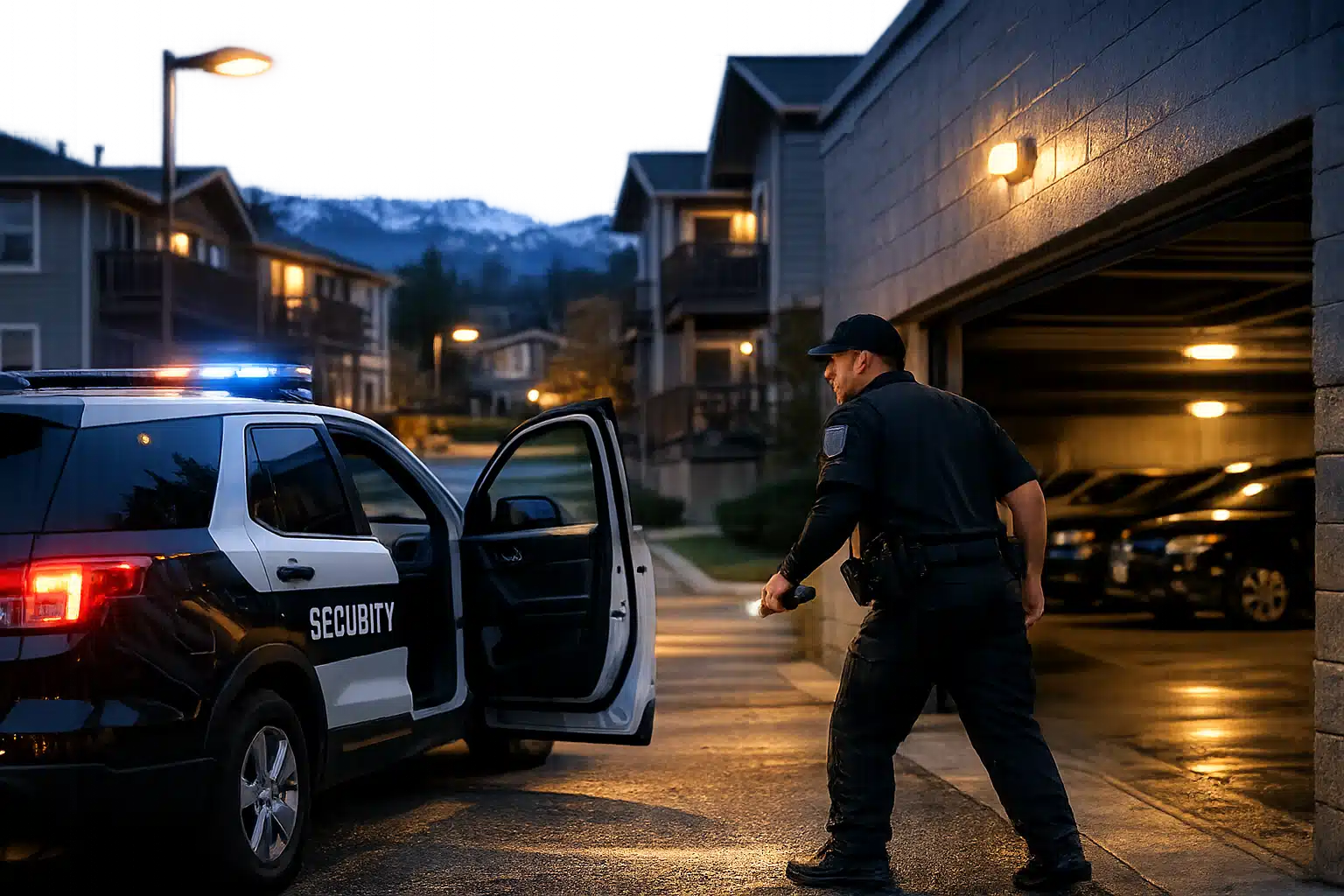
Choosing between mobile patrols and stationary guards depends on your apartment complex's specific security needs. Mobile patrols cover larger areas and deter crimes like car break-ins across parking lots, while stationary guards provide a constant presence at entry points to prevent unauthorized access. Consider your property's layout, crime patterns, and budget when deciding which option best protects residents.
Apartment Security Choices in Denver Start With Property Layout
Denver reported over 26,000 property crime incidents in a single recent year, with apartment communities absorbing a large share. Property managers in areas like Capitol Hill and Aurora face car break-ins, package theft, and after-hours trespassing. Choosing between mobile patrols and stationary guards shapes how well your community responds.
This post breaks down the difference between the two methods. You will learn which fits garden-style complexes, high-rises, and sprawling suburban properties.
What Mobile Patrols Actually Do at Denver Apartments
Mobile patrols use marked vehicles to circle a property on a set or randomized schedule. A guard checks parking garages, laundry rooms, mailrooms, and dark corners. Then they move to the next stop or the next property.
For a 200-unit garden complex in Green Valley Ranch, one patrol vehicle can cover the full footprint in 20 minutes. That visible presence discourages catalytic converter theft, a problem that spiked across Denver metro parking lots.
Strengths of Mobile Patrols
- Lower cost per property since one officer serves several sites in a shift.
- Wide coverage for spread-out complexes with detached buildings.
- Randomized timing that keeps trespassers guessing.
- Fast winter response when icy walkways and dead cars need eyes.
Weak Spots of Mobile Patrols
A patrol is not everywhere at once. If an incident happens right after the vehicle leaves, response time stretches. Gaps between rounds create windows a determined intruder can exploit.
What Stationary Guards Bring to a Single Property
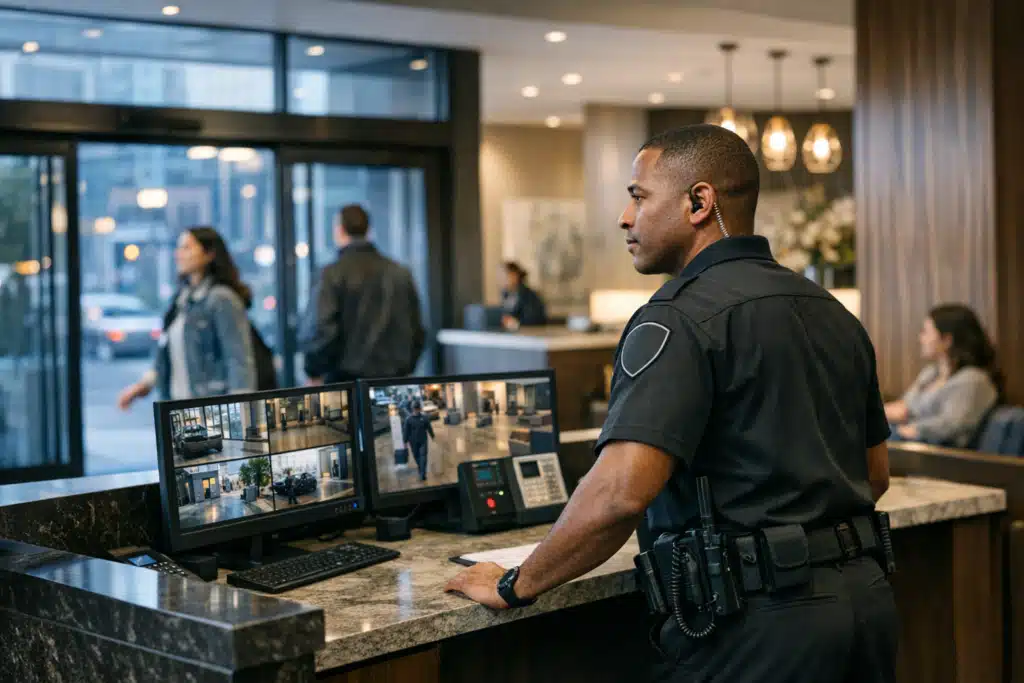
Stationary guards stay posted at one location for the full shift. They work a lobby, a gated entrance, or a leasing office. Residents see the same faces and build trust over time.
For a downtown high-rise near LoDo, a fixed post at the main entrance controls who enters. That constant presence matters where foot traffic runs heavy day and night.
Strengths of Stationary Guards
- Instant response to disputes, lockouts, or medical calls.
- Access control at a single gate or lobby door.
- Resident familiarity that improves reporting and cooperation.
- Deterrence for buildings with a known crime history.
Weak Spots of Stationary Guards
One post covers one area. A guard at the front door cannot watch a back alley or a detached garage. Costs climb fast if a large property needs several posts at once.
How Denver Weather Changes the Decision
Rocky Mountain winters affect both methods. Snow, ice, and sub-zero nights reshape how officers work and where risk builds.
Mobile patrols catch frozen pipes, blocked fire lanes, and stranded residents across a property. A heated vehicle keeps an officer moving in a January cold snap.
Stationary guards stay warm at a post but lose reach in bad weather. During a heavy snowfall in Highlands, a fixed guard may miss a break-in two buildings away.
Matching the Method to Your Denver Property
The right choice depends on layout, budget, and crime patterns. Use this quick reference for common Denver apartment types.
- Garden-style suburban complex (Aurora, Green Valley Ranch): Mobile patrols fit the spread-out design and lower density.
- Downtown high-rise (LoDo, Capitol Hill): Stationary guards control single-entry access and heavy traffic.
- Mid-size gated community: A stationary gate guard plus overnight mobile patrols covers both entry and grounds.
- Properties with active theft trends: Combine both methods until incident reports drop.

 Posted on Google
Adding Remote Video Surveillance to Either Method
Remote video monitoring stretches your security budget further. Cameras with live agents watch parking lots and entrances between patrol rounds. Agents speak through on-site speakers to warn off trespassers in real time.
A garden complex can run one nightly mobile patrol backed by monitored cameras. That pairing closes the coverage gaps mobile patrols leave behind. It costs less than posting guards at every building.
When Remote Monitoring Makes the Most Sense
- Large parking areas hit by vehicle theft.
- Package rooms with repeat porch-piracy claims.
- Pools and amenity spaces that need after-hours enforcement.
- Budgets that cannot cover 24-hour on-site staffing.
Cost Comparison for Denver Apartment Managers
Stationary guards cost more per property because one officer serves one site. A single 24-hour post can require three shifts and multiple staff. Mobile patrols spread that expense across several clients.
Remote surveillance lowers the total further. Many Denver managers pair a few nightly patrol checks with monitored cameras. That mix holds down cost while keeping eyes on the property.
Questions to Ask Before You Hire
- Are your officers licensed under Colorado guard regulations?
- How are patrol rounds logged and reported to management?
- What is the average response time for an alarm or call?
- Can you combine mobile patrols with remote video monitoring?
- How do officers handle winter storm conditions on-site?
Clear answers separate a serious provider from a weak one. Ask for sample patrol logs before signing any agreement.
Conclusion
Mobile patrols cover spread-out Denver complexes at lower cost, but leave timing gaps. Stationary guards give instant response at one point, at a higher price. Most apartment communities do best with a mix, backed by remote video monitoring.
Twin City Security Denver builds security plans around your property layout and budget. Call 303‑574‑0000 or email Denver@TwinCitySecurity.com for a Denver apartment security assessment.
Sources
- Denver Police Department – Crime Statistics and Reporting
- Colorado Department of Regulatory Agencies – Division of Professions and Occupations
- FBI – Uniform Crime Reporting Program
Denver apartment managers must choose between mobile patrols and stationary guards based on property layout, budget, and crime patterns. Most communities benefit from combining both methods with remote video monitoring.
- Mobile patrols cost less and cover spread-out complexes like garden-style apartments, but leave timing gaps between rounds that intruders can exploit.
- Stationary guards provide instant response and access control at single entry points, making them ideal for downtown high-rises, though costs rise when multiple posts are needed.
- Remote video surveillance with live monitoring agents can close coverage gaps and reduce expenses when paired with either security method.


