

Maximizing Security for Denver’s High-End Residential Areas
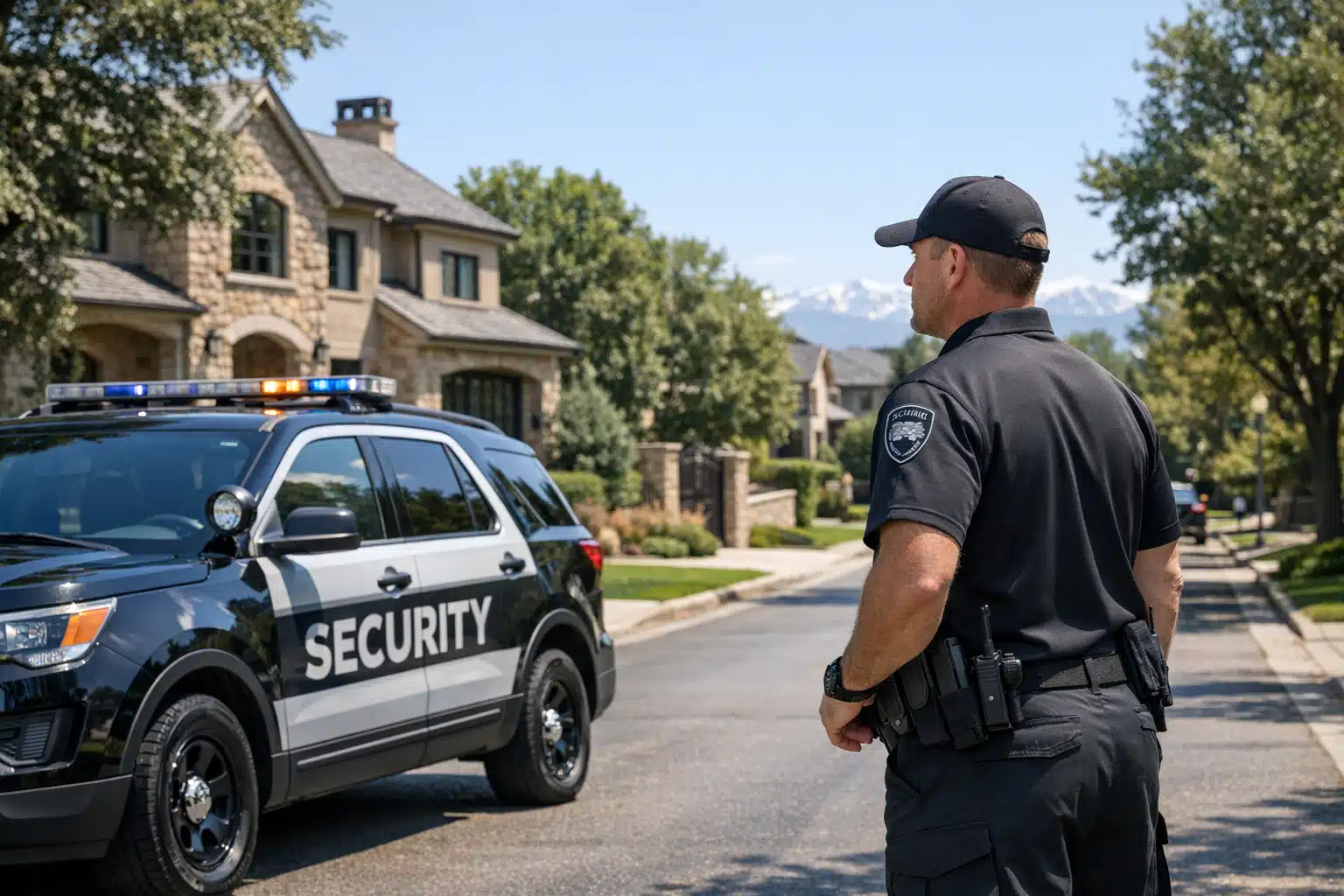
Securing luxury Denver homes requires a layered approach combining professional monitoring systems, strategic lighting, and reinforced entry points. Properties in areas like Cherry Creek and Hilltop benefit from perimeter cameras, motion sensors, and smart locks. Mature landscaping should be trimmed to eliminate hiding spots, while visible security signage serves as an effective deterrent against targeted property crimes.
Why Upscale Denver Neighborhoods Face Different Security Risks
Denver’s high-end neighborhoods draw a specific kind of criminal attention. Homes in Cherry Creek, Hilltop, and Country Club hold expensive vehicles, art, and electronics behind wide setbacks and mature landscaping.
That same landscaping gives intruders cover. Residential security for these areas requires more than a doorbell camera and a yard sign.
This post breaks down the exact strategies that protect luxury Denver properties. You will learn how guard patrols, remote video monitoring, and winter-specific planning work together across upscale neighborhoods.
How Property Crime Actually Hits Denver’s High-End Areas
Burglary crews target affluent zip codes because the payoff per hit is larger. A single break-in in Hilltop can net jewelry, watches, and cash worth more than a dozen average homes.
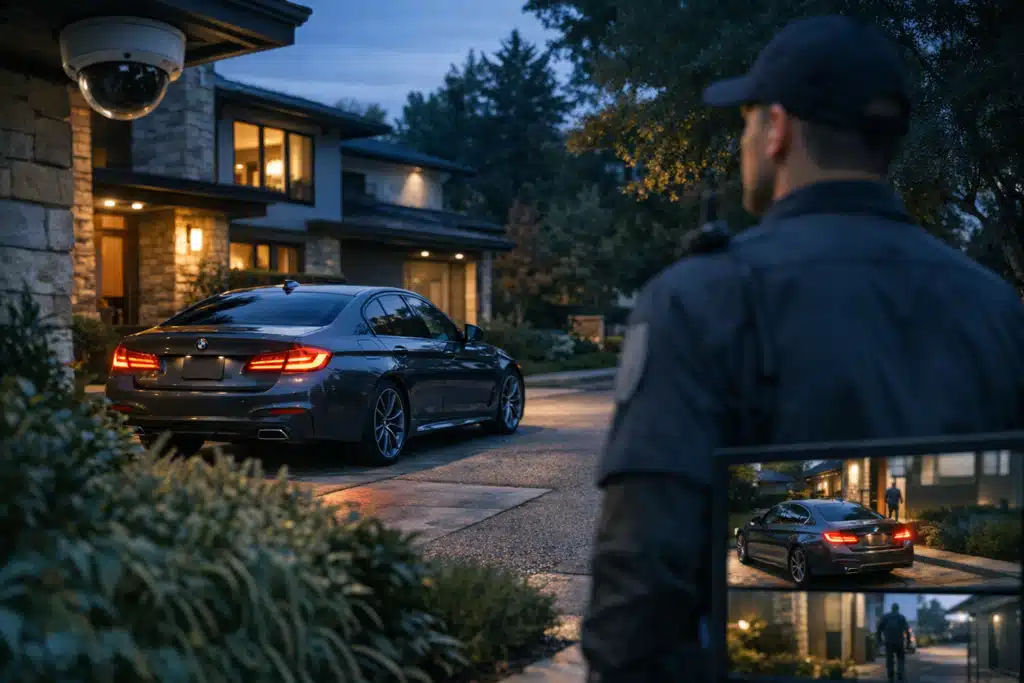
Denver police data shows motor vehicle theft remains one of the city’s most common property crimes. Luxury SUVs and European sedans parked in visible driveways are frequent marks.
Common Attack Patterns in Upscale Denver Blocks
- Daytime “knock-knock” burglaries when residents are at work
- Package and porch theft along quiet, low-traffic streets
- Vehicle break-ins targeting garage remotes and registration data
- Landscaping crews and delivery timing used to scout occupancy
- Follow-home robberies after retail purchases in Cherry Creek North
These patterns share one trait. Criminals study routine before they strike.
Building Residential Security Around Layered Defense
Effective protection for high-end areas uses three layers that reinforce each other. No single tool covers every gap.
Layer One: On-Site Guard Presence
A marked patrol vehicle changes attacker math. When a guard rolls past a Country Club block every 40 minutes, scouting becomes risky.
Guards catch things cameras miss. An unfamiliar car idling near a driveway, a side gate left open, a stranger checking mailboxes.
Roving patrols work best for gated communities and clusters of luxury homes. One dedicated officer can cover several adjacent properties on a scheduled and randomized rotation.
Layer Two: Remote Video Monitoring
Live remote monitoring puts trained eyes on your property around the clock. Operators watch feeds in real time, not after a crime happens.
When motion triggers a camera at 2 a.m., an operator verifies the threat. If it is an intruder, they issue a live voice warning and dispatch police.
This matters because most home cameras only record. Recording tells you who robbed you. Live monitoring stops the robbery.
Layer Three: Access and Perimeter Control
High-end properties benefit from controlled entry points and clear sightlines. Trim landscaping near windows and gates removes hiding spots.
- Motion-activated lighting on all approach paths
- Cameras covering driveways, side yards, and rear entries
- Signage stating the property is under live monitoring
- Reinforced gates at community access points
Winter Security Challenges Specific to Denver Homes
Rocky Mountain winters create risks most security plans ignore. Snow, cold, and shorter days each change how properties get attacked and protected.
Snow Reveals Occupancy Patterns
An unshoveled driveway signals an empty house. Burglars read snow like a calendar, tracking which homes sit vacant during ski trips or holiday travel.
Guard patrols can log which properties look unoccupied and increase checks. A cleared walk and a passing patrol vehicle suggest someone is watching.
Cold Weather Affects Camera Performance
Cheap cameras fail below zero. Lenses fog, batteries drain, and infrared range drops in heavy snowfall.
Equipment rated for Colorado winters keeps working when temperatures hit single digits. This is where consumer gear and commercial-grade monitoring diverge.
Early Darkness Extends the Risk Window
In December, Denver loses daylight before 4:30 p.m. That gives intruders more cover during the hours residents are still commuting home.
Live monitoring and thermal-capable cameras close this gap. Operators track heat signatures even in full dark.
A Step-by-Step Security Plan for Luxury Denver Properties
Property managers and homeowners in high-end areas can follow this sequence to build real protection.
- Assess the property. Map every entry point, blind spot, and sightline from the street.
- Fix the perimeter. Trim cover, add lighting, and reinforce gates and side access.
- Install monitored cameras. Cover driveways, entries, and rear approaches with weather-rated units.
- Add live remote monitoring. Choose real-time operator response, not recording alone.
- Schedule guard patrols. Use randomized rotations across the block or community.
- Plan for winter. Increase checks on vacant homes and confirm cold-rated equipment.
- Review quarterly. Update the plan as travel schedules and threats shift.

 Posted on Google
Coordinating Security Across Neighborhoods and HOAs
Individual homes protect better as part of a wider plan. HOAs in Denver’s high-end areas gain leverage by pooling coverage.
A shared patrol contract lowers per-home cost. One officer covering a Hilltop cluster costs each household far less than private guards.
Community-wide monitoring also builds a record. When one home reports a suspicious vehicle, neighbors get alerted fast.
What HOAs Should Ask a Security Provider
- Are patrol routes randomized or fixed and predictable?
- Do operators issue live voice warnings during break-ins?
- Is camera equipment rated for Colorado winter conditions?
- How quickly do you dispatch and coordinate with Denver police?
- Can coverage scale during holiday travel seasons?
Why Local Denver Knowledge Matters
Security firms that know Denver read risk differently. They understand how Cherry Creek North retail traffic feeds follow-home robberies.
They know which quiet Hilltop streets sit dark at night. They track how snowfall exposes vacant homes during ski season.
Twin City Security Denver builds plans around these local realities. Guard patrols, live monitoring, and winter-ready equipment work together for high-end residential protection.
Protect Your High-End Denver Property
Luxury Denver homes need layered defense that combines guard presence, live remote monitoring, and Colorado-specific winter planning. Coordinated coverage across a block or HOA cuts cost and closes gaps.
Contact Twin City Security Denver for a residential security assessment or monitoring quote. Call 303‑574‑0000 or email Denver@TwinCitySecurity.com.
Sources
- Denver Police Department – Crime Map and Statistics
- FBI – Uniform Crime Reporting Program
- National Weather Service – Denver/Boulder Forecast Office
Denver's high-end neighborhoods like Cherry Creek, Hilltop, and Country Club face unique security risks due to valuable assets and landscaping that provides cover for intruders. Effective protection requires layered defense combining guard patrols, live remote monitoring, and winter-specific planning.
- Burglary crews target affluent areas for higher payoffs, using tactics like daytime break-ins, package theft, and follow-home robberies after studying residents' routines.
- Three security layers work together - on-site guard patrols that deter scouting, live remote video monitoring with real-time operator response, and perimeter controls including lighting and trimmed landscaping.
- Colorado winters create added risks as unshoveled driveways signal vacant homes, cheap cameras fail in cold temperatures, and early darkness extends the window for break-ins.


