

The Role of Security Patrols in Protecting Denver’s Schools During Fall
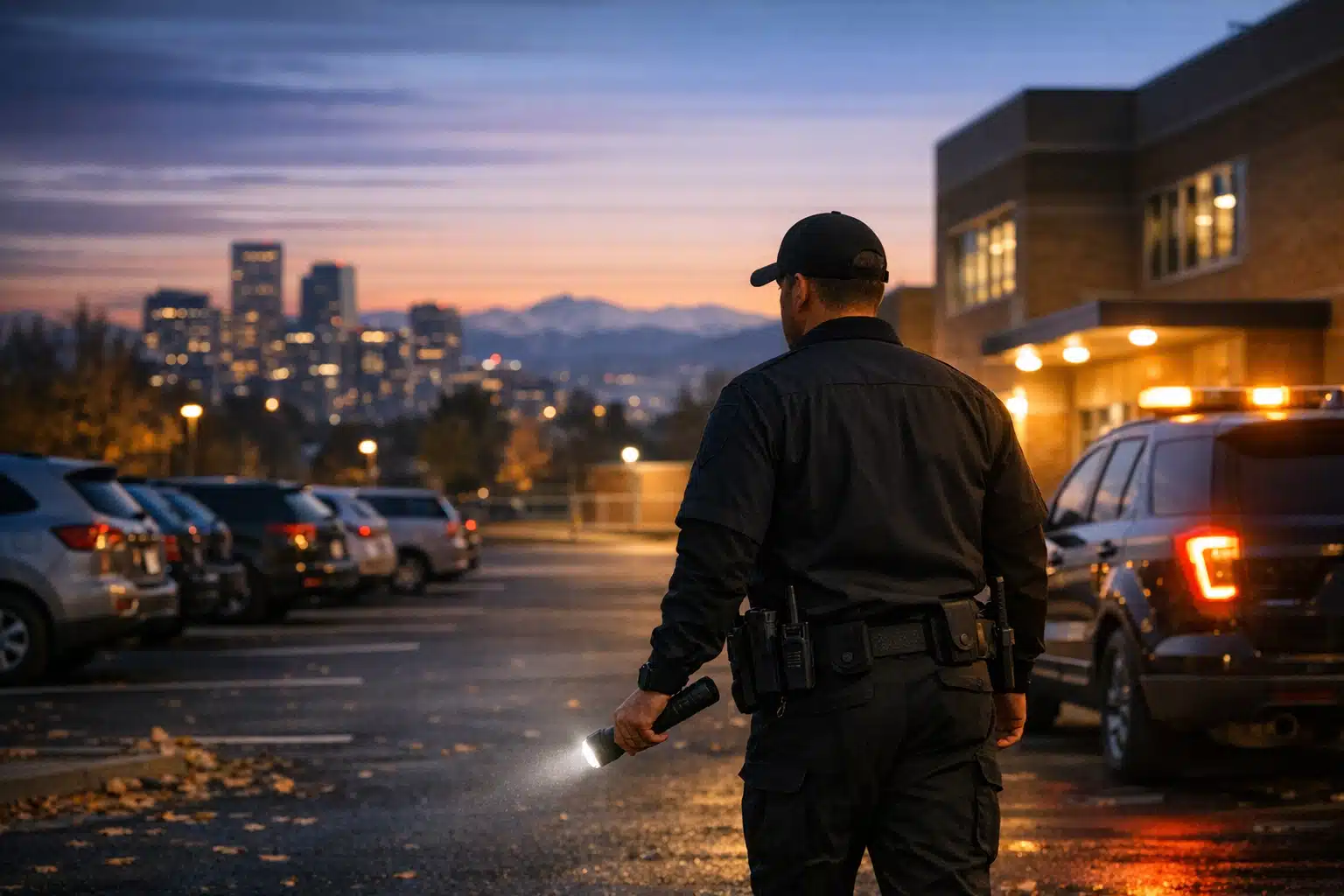
Security patrols play a key role in protecting Denver schools during fall by addressing seasonal safety challenges. As daylight hours decrease rapidly at high altitude, dismissal times often occur near dusk by late October. Patrols help monitor school grounds, manage traffic flow during pickup and drop-off, and maintain visibility during darker afternoon hours to keep students safe.
Fall Brings Specific Risks to Denver School Campuses
Denver schools face a shift in safety demands every September. Daylight shrinks fast at altitude, and dismissal often happens near dusk by late October.
Strong school security during fall means adjusting coverage to match shorter days, football crowds, and heavier traffic. This post breaks down the fall-specific threats Denver campuses see and how patrols address them.
Property managers, district administrators, and charter school operators across Capitol Hill, Aurora, and the Highlands all deal with the same seasonal pressures. The details below come from fieldwork on real Denver campuses.
Why Fall Changes the School Security Picture in Denver
Fall compresses the window of natural light. Denver sits at 5,280 feet, and sunset moves from past 7:30 p.m. in early September to near 4:40 p.m. after the time change in November.
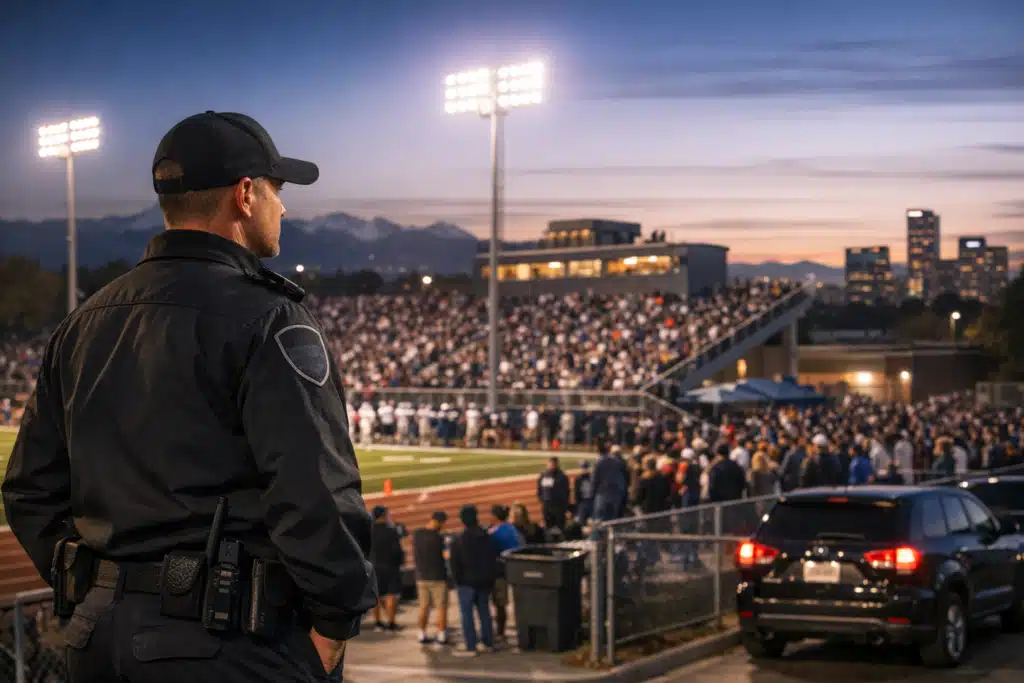
Darker parking lots and bus loops create blind spots. Foot traffic from after-school sports and theater keeps buildings occupied well past the final bell.
The Main Fall-Specific Threats
- Dusk-hour dismissals: Elementary pickups near Washington Park happen in fading light by November.
- Friday night football crowds: Large gatherings at campus stadiums draw outside visitors and parking congestion.
- Open-campus loitering: Cooler weather pushes teens and non-students into stairwells and covered entries.
- Vehicle break-ins: Packed event lots give thieves cover among hundreds of parked cars.
- Early-season snow: First storms arrive in October, icing walkways and slowing emergency response.
How Security Patrols Protect Denver Schools in Fall
Security patrols give campuses a visible deterrent that cameras alone cannot match. A uniformed officer walking the perimeter changes behavior before an incident starts.
Patrols work best when timed to the fall schedule, not a fixed year-round routine. Coverage should follow the people.
Step-by-Step: Building a Fall Patrol Plan
- Map your dusk hours. Identify when dismissal and activities fall after sunset each month.
- Prioritize dark zones. Assign foot patrols to bus loops, athletic fields, and rear parking lots.
- Add event-day coverage. Staff home games and performances with dedicated officers.
- Coordinate with staff. Share patrol timing with front-office and athletic directors.
- Adjust monthly. Shift start times earlier as daylight fades toward winter.
What Trained Officers Watch For
Officers do more than stand at a door. On a Denver campus in October, a patrol will check unlocked exterior doors propped open by athletes.
They monitor parking lots during games for break-in attempts. They verify that visitors sign in rather than drifting through side entrances.
During a first snow, officers flag icy ramps and clear sightlines near entrances. Small catches prevent injuries and liability claims.
Combining Patrols With Remote Video Surveillance
Patrols and remote monitoring cover each other’s gaps. One officer cannot watch every corner of a multi-building campus at once.
Remote video surveillance extends that reach. A live monitoring team watches feeds across the property and directs the on-site patrol to problems in real time.
How the Two Work Together
- Cameras spot it, patrols respond: A monitor sees loitering near the gym and radios the nearest officer.
- Night coverage without blind spots: Infrared cameras cover dark athletic fields after games.
- Verified alerts: Operators confirm real threats before calling Denver police, cutting false alarms.
- Recorded evidence: Footage supports incident reports and insurance claims.
For charter schools and smaller campuses with tight budgets, this pairing stretches coverage. You get eyes everywhere without staffing every corner.

 Posted on Google
Addressing Denver-Specific Concerns
Denver property crime runs above the national average, and school lots are soft targets during events. Catalytic converter theft has hit campus parking areas across Aurora and the metro.
Patrols reduce that exposure. A marked presence during Friday games pushes opportunistic thieves toward easier targets elsewhere.
Weather and Altitude Factors
Rocky Mountain weather turns fast. A 70-degree afternoon can drop into a snow squall by evening dismissal.
Officers trained for Colorado conditions dress for swings and stay posted when staff leave. Continuity during weather events keeps a campus covered when it matters most.
What Denver Schools Should Ask Before Hiring Security
Smart questions separate real protection from a warm body at a door. Ask any provider the following before signing.
- Are your officers licensed in Colorado? Confirm current state guard credentials.
- Can you flex patrol hours by season? Fall needs differ from spring.
- Do you offer paired remote monitoring? Combined coverage beats standalone patrols.
- How fast do you respond to an alert? Minutes count during an event incident.
- Do you know Denver event protocols? Local knowledge speeds coordination with police.
Protect Your Denver Campus This Fall
Fall security demands shorter-day coverage, event staffing, and weather readiness that generic plans miss. Patrols paired with remote surveillance close the gaps that cost schools time, money, and safety.
Twin City Security Denver builds fall patrol plans around your campus schedule and neighborhood. Call 303‑574‑0000 or email Denver@TwinCitySecurity.com for a Denver school security assessment.
Sources
- Colorado Public Radio – Denver Crime and Property Theft Trends
- U.S. Department of Education – Readiness and Emergency Management for Schools
- National Weather Service – Denver/Boulder Forecast Office
- Colorado Department of Regulatory Agencies – Private Security Guard Licensing
Denver schools face unique fall security challenges as daylight shrinks rapidly at altitude, with dismissal often occurring near dusk by late October. Security patrols paired with remote video surveillance help address threats like vehicle break-ins during events, loitering, and weather-related hazards.
- Fall compresses natural light in Denver, with sunset moving from 7:30 p.m. in September to 4:40 p.m. after the November time change, creating blind spots in parking lots and bus loops.
- Trained officers check for propped doors, monitor parking lots during games for break-in attempts, verify visitor sign-ins, and flag icy conditions during early snow events.
- Combining patrols with remote monitoring extends coverage across multi-building campuses, allowing live operators to direct officers to problems and verify threats before contacting police.


