

The Importance of Fire Watch Services for Denver’s Commercial Buildings in Fall
Fire watch services are critical for Denver's commercial buildings during fall because the season brings dry air, dropping humidity, and the first heating cycles of the year. These conditions significantly increase fire danger inside commercial properties. Professional fire watch personnel monitor buildings for potential hazards, respond quickly to emerging threats, and help maintain safety when environmental conditions heighten risk.
Fall Fire Risk Climbs for Denver’s Commercial Buildings
Denver’s fall brings dry air, dropping humidity, and the first heating cycles of the season. Each raises fire danger inside commercial buildings across the metro.
Fire watch services fill the gap when a building’s fire protection system goes offline. For Denver property managers, that gap appears more frequently as cold weather approaches.
This post explains what fire watch covers, when Colorado code requires it, and how Denver’s altitude and climate shape the risk. You will learn when to call for help and what a trained fire watch patrol does on-site.
What Fire Watch Services Actually Do
A fire watch is a trained person who patrols a building when its fire detection or suppression system is down. The patrol watches for smoke, heat, and hazards that an impaired system would miss.
Denver Fire Department requires fire watch in several situations. The most common include:
- Sprinkler system outage lasting more than four hours in a 24-hour period
- Fire alarm system failure or planned shutdown during maintenance
- Hot work like welding or cutting near combustible materials
- Standpipe or water supply interruption during building repairs
- Large public events where occupancy exceeds normal limits
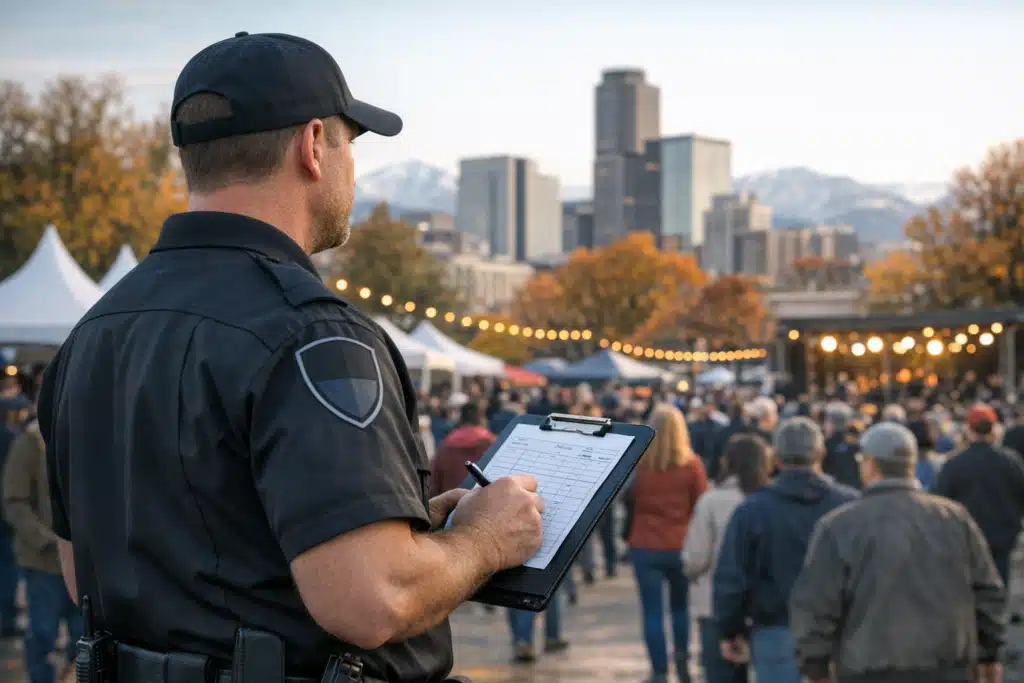
A fire watch guard keeps a written log. The log records patrol times, areas covered, and any hazard found. Denver Fire inspectors ask for this log, and a missing record can mean fines.
What a Patrol Looks Like in Practice
Picture a LoDo office building with a sprinkler main under repair. The guard walks every floor on a fixed schedule, usually every 30 to 60 minutes.
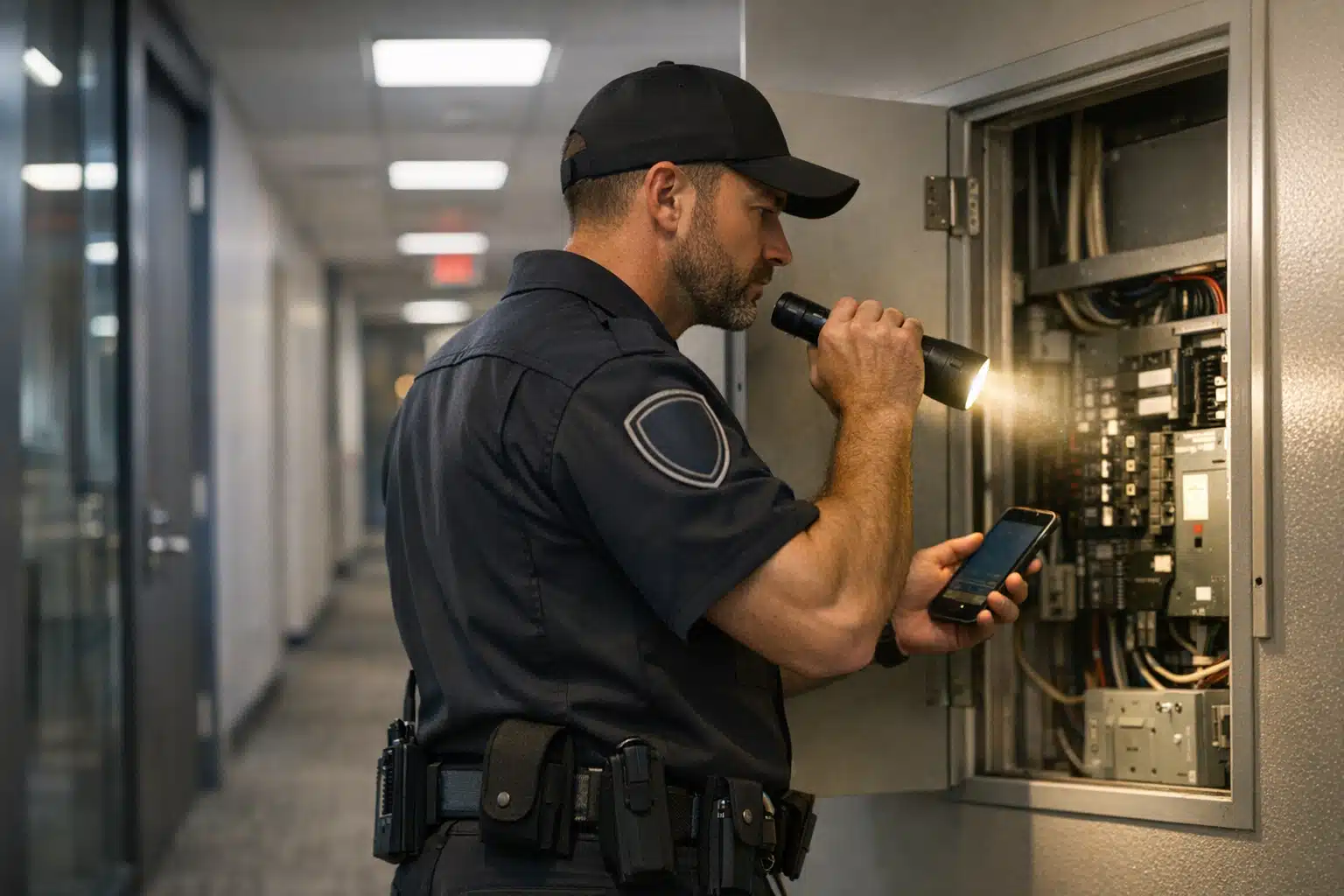
On each round the guard checks stairwells, mechanical rooms, and electrical closets. The guard carries a charged phone, a flashlight, and direct knowledge of the nearest pull stations and exits.
If smoke appears, the guard calls 911 first, then evacuates occupants. Speed matters most when the automatic system cannot act.
Why Denver’s Fall Weather Raises the Stakes
Denver sits at 5,280 feet. Thin, dry mountain air pulls moisture from wood, paper, and insulation faster than at sea level.
By October, relative humidity in the metro often drops below 30 percent. Dry materials ignite faster and fire spreads quicker.
Fall also marks the return of furnace use. Heating equipment is a leading cause of commercial structure fires once temperatures fall.
Heating Season Hazards in Older Buildings
Capitol Hill and Baker hold many converted older structures. Aging wiring and long-idle boilers both carry elevated risk when first fired up in fall.
A fire watch adds human eyes during the exact weeks when heating systems restart and detection systems sometimes need repair. Both events cluster in September and October.
Fire Watch for Denver Construction Sites in Fall
Construction crews rush to close out projects before winter. That push means more hot work, temporary heaters, and partially installed fire systems.
A building under construction frequently lacks working sprinklers. Colorado code treats that condition as a trigger for fire watch coverage.
For active Denver job sites, follow these steps during fall:
- Confirm your fire system status with the general contractor each day
- Schedule a fire watch whenever suppression is offline or incomplete
- Separate hot work zones from stored lumber and insulation
- Clear temporary heater areas of debris and flammable liquids
- Keep a written patrol log for Denver Fire inspection
Twin City Security Denver staffs fire watch guards who understand job-site rhythm. They coordinate with site supervisors and document every round.

 Posted on Google
Cannabis Facilities and Fire Watch Requirements
Colorado cannabis operators face stacked fire risk. Grow rooms run heavy electrical loads, and extraction areas handle flammable solvents.
When a cultivation facility’s fire alarm fails, state and local rules push operators toward immediate fire watch coverage. A failed system in an extraction space creates serious danger.
Denver cannabis operators should plan for:
- Solvent storage checks during every patrol round
- Electrical panel monitoring in high-draw grow rooms
- Clear evacuation paths around sealed, secured areas
- Coordination with security staff who already guard the product
A guard who already knows cannabis compliance can cover fire watch and site security at once. That overlap saves operators money during a system outage.
What It Costs and When to Call
Fire watch pricing depends on building size, patrol frequency, and coverage length. Larger buildings need more guards or more frequent rounds.
Call for fire watch coverage the moment you learn a system will go offline. Common triggers include:
- Scheduled sprinkler or alarm maintenance
- Unexpected system failure flagged by your monitoring company
- Hot work permits for welding or roofing
- Water main or standpipe repairs
Waiting risks both occupant safety and code penalties. Denver Fire can shut down a noncompliant building until coverage begins.
Pairing Fire Watch With Remote Video Monitoring
On-site guards cover the interior. Remote video adds eyes on perimeter doors, parking areas, and roofs during the same outage window.
For a large Aurora warehouse, one guard plus remote cameras can cover more ground than foot patrol alone. The combination fits buildings with wide floor plates or multiple structures.
Conclusion
Denver’s dry fall air, restarting furnaces, and year-end construction push all raise fire risk in commercial buildings. Fire watch coverage keeps occupants safe and keeps you compliant when detection systems go down.
Twin City Security Denver provides trained fire watch guards and remote video monitoring across the metro. Call 303‑574‑0000, email Denver@TwinCitySecurity.com, or visit https://www.twincitysecuritydenver.com for a Denver fire watch assessment.
Sources
- National Fire Protection Association – Fire Watch and Codes
- Denver Fire Department – Fire Prevention and Permits
- U.S. Fire Administration – Commercial Structure Fire Data
- National Weather Service Boulder – Denver Climate and Humidity
Denver's fall season increases fire risk in commercial buildings due to dry air, low humidity, and heating system startups. Fire watch services provide trained patrols when fire protection systems go offline, meeting Denver Fire Department requirements.
- Fire watch is required when sprinkler or alarm systems are down for more than four hours, during hot work, or when water supplies are interrupted. Guards patrol every 30 to 60 minutes and maintain written logs for inspectors.
- Denver's 5,280-foot elevation causes materials to dry faster, and October humidity often drops below 30 percent. Older buildings in areas like Capitol Hill face added risk when aging heating systems restart.
- Construction sites, cannabis facilities, and large warehouses benefit from fire watch coverage paired with remote video monitoring to maintain safety and avoid code penalties during system outages.


