

How Fire Watch Services Protect Construction Sites During Denver’s Dry Season
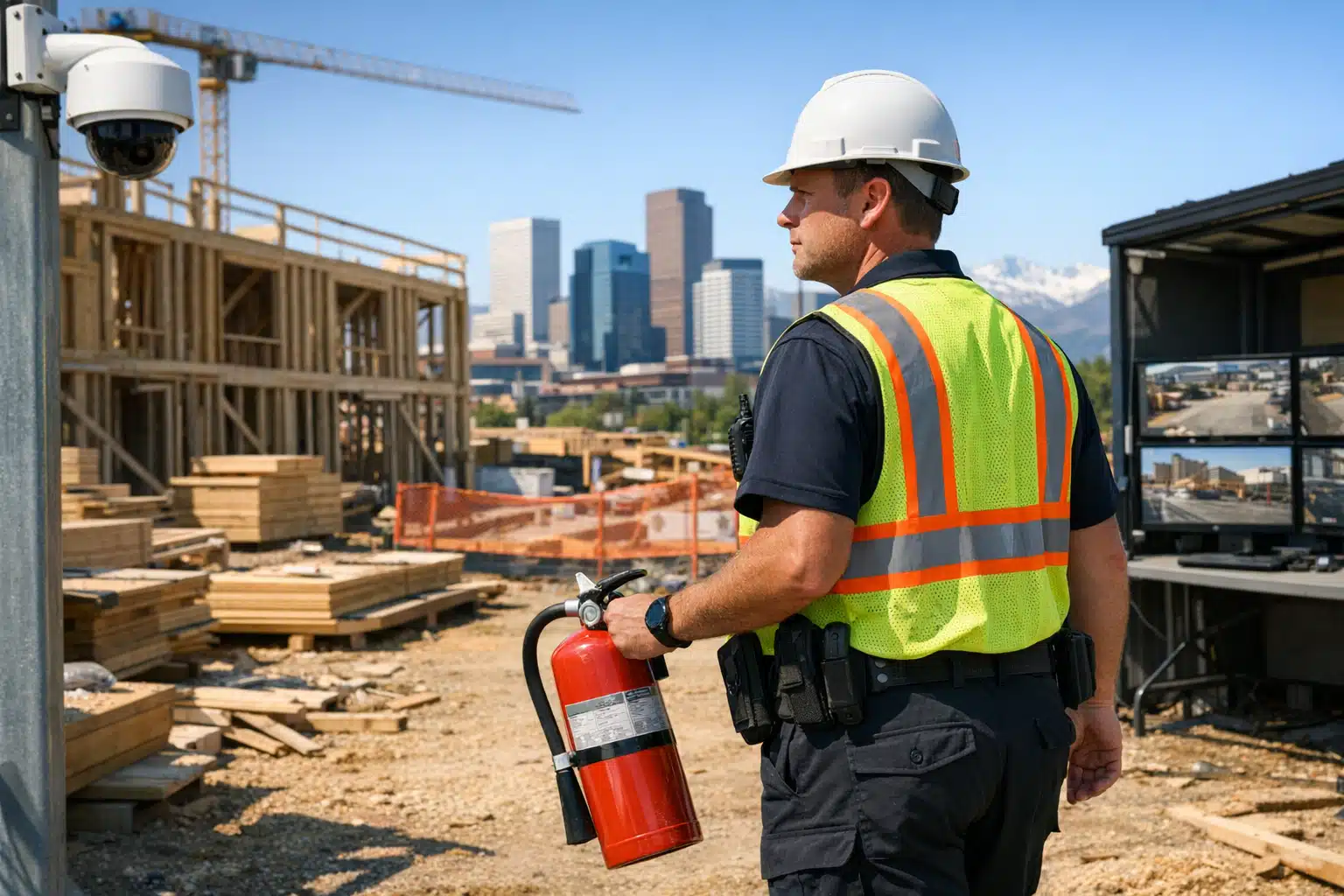
Fire watch services protect Denver construction sites during the dry season by providing trained personnel who patrol the area continuously, monitor hot work activities like welding and cutting, identify fire hazards before they escalate, and maintain firefighting equipment ready for immediate response. With Denver receiving fewer than 17 inches of annual precipitation, these services are especially critical from June through September when sites are at peak fire risk.
Denver’s Dry Season Turns Construction Sites Into Fire Risks
Denver averages fewer than 17 inches of precipitation a year. That semi-arid climate leaves construction sites bone-dry from June through September.
Add high-altitude sun, low humidity, and gusty Front Range winds, and a single spark becomes a real threat. This is where fire watch services earn their keep.
A fire watch is a trained person who monitors a site for fire hazards when normal fire protection is offline or when hot work happens. For Denver builders, that role matters most during the dry months.
This post breaks down when fire watch is required, what a proper watch covers, and how it keeps your project on schedule and code-compliant.
Why Denver’s Dry Season Raises Fire Risk on Job Sites
Colorado’s climate creates conditions most crews underestimate. Framing lumber, sawdust, and packaging dry out fast at 5,280 feet.
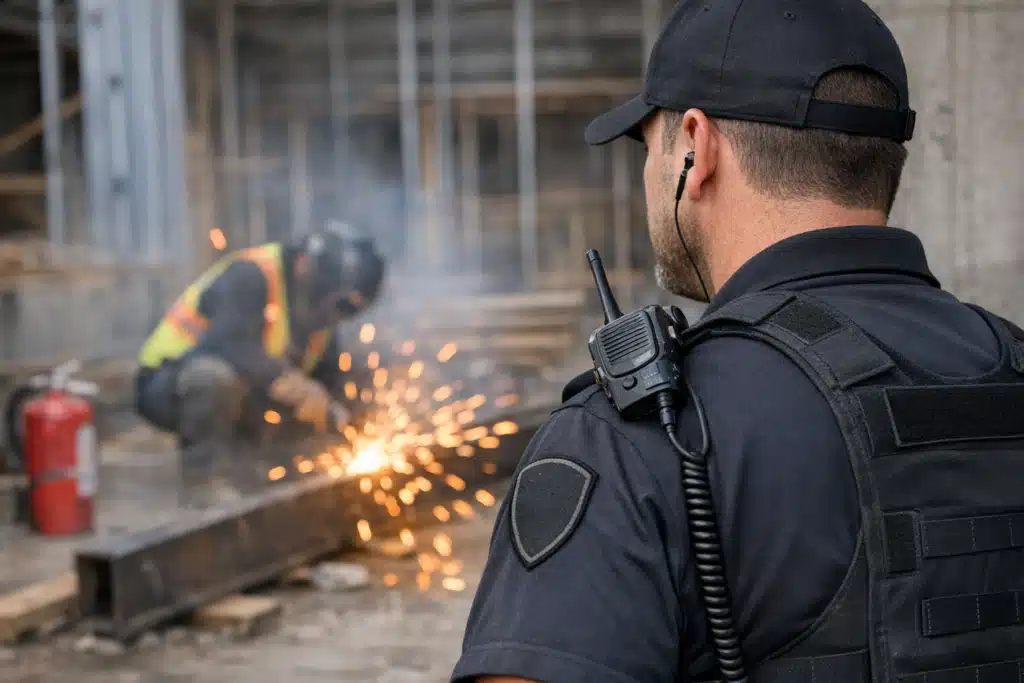
Low humidity means combustible material ignites easier and burns faster. Wind carries embers across open lots in seconds.
The Local Conditions That Drive the Risk
- Low humidity: Denver summer humidity frequently drops below 25%.
- High UV and heat: Direct sun bakes exposed framing and materials.
- Chinook and downslope winds: Front Range gusts spread flames quickly.
- Open, unfinished structures: No sprinklers or fire barriers yet exist.
Sites in Aurora, the Highlands, and RiNo see rapid vertical development. Many buildings sit without active fire protection for months.
What Fire Watch Services Cover on a Construction Site
A fire watch is more than someone standing near a fire extinguisher. It is active monitoring by a trained officer with a clear scope.
On a Denver construction site, a fire watch officer performs specific duties before, during, and after high-risk work.
Core Fire Watch Duties
- Patrol assigned areas on a fixed schedule.
- Watch hot work zones during welding, cutting, and grinding.
- Keep firefighting equipment staged and ready.
- Stay on site for 30 to 60 minutes after hot work ends.
- Log every patrol with time stamps and observations.
- Call 911 and alert crews the moment smoke appears.
That post-work watch period matters most. Many fires start after crews leave, when a smoldering ember finds fuel.
When Denver Code Requires a Fire Watch
Denver follows the International Fire Code, enforced by the Denver Fire Department. A fire watch becomes mandatory in several situations.
Common Triggers for a Required Fire Watch
- Impaired fire systems: Sprinklers or alarms taken offline during construction.
- Hot work permits: Welding or cutting near combustible materials.
- Large events: Assembly occupancies with occupancy concerns.
- System testing: Fire protection temporarily disabled for upgrades.
Skipping a required watch risks stop-work orders and fines. It also voids insurance coverage if a fire follows.
A documented fire watch log protects you during inspections and claims. That paper trail proves you met your duty of care.
Fire Watch Plus Remote Video Surveillance
On-site officers cover active work zones. Remote video surveillance covers the rest of the site around the clock.
Combined, they close the gaps that dry-season fires exploit. A camera can spot a glow in an unmanned corner at 2 a.m.
How the Two Layers Work Together
- Daytime: Fire watch officers monitor hot work and patrol.
- After hours: Thermal and motion cameras watch dark, empty lots.
- Alerts: Live monitoring flags heat signatures and intruders fast.
- Deterrence: Visible cameras reduce arson and trespassing.
Arson is a real threat on vacant Denver sites. An unfinished building with copper and tools attracts trouble after dark.

 Posted on Google
Steps to Protect Your Denver Construction Site This Dry Season
To reduce fire risk on your site during Denver’s dry months, follow these steps.
- Assess your hot work schedule. Identify every welding and cutting task.
- Confirm your fire code obligations. Check permit and system-impairment rules.
- Assign trained fire watch officers. Match coverage to your work hours.
- Stage fire extinguishers and water sources. Keep them within reach.
- Add remote video surveillance. Cover the site after crews leave.
- Document every patrol. Maintain logs for inspectors and insurers.
Each step lowers your exposure to loss and delay. A fire on an active build can push a project back months.
What a Fire Watch Costs Denver Builders
Cost depends on site size, hours of coverage, and risk level. A small lot with limited hot work needs less than a multi-story build.
Weigh that cost against the alternative. A single dry-season fire can destroy materials, halt work, and raise premiums for years.
Fire watch coverage is a small line item next to those losses. For most Denver projects, it pays for itself the first time it prevents a claim.
Protect Your Site Before the Next Dry Spell
Denver’s dry season leaves construction sites exposed to fast-moving fire risk. Fire watch officers and remote surveillance together guard your build day and night.
Twin City Security Denver staffs trained fire watch officers and monitors sites across the metro area. Call 303‑574‑0000 or email Denver@TwinCitySecurity.com for a site assessment and quote.
Sources
- National Weather Service – Denver/Boulder Forecast Office
- Denver Fire Department – City and County of Denver
- National Fire Protection Association – Codes and Standards
Denver's semi-arid climate creates high fire risk on construction sites from June through September, making fire watch services a key safeguard for builders during the dry season.
- Fire watch officers patrol sites, monitor hot work zones, stage firefighting equipment, and remain on site 30 to 60 minutes after welding or cutting ends to catch smoldering embers.
- Denver follows the International Fire Code and requires fire watch when sprinklers or alarms are offline, during hot work permits, or when fire systems are disabled for testing.
- Combining on-site fire watch with remote video surveillance provides around-the-clock coverage, catching heat signatures and deterring arson on vacant lots after crews leave.


