

How to Choose the Right Security Cameras for Denver’s Summer Heat
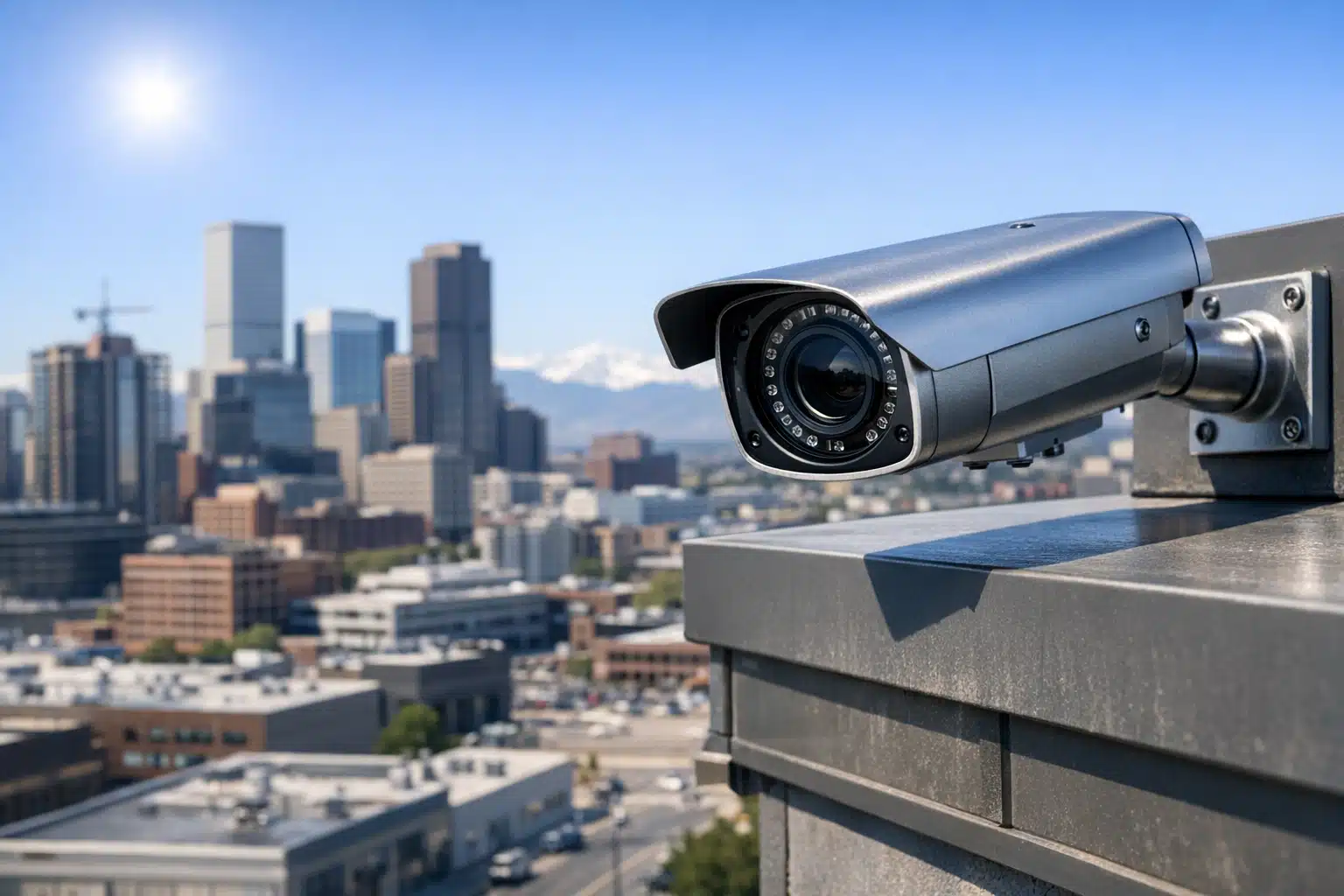
Select security cameras with an operating temperature rating of at least 140°F to 150°F, as Denver rooftops can exceed 150°F during summer months. Look for cameras with metal housings rather than plastic, UV-resistant coatings, and built-in cooling fans or heat sinks. Position cameras in shaded areas when possible and consider models with thermal protection features that prevent automatic shutdown during extreme heat.
Denver’s Summer Heat Puts Your Security Cameras to the Test
Denver records more than 60 days above 90°F each year, with rooftop surfaces climbing past 150°F. That level of exposure breaks down cheap electronics fast.
Picking the right security cameras for Denver means planning for altitude, direct sun, and wide daily temperature swings. A camera that works in Seattle can fail on a Highlands rooftop by August.
This post breaks down what heat does to camera hardware, which specs matter, and how Denver property owners protect their footage when temperatures spike.
Why Summer Heat Damages Security Cameras in Denver
Denver sits at 5,280 feet. Thinner air holds less moisture and blocks less ultraviolet radiation than lower elevations.
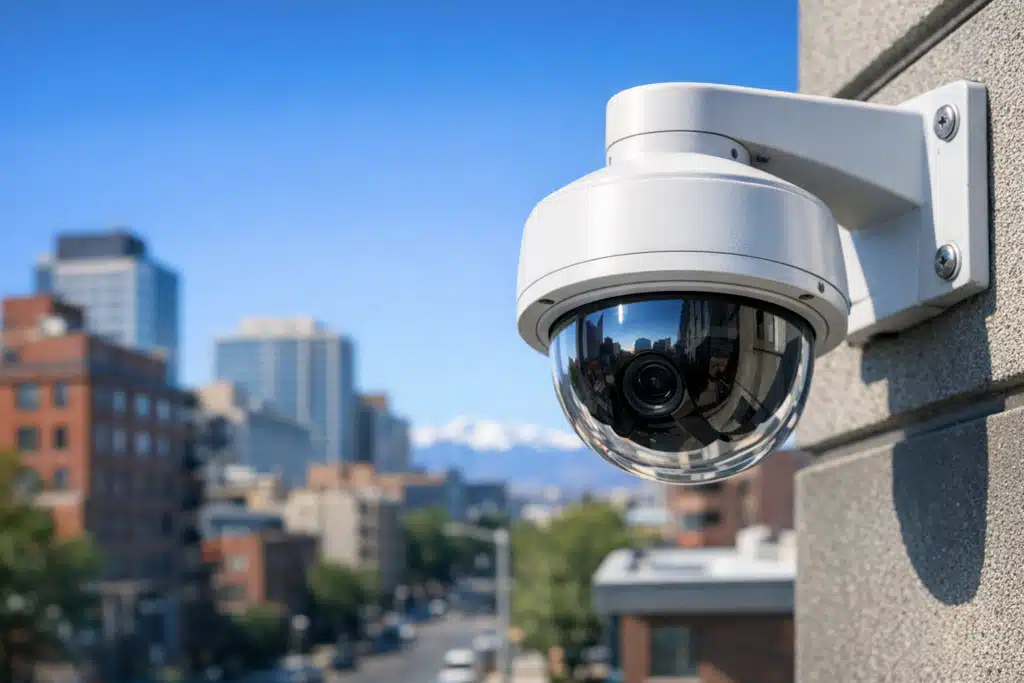
That combination cooks camera components differently than heat at sea level. Two forces cause most failures.
Internal Heat Buildup
Camera housings trap heat from the sun and from their own processors. Once internal temperatures pass roughly 140°F, image sensors start producing grainy, washed-out footage.
Prolonged overheating shortens the lifespan of capacitors and infrared LEDs. A camera rated only to 122°F may shut down entirely during a July afternoon in Aurora.
UV Degradation at Altitude
Denver receives stronger UV exposure than most U.S. cities because of its elevation. Sunlight cracks plastic housings and clouds cheap camera domes over two or three summers.
A clouded dome scatters light and destroys night image clarity. This damage shows up faster on south- and west-facing walls in neighborhoods like Capitol Hill and LoDo.
The Camera Specs That Matter in High Heat
To choose security cameras that survive Denver summers, check these ratings before you buy.
- Operating temperature range: Look for cameras rated to at least 140°F (60°C). Anything lower risks shutdowns on hot rooftops.
- IP66 or IP67 weather rating: Seals block dust from dry Front Range winds and moisture from sudden monsoon storms.
- UV-resistant polycarbonate housing: This material resists cracking under high-altitude sun far better than standard plastic.
- Wide Dynamic Range (WDR): WDR balances harsh shadows and bright glare common on sunny Denver mornings.
- Built-in heat dissipation: Aluminum housings and vented designs pull heat away from the sensor.
A camera meeting all five points will outlast a budget unit by years on an exposed Denver wall.
Camera Placement Strategies for Denver Sun
Where you mount a camera matters as much as the model you pick. Smart placement cuts heat exposure without sacrificing coverage.
Avoid Direct Afternoon Sun
West-facing walls take the harshest heat between 2 and 6 p.m. Mount cameras under eaves, awnings, or parapet overhangs to add shade.
A shaded camera can run 20 to 30 degrees cooler than one baking in open sun. That gap alone extends hardware life.
Account for Glare and Backlighting
Low winter sun and bright summer skies both create glare that blinds cameras. Angle lenses downward and away from direct light paths.
For east-facing entrances, sunrise glare can wash out footage during peak arrival hours. WDR cameras handle this better than standard models.
Special Concerns for Denver Cannabis Facilities
Cannabis operators face stricter camera rules than most Denver businesses. Colorado’s Marijuana Enforcement Division requires continuous video coverage of licensed premises.
Camera failure during summer heat can put a facility out of compliance. That risk makes heat-rated hardware a regulatory matter, not just a maintenance one.
Grow Rooms Add Heat Load
Indoor cultivation sites run hot lighting that raises ambient room temperatures. Cameras inside these spaces need higher temperature tolerance than exterior units.
State rules also require footage retention of at least 40 days. Overheated cameras that drop frames or fail leave gaps that regulators will flag.

 Posted on Google
Remote Monitoring Keeps Watch During Heat Events
Remote video surveillance adds a layer that stand-alone cameras cannot match. Live monitoring catches problems before they cost you footage or property.
At Twin City Security Denver, our monitoring team flags camera outages in real time. If a unit overheats and drops offline, someone knows within minutes.
Benefits for Construction and Vacant Sites
Denver’s summer building season leaves job sites full of copper, tools, and equipment. Remote monitoring covers these sites overnight when theft peaks.
- Instant alerts when motion triggers after hours
- Camera health checks that catch heat-related failures early
- Live voice response to warn off intruders in real time
- Verified footage for Denver police reports
This coverage matters most on unshaded lots in Aurora and the outer metro, where equipment sits exposed for months.
Maintenance Steps to Protect Cameras Through Summer
Good hardware still needs upkeep. Follow these steps before Denver’s hottest months arrive.
- Clean domes and lenses in late spring to clear pollen and dust film.
- Inspect housings for cracks or cloudiness from UV wear.
- Confirm cable connections stay sealed against dry-rot and heat.
- Test recording and storage before peak season load.
- Reposition any camera taking full afternoon sun exposure.
A short spring inspection prevents most summer failures. Property managers in Highlands and LoDo see fewer outages when they schedule this yearly.
Matching Cameras to Your Denver Property Type
Different properties face different heat and security demands. Here is how needs shift by site.
Apartment Communities
Common areas and parking structures need cameras with strong glare handling. Rooftop and open-lot units require the highest heat ratings.
Downtown Offices
LoDo and Capitol Hill buildings deal with reflected heat off glass and pavement. Shaded mounts and WDR cameras handle this reflected load.
Event Venues
Outdoor venues need cameras that run reliably during long summer daytime events. Portable, heat-rated units cover temporary layouts.
Protect Your Denver Property Before the Heat Hits
Denver’s altitude, UV exposure, and 90-degree days demand cameras built for real heat, not just mild climates. Choose units rated to 140°F, seal them well, and mount them out of direct afternoon sun.
Twin City Security Denver builds camera and remote monitoring plans matched to your property and its sun exposure. Call 303‑574‑0000, email Denver@TwinCitySecurity.com, or visit https://www.twincitysecuritydenver.com for a Denver security assessment.
Sources
- National Weather Service – Denver/Boulder Forecast Office
- Colorado Marijuana Enforcement Division – Marijuana Rules
- U.S. EPA – UV Index Scale and Altitude Effects
Twin City Security Denver explains how to select security cameras that withstand Denver's extreme summer heat, high altitude, and intense UV exposure. The guide covers specs, placement strategies, and maintenance tips for property owners.
- Denver's 5,280-foot elevation and 60-plus days above 90°F cause cameras to overheat and UV rays to crack housings faster than at sea level. Cameras should be rated to at least 140°F with UV-resistant polycarbonate and IP66 or IP67 weather seals.
- Mounting cameras under eaves or awnings can reduce temperatures by 20 to 30 degrees. Wide Dynamic Range helps handle glare from bright summer skies and low winter sun.
- Cannabis facilities face compliance risks if cameras fail in heat since Colorado requires continuous video coverage. Remote monitoring catches outages in real time and provides verified footage for police reports.


