

Protecting Denver’s LoDo Area: Tailored Security Solutions for Downtown Businesses
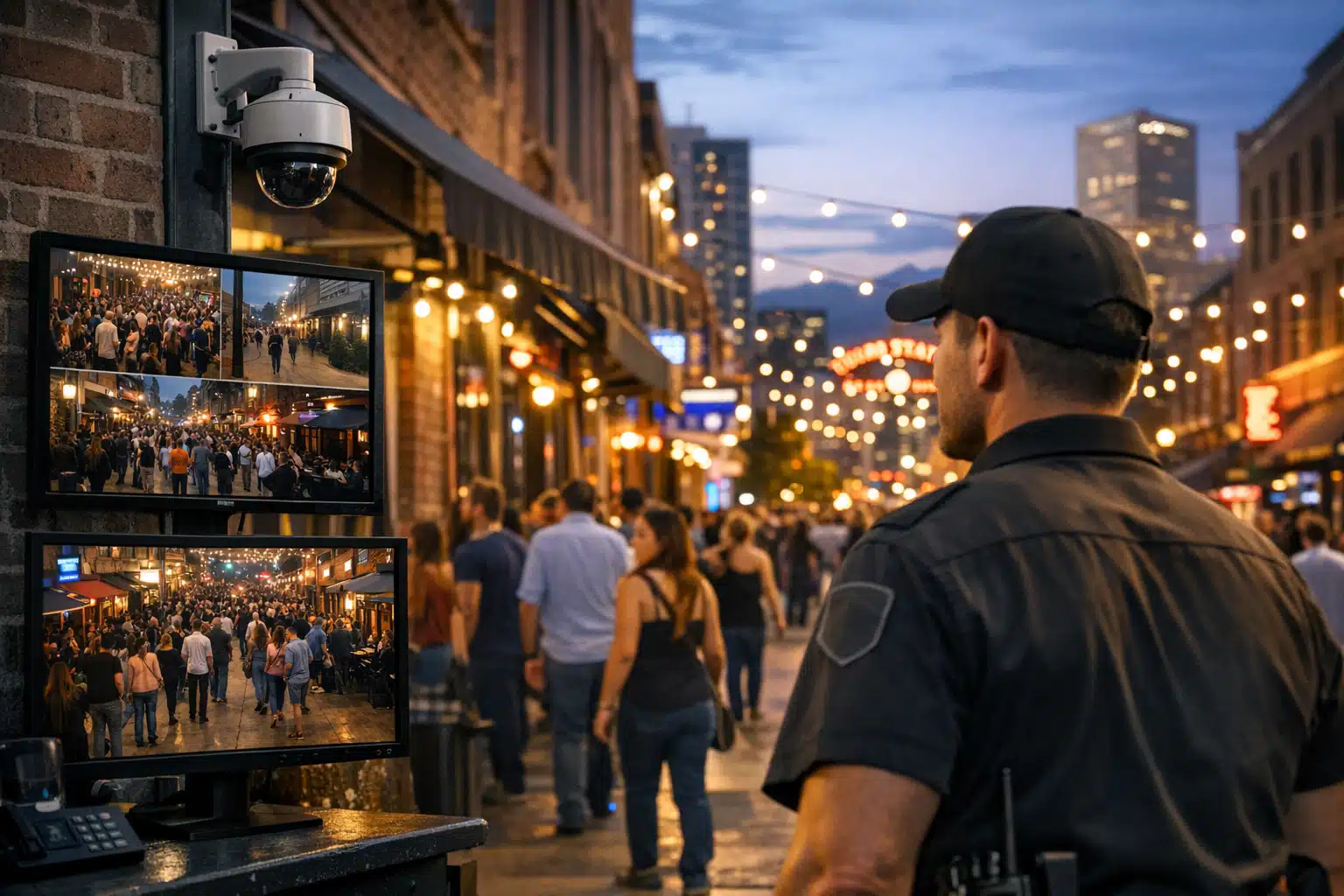
Denver's Lower Downtown district presents unique security challenges due to its high concentration of bars and nightlife venues. On busy weekend nights, foot traffic along Larimer and Market Streets reaches into the thousands, creating concerns around crowd management, theft prevention, and property protection that require specialized security approaches tailored to this entertainment-focused urban environment.
LoDo’s After-Dark Reality Sets the Security Bar
Lower Downtown packs more bars per block than any other Denver district. On a single Saturday night, foot traffic along Larimer and Market Streets climbs into the thousands.
That volume creates property crime risk most neighborhoods never face. Effective downtown security in LoDo starts with knowing the difference between a quiet Tuesday and a Rockies home-game Friday.
This post breaks down what LoDo businesses face, which protection methods fit each property type, and how to build coverage that matches your actual exposure.
Why LoDo Security Differs From the Rest of Denver
LoDo combines historic brick buildings, ground-floor retail, restaurants, offices, and event venues in roughly 25 square blocks. Each property type carries its own vulnerability.
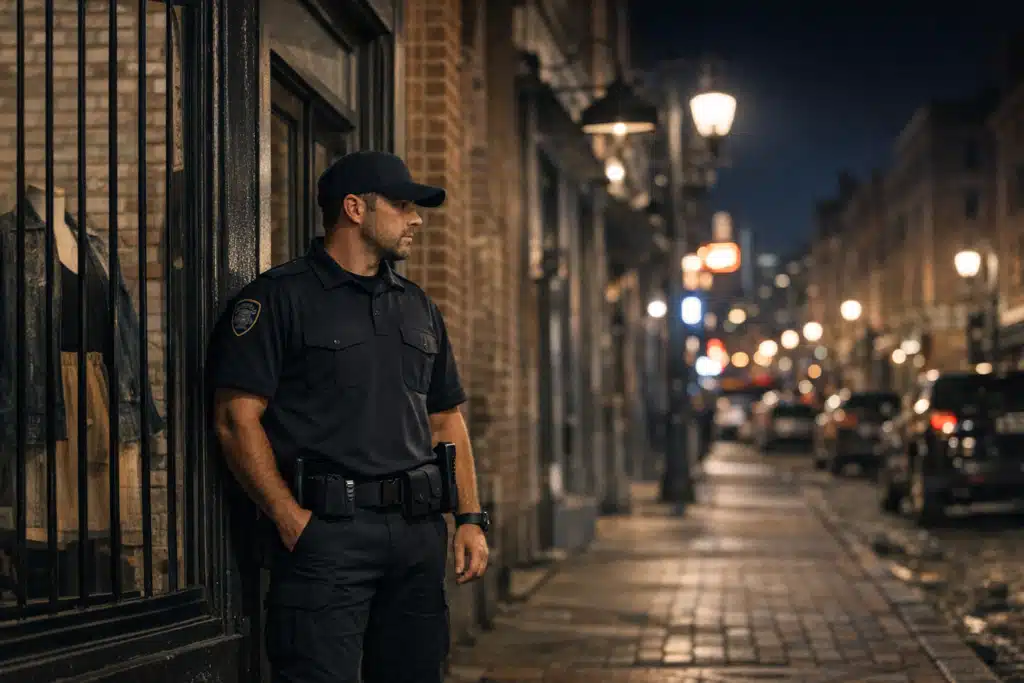
Denver Police District 6 covers downtown, including LoDo. Property crime here clusters around late-night hours and major event releases.
The Foot-Traffic Problem
High pedestrian volume hides bad actors. A person testing door handles at 1 a.m. blends into the crowd leaving Coors Field or a Larimer Square bar.
Common LoDo incidents include:
- Smash-and-grab theft at ground-floor retail after closing
- Vehicle break-ins in surface lots and parking structures
- Loitering and trespassing in alleys behind restaurants
- Vandalism and graffiti on historic facades
- After-hours intoxication conflicts near bar entrances
The Closing-Time Window
Colorado bars stop serving at 2 a.m. The crowd dispersal that follows is when LoDo sees its sharpest spike in disorder calls.
Empty offices and shuttered shops sit next to that activity. A closed boutique on Wazee Street has no staff present when the rush hits.
On-Site Guards for High-Traffic Downtown Properties
On-site guards work best where human presence stops problems before they start. A visible uniformed officer changes behavior at an entrance.
LoDo properties that benefit most from staffed coverage include:
- Restaurants and bars needing door control and conflict de-escalation
- Event venues managing entry, capacity, and crowd flow
- Apartment communities with lobby and garage access points
- Ground-floor retail exposed during peak nightlife hours
What a LoDo Guard Shift Looks Like
A typical assignment runs Thursday through Saturday, covering 6 p.m. to 3 a.m. Officers patrol entrances, monitor alley access, and document incidents in real time.
Trained guards know when to call Denver PD versus handle a situation directly. That judgment keeps minor disputes from becoming police reports.
Remote Video Surveillance for After-Hours Coverage
Remote video monitoring covers the gap when guards go home and businesses sit empty. Live operators watch your cameras from a central station.
This method fits LoDo properties where overnight staffing makes no financial sense. An office building or closed retail shop gains eyes without a guard on payroll all night.
How Remote Monitoring Stops LoDo Crime
Active monitoring beats passive recording. A recorded break-in helps the insurance claim. A live operator stops it as it starts.
Remote video surveillance includes:
- Live human review of motion alerts during set hours
- Voice-down warnings that speak directly to trespassers
- Direct dispatch to Denver PD when a real threat appears
- Time-stamped footage for claims and prosecutions
A trespasser hearing “You are being recorded and police have been called” leaves most of the time. That warning costs nothing per incident.
Cold-Weather Camera Performance
Denver winters test surveillance hardware. Single-digit nights and blowing snow degrade cheap cameras fast.
LoDo properties need equipment rated for Colorado temperature swings. Cameras must hold image clarity at 5 degrees and in glare off fresh snow.
Lens placement matters around historic buildings. Tight alley angles and brick overhangs create blind spots that proper mounting eliminates.
Building a Layered Plan for Your LoDo Property
The strongest LoDo security setups pair guards and cameras by time of day. Each method covers what the other cannot.
A Sample Restaurant Plan
Take a Market Street restaurant open until midnight. Here is how coverage stacks:
- 6 p.m. to 1 a.m.: On-site guard handles the door and patio
- 1 a.m. to 6 a.m.: Remote video monitors the kitchen entrance and alley
- Daytime: Recorded cameras cover the dining room and register
This structure puts staffing where crowds peak and cameras where the building sits empty. Owners pay for presence only when risk warrants it.
Steps to Assess Your Own Exposure
To match downtown security to your property, work through these points:
- Map your hours. When is the building occupied versus dark?
- List your access points. Count doors, garages, and alley entries.
- Review past incidents. Where have break-ins or disputes happened?
- Check event calendars. Rockies and event nights change your risk window.
- Identify camera blind spots. Walk the perimeter after dark.

 Posted on Google
Cannabis and Specialty Properties Near Downtown
Colorado law sets strict security rules for cannabis operators. The Marijuana Enforcement Division requires video coverage of all limited-access areas and 40-day footage retention.
Dispensaries near downtown carry cash and product that draw targeted theft. Compliance failures risk license suspension on top of loss.
A proper cannabis plan covers:
- Continuous camera coverage meeting state retention rules
- Access control on limited-access rooms
- Guard presence during open hours and cash transport
- Alarm response coordinated with monitoring
Downtown security for cannabis means meeting regulation and stopping loss at the same time. One without the other leaves a gap.
What LoDo Business Owners Should Ask Before Hiring
Questions to put to any security provider before signing:
- Are your guards licensed under Colorado and Denver requirements?
- Do your remote operators dispatch directly to Denver PD?
- How fast do operators respond to a triggered alert?
- Is your equipment rated for Front Range winter conditions?
- Can coverage scale up for event nights and holidays?
Clear answers separate a real provider from a guard-for-hire agency. Your property near Union Station deserves a plan built for LoDo, not a generic post order.
Protect Your Downtown Denver Property
LoDo’s crowds, nightlife, and historic layout create risks no single method covers alone. Pairing on-site guards with live remote video matches protection to your real hours and exposure.
Twin City Security Denver builds coverage for downtown restaurants, retail, offices, apartments, and cannabis operators. Call 303‑574‑0000 or email Denver@TwinCitySecurity.com for a LoDo property assessment.
Sources
- Denver Police Department – Official City Page
- Colorado Marijuana Enforcement Division – Rules and Regulations
- Colorado Division of Professions and Occupations – Security Guard Licensing
Twin City Security Denver outlines security challenges specific to LoDo, where high foot traffic and late-night bar crowds create property crime risks that differ from other Denver neighborhoods.
- LoDo sees crime spikes during bar closing times around 2 a.m. and on event nights, with common incidents including smash-and-grab theft, vehicle break-ins, and vandalism on historic buildings.
- On-site guards work best for high-traffic periods at restaurants, bars, and event venues, while remote video monitoring covers after-hours gaps when buildings sit empty.
- A layered approach pairs guards during peak hours with live camera monitoring overnight, and cannabis operators must also meet state requirements for video retention and access control.


