

Enhancing Security for Denver’s Industrial Complexes with Custom Guard Services
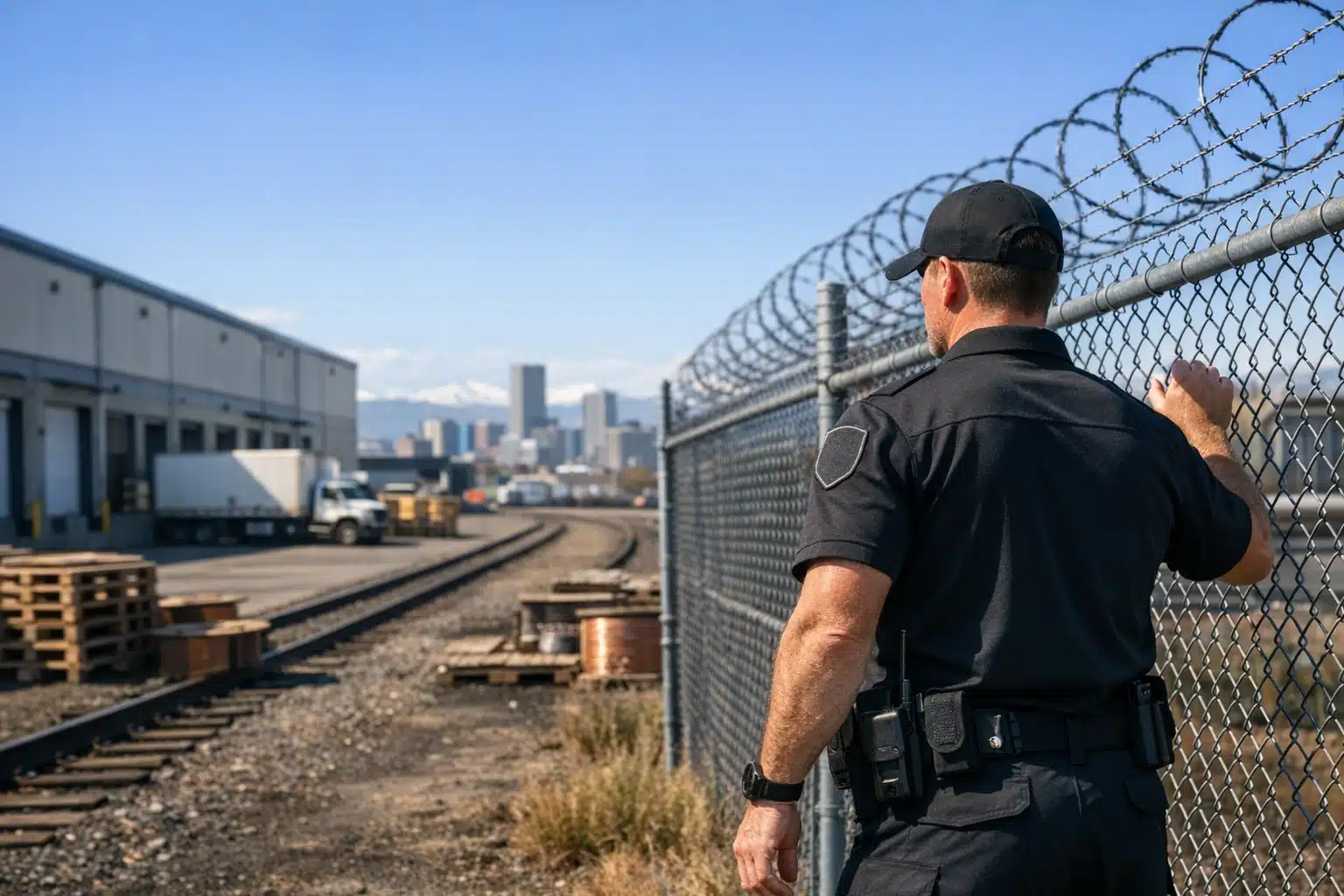
Denver industrial complexes can improve security by matching guard coverage to each facility's specific operations rather than using a one-size-fits-all patrol schedule. This includes addressing unique risks like copper theft near rail lines, adapting to Colorado regulations, and preparing guards for Rocky Mountain winter conditions that affect outdoor patrols and site access.
Denver’s Montbello and Central Park corridors hold hundreds of warehouses, distribution centers, and manufacturing sites. Many sit near rail lines and open lots that draw copper thieves and trespassers after dark. Strong industrial security starts with matching guard coverage to how each facility runs, not applying one patrol schedule to every gate. This post breaks down how Denver operators protect sprawling sites, meet Colorado rules, and handle Rocky Mountain winters.
Why Denver Industrial Complexes Need Site-Specific Guard Coverage
Industrial properties carry risks that retail or office buildings rarely face. Loading docks stay open for hours. Fence lines run for acres. High-value copper, catalytic converters, and equipment sit exposed.
Denver saw sharp jumps in metal theft and commercial burglary over recent years. Warehouse districts along I-70 and Peña Boulevard remain frequent targets. A single stolen transformer or spool of copper can stall operations for days.
Generic patrols miss the details that matter on these sites. A guard who knows your shift changes, your blind spots, and your delivery windows stops problems before they escalate.
Common Threats at Denver Industrial Sites
- Metal and equipment theft from unsecured yards and staging areas
- Trespassing and squatting in vacant or overnight-empty buildings
- Cargo theft at loading docks and truck staging zones
- Vandalism and graffiti along fence lines and exterior walls
- Unauthorized after-hours access by former employees or contractors
Building Custom Guard Services Around Your Operation
Effective custom guard services begin with a walk of your property. Every industrial complex has choke points, dead zones, and traffic patterns that shape a coverage plan.
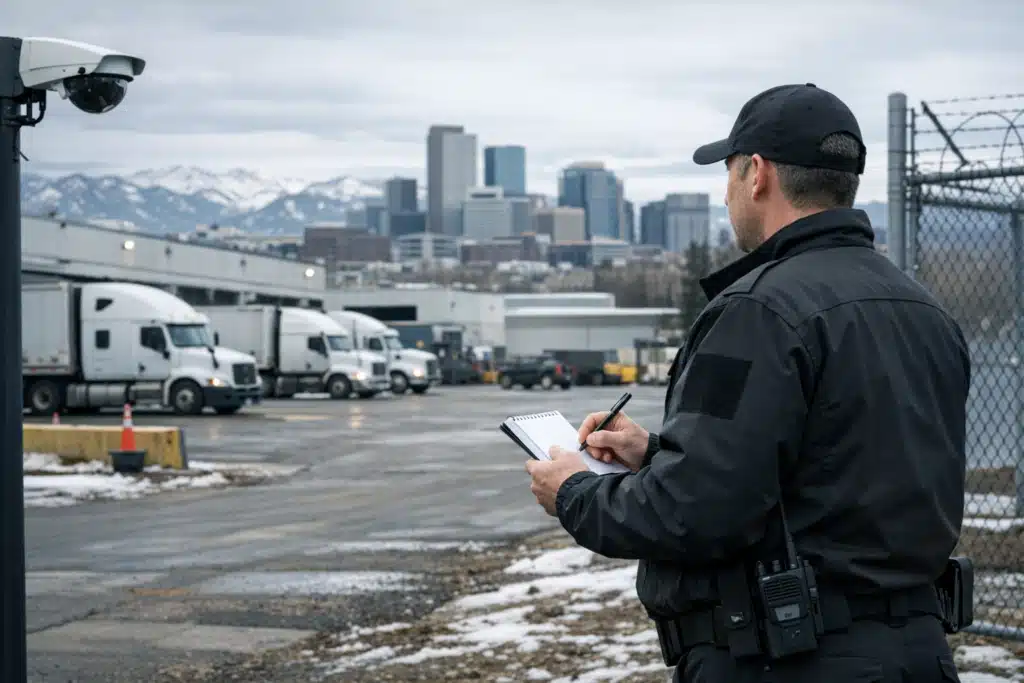
Twin City Security Denver maps each site before assigning a single guard. That means noting where trucks queue, where lighting fails, and where fence lines meet open land.
Steps to Match Guards to Your Facility
- Assess the perimeter. Measure fence length, gate count, and camera gaps.
- Map traffic flow. Track when trucks, staff, and contractors move in and out.
- Identify high-value zones. Flag areas holding copper, machinery, or finished goods.
- Set patrol timing. Vary routes so patterns stay unpredictable to outsiders.
- Layer remote monitoring. Cover blind spots with cameras backed by live operators.
This method fits the guard plan to real risk, not a template. A 40-acre distribution hub in Commerce City needs different coverage than a small fabrication shop in Globeville.
Pairing On-Site Guards With Remote Video Monitoring
Cameras alone rarely stop crime. A recorded break-in tells you what happened after the loss. Live monitoring paired with guards changes the response.
Remote operators watch feeds in real time and alert on-site guards to movement. Guards then respond directly, and operators can trigger audio warnings or call Denver police.
This pairing cuts staffing costs on large sites. One or two guards cover ground physically, and cameras extend their reach across the rest of the property.
Where Remote Monitoring Adds the Most Value
- Long fence lines that a single guard cannot watch at once
- Remote yards holding trailers or heavy equipment
- Overnight hours when foot traffic drops to zero
- Multiple buildings spread across one industrial campus
Cannabis Facility Security Under Colorado Rules
Cannabis grows and warehouses face strict state requirements. Colorado’s Marijuana Enforcement Division mandates 24-hour recorded surveillance and controlled access at licensed sites.
Denver adds local rules on top of state law. Cultivation sites in the RiNo and Elyria-Swansea areas must log every entry and keep footage for set retention periods.
Guards trained on cannabis compliance help operators avoid license penalties. They verify visitor logs, watch restricted zones, and document chain-of-custody at shipping points.
What Cannabis Site Security Requires
- Continuous camera coverage of all limited-access areas
- Verified access control at every entry and vault point
- Detailed visitor and vehicle logs kept for state review
- Guards who know MED rules and Denver licensing conditions

 Posted on Google
Handling Rocky Mountain Winters at Industrial Sites
Denver winters test both guards and equipment. Snow blocks camera views, ice slows patrols, and short daylight extends dark hours across facilities.
A guard plan built for July fails in January. Coverage plans must account for cleared walkways, heated equipment, and shorter safe patrol windows during storms.
Winter-Ready Security Steps
- Position cameras under eaves or housings that shed snow and ice.
- Add lighting to offset early sunsets from November through February.
- Plan indoor guard stations for warmth during extreme cold.
- Adjust patrol routes around icy loading docks and ramps.
Guards who work Denver sites year-round know how storms change risk. Thieves target properties where snow hides tracks and cold keeps staff indoors.
Choosing a Denver Industrial Security Partner
The right partner knows local crime patterns and Colorado law. Ask any provider how they handle metal theft, cannabis compliance, and winter coverage before signing.
Questions worth asking a Denver security provider:
- Do you survey the site before setting a guard plan?
- Can you pair on-site guards with live remote monitoring?
- Are your guards trained on Colorado cannabis regulations?
- How do you adjust coverage during snowstorms?
- What is your response time when an alarm triggers?
Strong industrial security depends on answers to questions like these. A provider that surveys, plans, and adjusts protects your operation better than a fixed patrol schedule.
Protect Your Denver Industrial Complex
Industrial sites in Denver face metal theft, cargo loss, and strict cannabis rules that generic patrols cannot address. Site-specific guard coverage paired with live monitoring closes the gaps that thieves exploit. Colorado winters raise the stakes, making year-round planning worth the investment.
Twin City Security Denver builds guard coverage around how your facility runs. Call 303‑574‑0000 or email Denver@TwinCitySecurity.com for a Denver industrial security assessment.
Sources
- Colorado Department of Revenue – Marijuana Enforcement Division
- City and County of Denver – Denver Police Department
- FBI – Uniform Crime Reporting Program
Denver's industrial corridors face rising metal theft, cargo loss, and trespassing, requiring security plans tailored to each facility rather than generic patrol schedules. Twin City Security Denver builds custom guard coverage based on site-specific risks, Colorado regulations, and seasonal challenges.
- Industrial sites near I-70 and Peña Boulevard are frequent targets for copper theft and commercial burglary, with a single stolen transformer capable of stalling operations for days.
- Effective security pairs on-site guards with live remote video monitoring, allowing one or two guards to cover ground while cameras extend their reach across large properties.
- Cannabis facilities must meet strict Colorado Marijuana Enforcement Division rules including 24-hour surveillance and controlled access, and Denver winters require adjusted patrol routes and weather-ready equipment.


