

Understanding the Benefits of Remote Surveillance for Denver’s Office Buildings
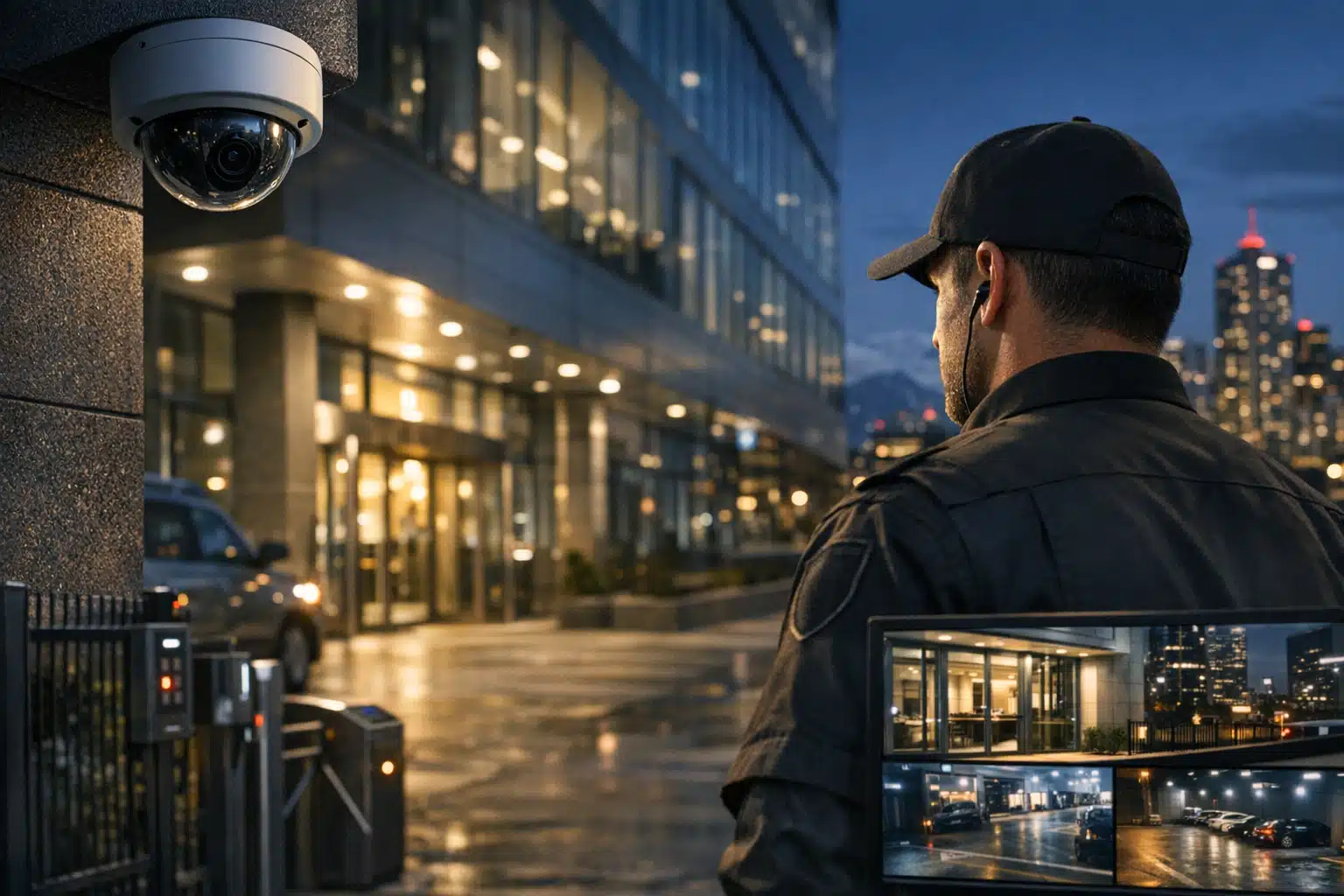
Remote surveillance provides continuous monitoring of office buildings during vulnerable after-hours periods when most break-ins occur. It offers real-time threat detection, rapid response coordination with security teams, and documented evidence for investigations. This technology reduces security costs compared to on-site guards while covering multiple entry points and parking areas simultaneously.
Why Denver Office Buildings Face Rising Security Risks
Denver reported over 20,000 commercial property crimes in recent years, with break-ins peaking during winter months. Office buildings in Downtown, LoDo, and the Tech Center sit empty for long stretches after hours. That gap is when most losses happen.
Remote surveillance closes that gap without the full expense of round-the-clock guard staffing. For Denver property managers watching budgets, this matters. This post breaks down how remote monitoring works, what it costs, and why it fits Denver’s climate and crime patterns.
You get a clear picture of the money math and the practical steps to set up a system that fits your building.
What Remote Surveillance Means for Office Security
Remote surveillance uses cameras, sensors, and live monitoring agents who watch your building from an off-site center. When motion triggers an alert, a trained agent verifies the threat in real time. They can issue voice warnings, call police, or dispatch a guard.
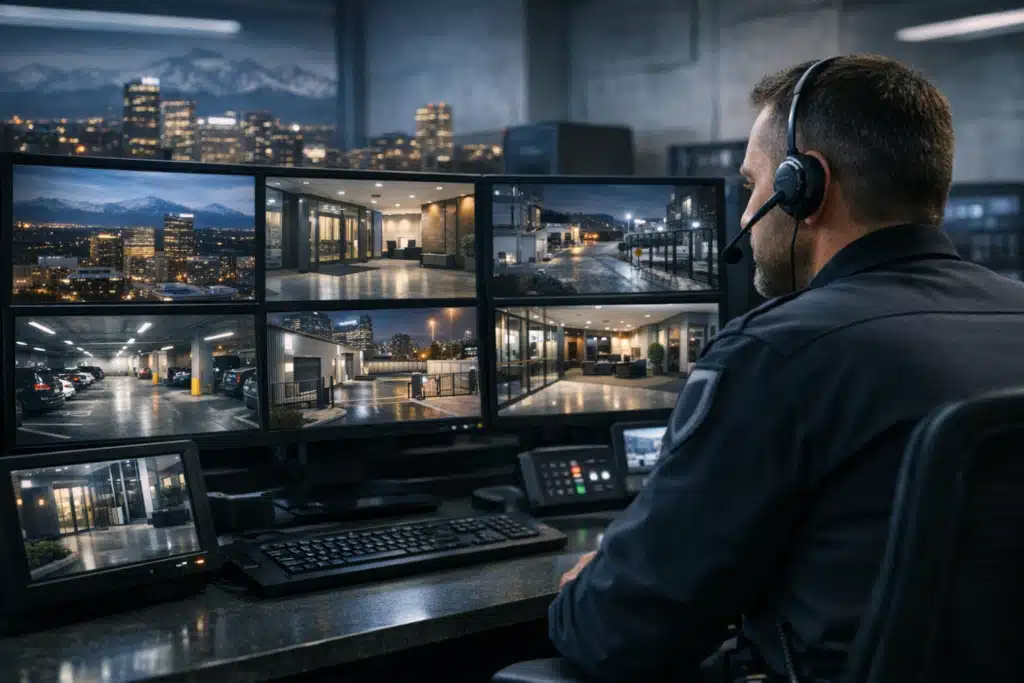
This differs from passive recording. Old-school cameras only help after a crime happens. Live remote monitoring stops incidents as they unfold.
The Two Common Approaches Compared
- On-site guards only: A physical presence, but limited to one location at a time and expensive per hour.
- Remote surveillance with guard backup: Cameras cover every entry point at once, with agents ready to escalate when needed.
Most Denver offices get the strongest coverage from a mix. Cameras handle constant watch. Guards respond to verified threats.
The Cost-Effectiveness of Remote Surveillance for Denver Offices
A single overnight security guard in Denver runs roughly $25 to $40 per hour. That adds up to $180,000 or more per year for 24/7 staffing. Remote monitoring covers the same hours at a fraction of that figure.
One camera feed can watch multiple zones. One monitoring agent can oversee several buildings at once. That efficiency drives the price down.
Where the Savings Come From
- Fewer labor hours: You pay for monitoring, not for a body standing in an empty lobby.
- Lower liability: Fewer on-site staff means reduced exposure to workplace injury claims.
- Scalable coverage: Add cameras to a parking garage without hiring more guards.
- Deterrence value: Visible cameras and voice-down speakers stop many intruders before they act.
A mid-size office building in Capitol Hill might spend a quarter of a full guard budget on remote coverage. The video evidence also speeds up insurance claims and police reports.
How Denver Weather Affects Office Security Systems
Rocky Mountain winters test any security setup. Temperatures swing from 60°F afternoons to single digits overnight. Snow blocks camera views. Ice storms knock out power.
Remote surveillance handles these conditions better than foot patrols. A guard walking an icy parking lot at 2 a.m. faces real danger. A camera with a heated housing keeps watching.
Cold-Weather Setup Tips
- Use cameras rated for sub-zero operation with built-in heaters and defrost cycles.
- Install infrared night vision for the long, dark winter mornings before staff arrive.
- Add battery or generator backup to keep feeds live during Denver windstorm outages.
- Position cameras under eaves to keep lenses clear of blowing snow.
High-altitude sun glare also washes out cheap cameras. Wide dynamic range sensors correct for Denver’s intense daytime light.
How to Set Up Remote Surveillance for Your Denver Office Building
Setting up remote monitoring follows a clear sequence. Each step matters for coverage and cost control.
Step 1: Map Your Vulnerable Points
Walk your property at night. Note dark corners, unlocked side doors, loading docks, and parking structures. In LoDo, alley-facing entrances draw the most break-in attempts.
Step 2: Choose Camera Placement
Cover every entry, exit, and cash-handling area. Overlap fields of view so no blind spots remain. Parking garages need cameras at each level and stairwell.
Step 3: Add Two-Way Audio
Speakers let monitoring agents warn trespassers directly. A live voice saying “You are being recorded” ends most incidents fast.
Step 4: Connect to a Monitoring Center
Feeds route to trained agents who watch for triggers around the clock. They verify alerts and follow your escalation plan.
Step 5: Set Response Protocols
Decide who gets called first. Police, a mobile guard, or your facility manager. Written protocols cut response time when seconds count.

 Posted on Google
Which Denver Properties Benefit Most
Remote surveillance fits many building types across the metro area. Coverage adapts to each risk profile.
- Downtown high-rises: Multiple floors, lobbies, and garages watched from one center.
- Tech Center offices: Large campuses with sprawling parking that guards cannot cover alone.
- Aurora business parks: Isolated buildings that face after-hours vandalism.
- Highlands mixed-use spaces: Ground-floor retail and upper-floor offices needing layered watch.
Cannabis operators and construction sites gain the most, since both hold high-value assets overnight. Colorado’s Marijuana Enforcement Division requires video coverage of licensed premises. Remote monitoring meets that rule and adds live response.
Combining Remote Surveillance With On-Site Guards
The strongest Denver office security pairs cameras with human response. Agents catch the threat. Guards handle the physical confrontation.
This model keeps guard hours low. You dispatch a guard only when a verified event demands it. That balance protects your building and your budget.
A Practical Example
A Capitol Hill office had repeat overnight loitering near its loading dock. Cameras with voice-down speakers cut incidents by more than half in the first month. A guard patrol responded only twice during that stretch. The savings versus full guard staffing paid for the whole system.
Conclusion
Remote surveillance gives Denver office buildings continuous protection at a fraction of full guard costs. It handles harsh winters, covers blind spots, and stops threats in real time. Pairing cameras with on-call guards keeps both your property and your budget secure.
Twin City Security Denver builds monitoring plans matched to your building and neighborhood. Call 303‑574‑0000, email Denver@TwinCitySecurity.com, or visit https://www.twincitysecuritydenver.com for a free Denver security assessment.
Sources
- Denver Police Department – Crime Information and Statistics
- Colorado Department of Revenue – Marijuana Enforcement Division
- National Weather Service – Denver/Boulder Forecast Office
Remote surveillance offers Denver office buildings continuous security at a fraction of full guard costs, handling harsh winters and stopping threats in real time. Twin City Security Denver provides monitoring plans matched to specific buildings and neighborhoods.
- Denver reported over 20,000 commercial property crimes in recent years, with break-ins peaking during winter months when office buildings sit empty after hours. Remote monitoring uses cameras and live agents who verify threats and can issue voice warnings or call police.
- A single overnight guard costs $25 to $40 per hour, adding up to $180,000 or more yearly for 24/7 staffing. Remote surveillance covers the same hours at a fraction of that cost since one agent can oversee multiple buildings.
- Cold-weather setups need cameras rated for sub-zero operation with heaters and battery backup. Pairing cameras with on-call guards provides the strongest coverage while keeping labor hours low.
