

The Impact of Denver’s Summer Weather on Security Systems
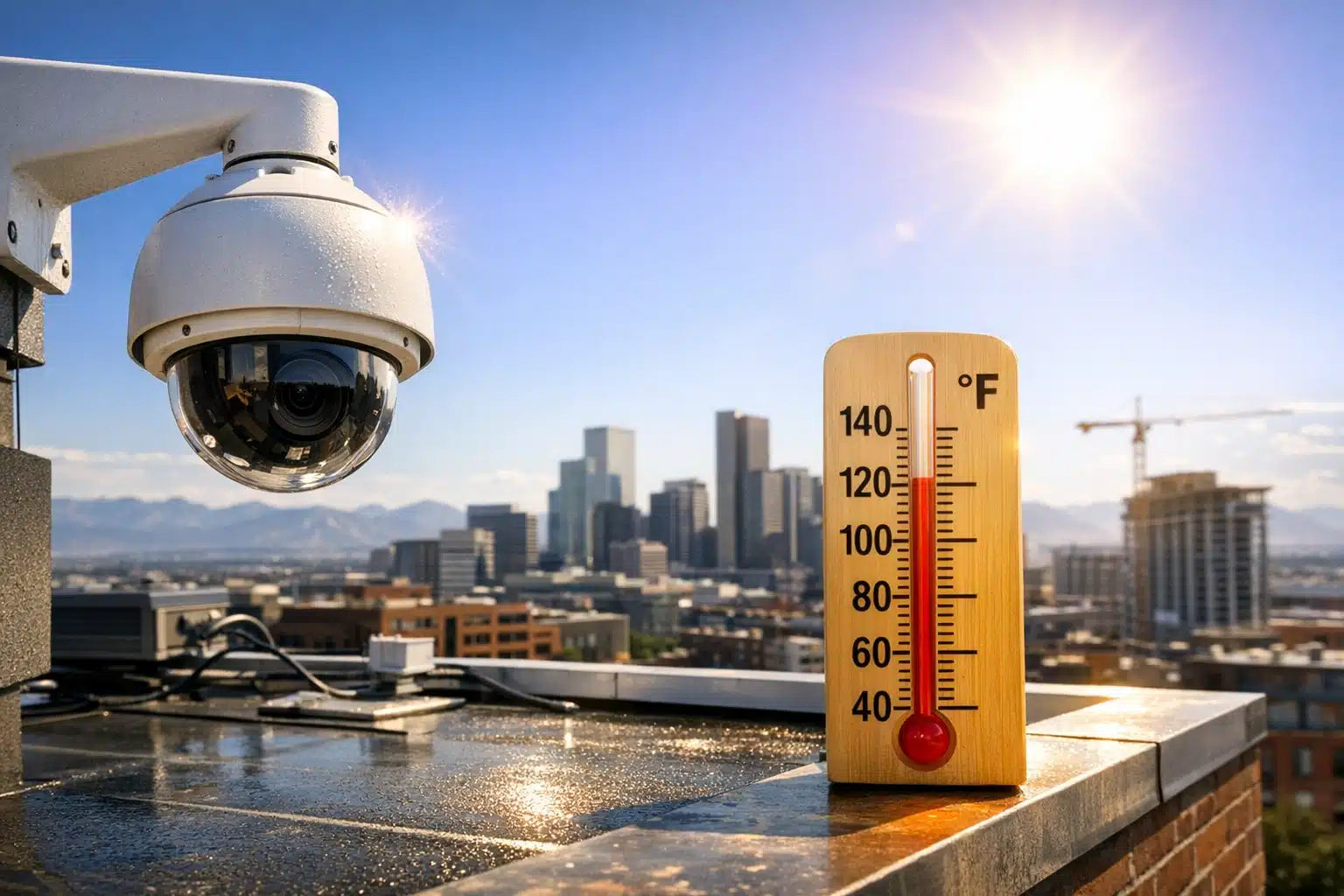
Denver's summer weather poses significant challenges for security systems due to intense high-altitude sunlight and heat between June and September. The roughly 300 days of annual sunshine can damage outdoor electronics, including security cameras, sensors, and wiring. Business owners across the Front Range face accelerated wear on hardware, potential malfunctions, and reduced equipment lifespan during the warm season.
Denver sees roughly 300 days of sun per year, and that high-altitude light punishes outdoor electronics. The weather impact on security cameras, sensors, and wiring grows sharp between June and September. Business owners in LoDo, cannabis operators in Aurora, and construction managers across the Front Range all face the same summer threats. This post breaks down how Denver’s warm season affects security hardware and what you can do about it.
Summer in the Mile High City brings extreme temperature swings, violent hail, and intense ultraviolet radiation. Each one attacks security equipment differently. Knowing the failure points helps you protect your investment before a camera goes dark during an incident.
The Weather Impact of Denver’s Summer Heat on Security Systems
Heat is the quiet killer of outdoor security systems. Denver rooftops and parking lots can hit surface temperatures above 140°F on a July afternoon. Electronics baking in that range fail faster and behave unpredictably.
How High Temperatures Degrade Camera Performance
Camera sensors produce more visual noise as internal temperatures climb. That means grainy footage right when you need clear evidence.
Heat also shortens the lifespan of these components:
- Image sensors — thermal noise reduces night clarity and color accuracy.
- Internal batteries — backup power cells lose capacity above 95°F.
- Hard drives — recorders storing footage on-site can overheat and corrupt files.
- Adhesive seals — gaskets that keep moisture out begin to fail under repeated heat cycles.
A camera mounted on a south-facing Capitol Hill wall gets direct afternoon sun for hours. Without shading or heat-rated housing, its service life drops by years.
Steps to Protect Equipment From Denver Heat
To keep your Denver security systems running during summer, follow these steps:
- Choose heat-rated hardware. Look for cameras rated to at least 122°F operating temperature.
- Add sun shields. Simple weatherproof hoods lower internal temperatures.
- Relocate recorders indoors. Keep DVRs and NVRs in climate-controlled rooms.
- Schedule spring inspections. Catch failing seals before the hot months.
Hail and Storm Damage: Denver’s Costliest Weather Impact
Denver sits in the middle of Hail Alley, one of the most hail-prone regions in North America. The May 2017 storm caused over $2.3 billion in insured damage across the metro area. That same hail shatters camera lenses and dents housings in seconds.
Why Outdoor Cameras Are Vulnerable
Hailstones the size of golf balls strike with enough force to crack polycarbonate domes. A dented housing can misalign the lens and shift your field of view. Worse, cracks let water reach the internal board.
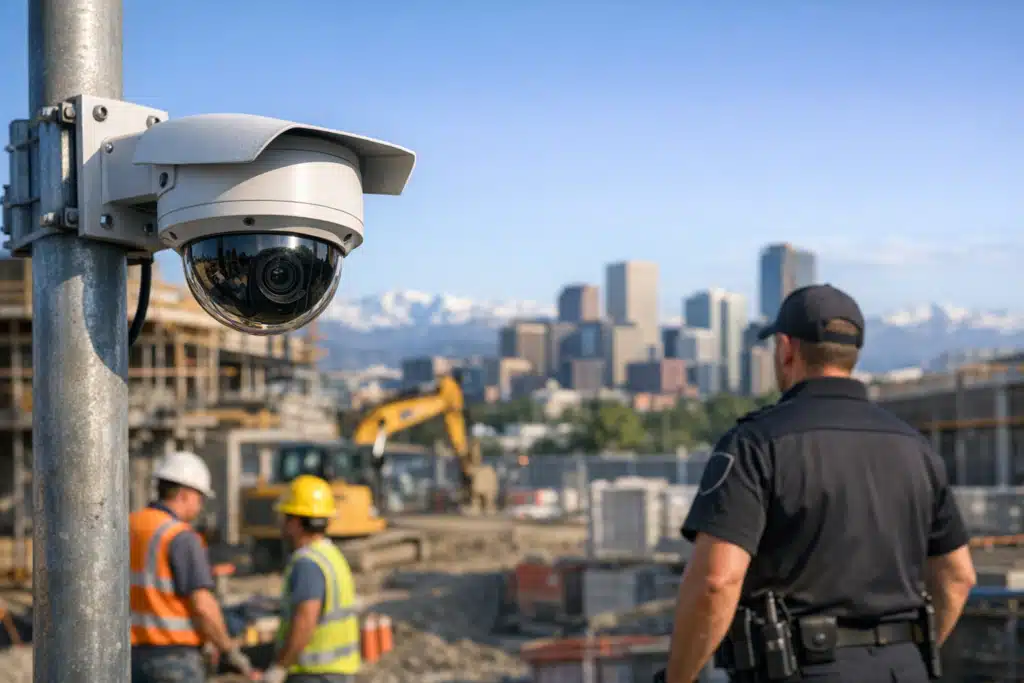
Construction sites face the highest risk. Cameras mounted on temporary poles across Highlands job sites take direct hits with no building overhang for cover.
Reducing Storm-Related Failures
Protect your equipment against Denver hail with these measures:
- Install vandal-rated domes. IK10-rated housings resist heavy impact.
- Mount under eaves where feasible. Overhead cover deflects most falling ice.
- Angle cameras downward. Reduces direct top-down hail strikes on the lens.
- Pair hardware with remote monitoring. Live operators spot outages the moment a camera drops offline.
Remote video monitoring matters most here. When a storm knocks out a camera, our operators know within minutes, not the next morning.
UV Radiation at Altitude: A Weather Impact Most Owners Miss
Denver’s mile-high elevation means 25% more UV exposure than at sea level. That radiation breaks down plastics, cabling, and mounting hardware faster than in lower cities.
What UV Does to Security Hardware
Sunlight yellows and cracks the plastic housings on cameras and junction boxes. Cable insulation left exposed on rooftops turns brittle and splits. Once the sheathing cracks, moisture follows and shorts the line.
We have seen cannabis grow facilities in Aurora lose exterior cameras after two summers of UV exposure. The housings looked chalky and the seals had crumbled.
Extending Hardware Life Against UV
Cannabis facility security requires equipment built for high-altitude sun. Colorado’s Marijuana Enforcement Division mandates 24-hour camera coverage of all limited-access areas. A UV-failed camera is both a security gap and a compliance violation.
Reduce UV damage with these practices:
- Specify UV-resistant housings and cabling rated for outdoor use.
- Run exposed cable inside conduit to shield insulation.
- Inspect exterior units each spring for chalking or cracks.
- Replace weatherproof gaskets on a set schedule, not after they fail.
Summer Storms and Power Reliability
Afternoon thunderstorms roll off the Rockies most summer days. Lightning surges and rolling outages disrupt security systems across the metro.
Protecting Against Surges and Outages
A single lightning surge can fry an entire recorder and every connected camera. Backup power keeps coverage alive during outages.
Guard your system against summer power events:
- Install surge protectors on all camera and network lines.
- Add battery backup to recorders and network switches.
- Use cellular failover so remote monitoring continues when internet drops.
- Test backups monthly during storm season.
Remote monitoring paired with cellular failover keeps eyes on your property even when the grid goes dark. This matters for construction sites where theft spikes during outages.

 Posted on Google
Why Denver Businesses Pair Guards With Remote Monitoring in Summer
Weather does not just damage hardware. It creates gaps that criminals exploit. A camera knocked offline by hail is an open door for a break-in.
On-site guards fill the gaps that technology cannot cover during rough weather. When cameras fail, a trained officer keeps watch. When storms clear, remote operators verify every camera came back online.
This layered setup helps different Denver properties:
- Construction sites — theft of copper and tools peaks in summer months.
- Cannabis facilities — state rules demand uninterrupted camera coverage.
- Apartment communities — summer brings more foot traffic and trespassing.
- Event venues — outdoor summer events need flexible, weather-ready coverage.
A Real Denver Scenario
A Highlands construction site lost three pole-mounted cameras in a June hailstorm last year. Because remote operators caught the outage instantly, they dispatched a mobile patrol within the hour. No equipment walked off the site that night.
That response only works when monitoring and guard coverage operate as one system. Hardware alone would have left that site blind until morning.
Preparing Your Denver Security System for Summer
The best defense against summer weather damage starts before the season hits. A spring assessment finds weak points while repairs stay cheap.
Ask these questions before June:
- Are exterior cameras rated for Denver heat and UV?
- Do housings meet impact standards for hail?
- Is backup power tested and current?
- Does remote monitoring alert you the second a camera fails?
If you answered no to any of them, your coverage has summer gaps worth closing now.
Conclusion
Denver’s summer heat, hail, UV, and storms each attack security systems in different ways, and the weather impact compounds over the season. Pairing weather-ready hardware with on-site guards and remote monitoring keeps your property protected when equipment fails. Contact Twin City Security Denver for a summer-ready security assessment at 303‑574‑0000 or Denver@TwinCitySecurity.com.
Sources
- National Weather Service – Denver/Boulder Forecast Office
- Colorado Marijuana Enforcement Division – Rules and Regulations
- Insurance Information Institute – Facts + Statistics: Hail
- U.S. EPA – UV Index Scale and Altitude Effects
Denver's summer weather - including extreme heat, hail, UV radiation, and storms - damages outdoor security systems and creates coverage gaps that criminals can exploit. Pairing weather-rated hardware with on-site guards and remote monitoring helps protect properties when equipment fails.
- High temperatures cause camera sensors to produce grainy footage, while heat degrades batteries, hard drives, and seals. Choosing heat-rated hardware and adding sun shields can extend equipment life.
- Denver sits in Hail Alley, where golf ball-sized hailstones can shatter camera lenses and crack housings in seconds. Vandal-rated domes and mounting cameras under eaves reduce storm damage.
- Mile-high elevation means 25% more UV exposure than sea level, causing plastic housings and cable insulation to crack and fail. UV-resistant materials and regular inspections help prevent compliance violations and security gaps.


