

The Advantages of Integrated Security Systems for Denver’s Corporate Campuses
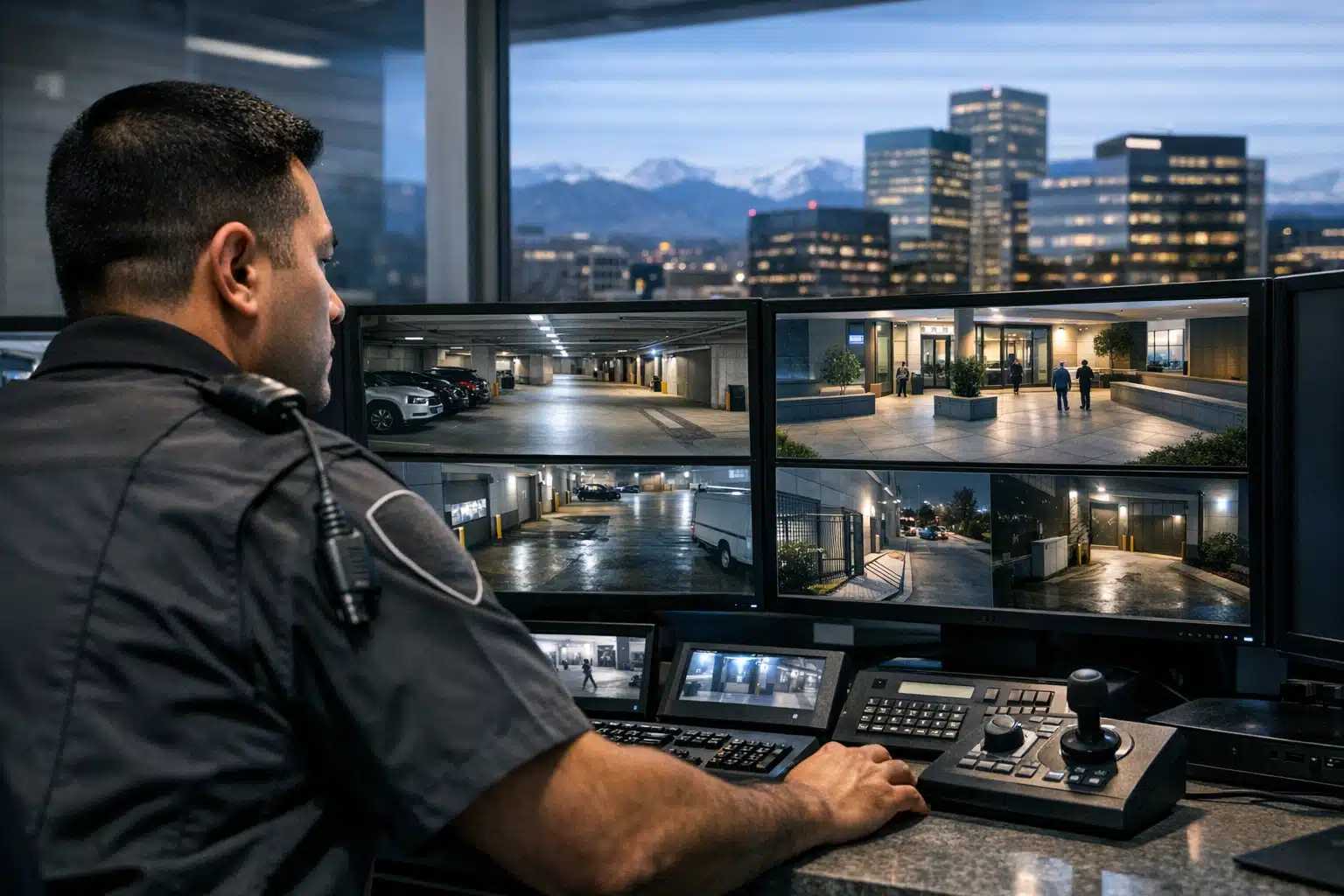
Integrated security systems combine access control, video surveillance, intrusion detection, and alarm monitoring into a single unified platform. This approach provides corporate campuses with real-time threat visibility, faster incident response, reduced false alarms, and streamlined management. By connecting all security components, facilities teams can monitor multiple buildings from one interface while lowering operational costs.
What Denver Corporate Campuses Face in 2024
Denver reported over 38,000 property crimes in recent city data, with commercial break-ins concentrated around office corridors like the Denver Tech Center and Interlocken.
Sprawling corporate campuses create blind spots. Multiple buildings, parking structures, and after-hours access points multiply the risk.
Integrated security systems connect on-site guards, video surveillance, and access control into one coordinated operation. For campus managers across Denver, this coordination reduces gaps that standalone tools leave open.
This post breaks down how integration streamlines corporate campus security, what components matter, and how Denver weather and geography shape smart deployment.
Why Integrated Security Systems Outperform Standalone Tools
A camera that records but alerts no one protects nothing. A guard who cannot see the north lot patrols blind.
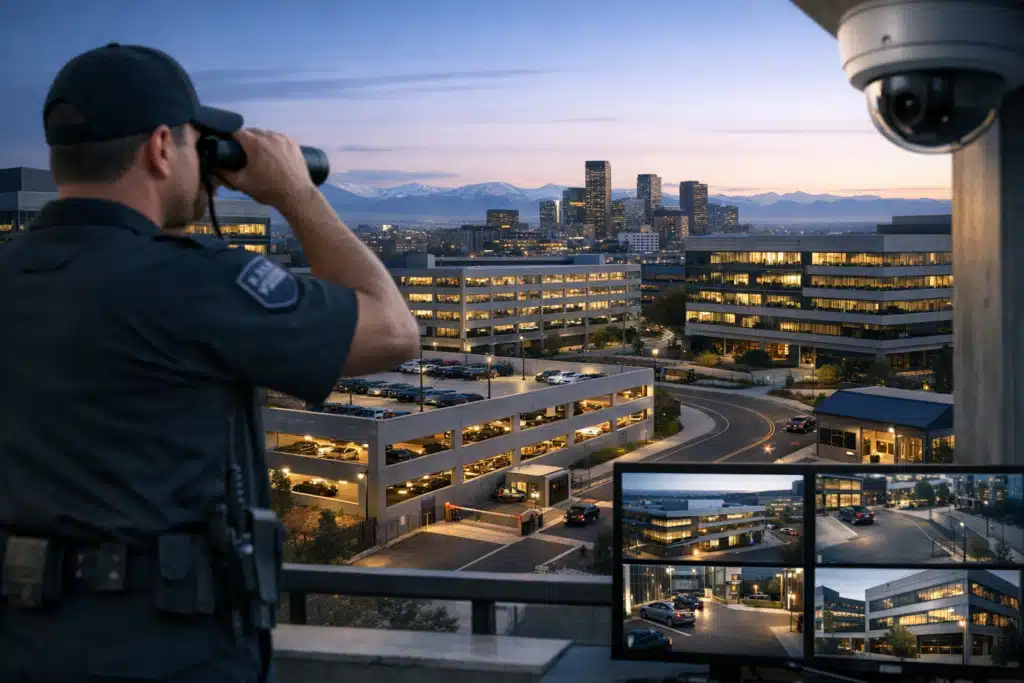
Integrated security systems link detection to response. When a motion sensor trips at a loading dock, cameras auto-focus and guards receive an instant alert.
The Problem With Siloed Setups
Many Denver campuses run disconnected equipment. A camera vendor here, a badge system there, a patrol contract somewhere else.
This fragmentation creates three recurring failures:
- Delayed response — alerts reach the wrong person or no one at all.
- Blind coverage — cameras record areas guards never watch live.
- No accountability — vendors point fingers when incidents slip past.
Integration removes the handoff points where security breaks down.
One Command Center, Full Visibility
A unified system routes every signal to a single monitoring point. Guards see camera feeds, access logs, and alarm triggers on one screen.
For a multi-building campus near the Denver Tech Center, this means one operator can track the parking garage, main lobby, and rear entrances at once.
Core Components of Corporate Campus Security
An effective integrated system for Denver corporate campuses combines four elements working in sync.
- On-site security guards — trained personnel who respond to incidents and deter trespassing.
- Remote video surveillance — cameras monitored live by off-site operators after hours.
- Access control — badge, keypad, or mobile credentials that log every entry.
- Alarm and sensor networks — motion, door, and glass-break detection tied to the response chain.
Each piece feeds the others. A badge swipe at an odd hour can cue a camera and a guard check in seconds.
How Remote Monitoring Extends Guard Coverage
One guard cannot stand at six entrances simultaneously. Remote video surveillance covers the rest.
Off-site operators watch live feeds overnight, weekends, and holidays. When they spot movement in a closed building, they dispatch the on-site guard or call Denver police.
This model cuts staffing costs. You pay for fewer patrol hours without leaving zones unwatched.
How Denver Weather Shapes Campus Security Design
Rocky Mountain winters test equipment and staffing. Cameras fog, batteries drain faster in cold, and snow blocks sightlines.
A campus in the Highlands or Aurora needs cameras rated for sub-zero temperatures and enclosures that resist ice buildup.
Winter-Specific Risks
Denver’s freeze-thaw cycles create predictable weak points:
- Snow-covered lenses that blind fixed cameras until cleared.
- Icy walkways where guards face slip hazards during patrols.
- Short daylight that extends dark-hour monitoring windows.
Integrated systems adapt by shifting coverage. When patrols slow during a storm, remote operators expand live monitoring to fill the gap.
High-Altitude Equipment Notes
Denver sits at 5,280 feet. Thinner air and intense UV exposure age outdoor cameras faster than at sea level.
Enclosures need UV-resistant housings and infrared capable of piercing winter haze. Our field teams replace weather seals on a set schedule to prevent moisture failure.
Streamlining Security Operations for Campus Managers
Integration does more than stop crime. It simplifies daily management for facility teams already stretched thin.
Fewer Vendors, Clearer Accountability
A single integrated provider owns the outcome. No more coordinating three contracts or chasing who missed the alarm.
When Twin City Security Denver runs both guards and remote monitoring, one team answers for every incident.
Data That Informs Decisions
Unified systems log everything in one place. Managers review access patterns, incident reports, and camera footage from a single dashboard.
This record matters for insurance claims, HR investigations, and identifying which entrances need more coverage.
Faster Incident Resolution
To handle a security event on an integrated campus, the chain moves fast:
- A sensor or operator detects unusual activity.
- Cameras confirm the threat in real time.
- The nearest guard receives exact location details.
- Remote operators contact Denver police if needed.
- The full event logs automatically for review.
What once took minutes of phone calls now takes seconds.

 Posted on Google
Matching Systems to Denver Neighborhoods
Security needs shift by location. A Capitol Hill office building faces different risks than a suburban Aurora campus.
Downtown and LoDo Offices
Dense foot traffic raises the risk of tailgating and lobby intrusions. Access control and staffed front desks carry more weight here.
Suburban Tech Campuses
Larger footprints near the Denver Tech Center demand wide camera coverage and vehicle patrols. Remote monitoring handles the acreage guards cannot walk continuously.
Mixed-Use Developments
Campuses that mix retail, office, and parking need layered credentials. Different tenants get different access rights, all tracked in one system.
What to Ask Before Hiring a Denver Security Provider
Before signing a contract, campus managers should confirm the provider can truly integrate every piece.
- Do guards and remote operators share one platform?
- Is equipment rated for Colorado winters?
- Who answers when an alarm triggers at 3 a.m.?
- Can the system scale as the campus grows?
- Are incident logs accessible for insurance and audits?
Clear answers separate a coordinated partner from a patchwork of disconnected contracts.
Conclusion
Integrated security systems turn scattered cameras, guards, and badges into one coordinated defense for Denver corporate campuses. The payoff is faster response, lower staffing waste, and cleaner accountability across every building.
Twin City Security Denver builds integrated corporate campus security around your site, your neighborhood, and Colorado’s demanding weather. Call 303‑574‑0000 or email Denver@TwinCitySecurity.com for a Denver campus security assessment.
Sources
- Denver Police Department – Crime Statistics and Maps
- Cybersecurity and Infrastructure Security Agency – Physical Security
- National Weather Service – Denver/Boulder Forecast Office
Integrated security systems connect guards, video surveillance, and access control into one coordinated operation for Denver corporate campuses, reducing gaps that standalone tools leave open. This approach addresses the city's high property crime rates and the unique challenges of sprawling multi-building facilities.
- Denver reported over 38,000 property crimes recently, with commercial break-ins concentrated around office corridors like the Denver Tech Center. Sprawling campuses create blind spots that integrated systems help eliminate.
- Rocky Mountain winters test equipment with sub-zero temperatures, snow-covered lenses, and shorter daylight hours. Cameras need UV-resistant housings and weather seals replaced on schedule to handle high-altitude conditions.
- A unified system routes all signals to one monitoring point, allowing faster incident response. Remote operators can expand live coverage during storms when guard patrols slow down.


