

How to Enhance Security for Denver’s Mixed-Use Developments During Peak Hours
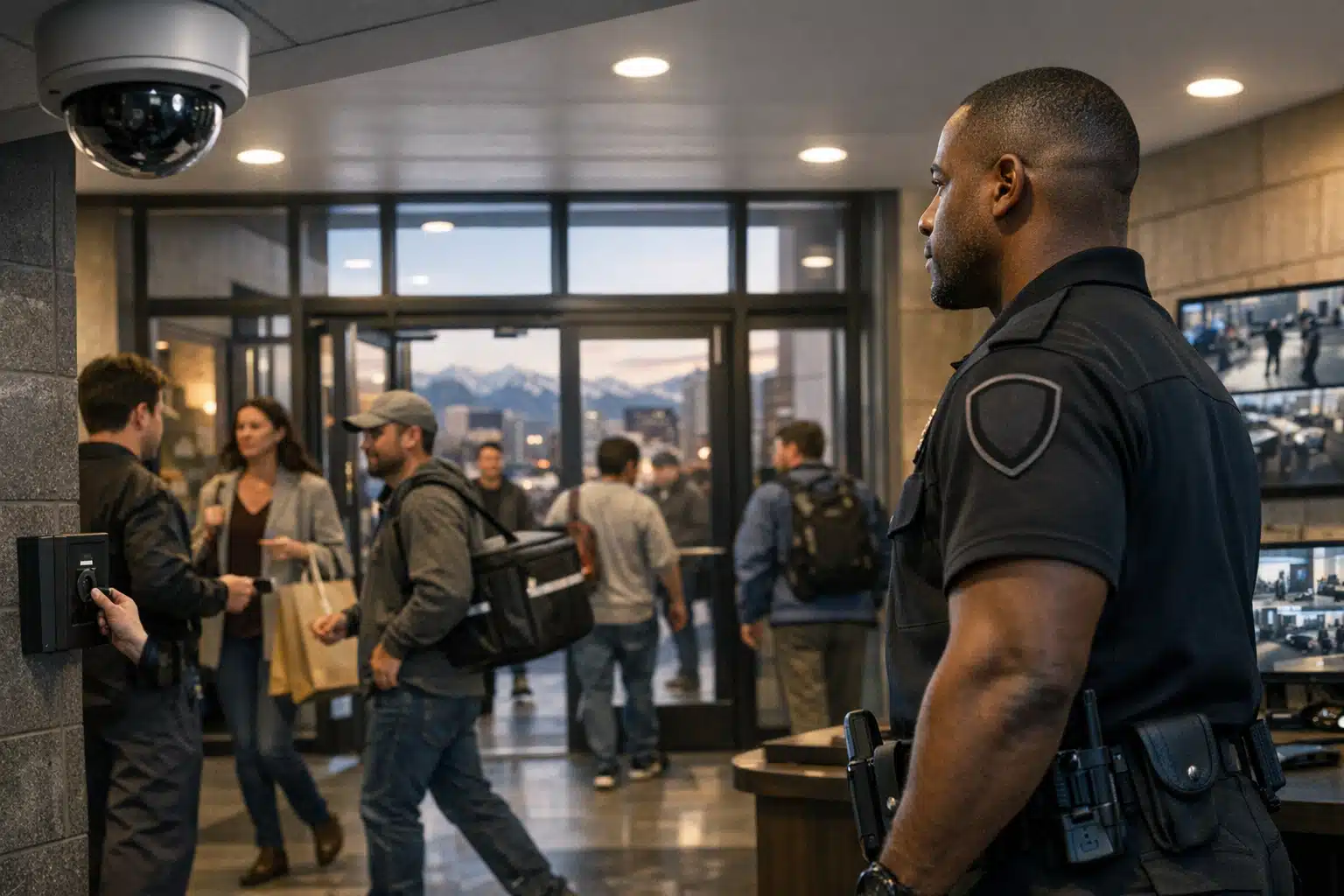
To enhance security for mixed-use developments during peak hours, property managers should implement controlled access points that separate pedestrian and vehicle traffic, deploy additional security personnel between 4 p.m. and 8 p.m., use real-time surveillance monitoring, and coordinate delivery schedules to reduce congestion at shared entrances during high-traffic periods.
Why Peak Hours Create the Biggest Security Gaps in Denver Mixed-Use Buildings
Mixed-use development security fails most often between 4 p.m. and 8 p.m. in Denver. That window stacks retail shoppers, returning residents, office workers, and delivery drivers into shared entrances.
When foot traffic spikes, blind spots multiply. A single unlocked lobby door in a RiNo apartment-retail building can let dozens of unverified people inside within minutes.
Denver reported over 40,000 property crime incidents in a recent year, with theft concentrated in dense corridors like Union Station and Cherry Creek. Peak hour security matters because criminals count on the confusion of crowds.
This post breaks down where Denver mixed-use properties lose control during high-traffic periods and how to fix it.
What Makes Denver Mixed-Use Properties Harder to Secure
Mixed-use buildings combine incompatible security needs under one roof. A ground-floor dispensary follows strict Colorado tracking rules. The apartments above want open, welcoming access.
That tension creates conflict during peak movement.
Overlapping User Groups
A LoDo development might host a coffee shop, 200 residential units, and shared parking. Each group uses the same doors at different times, and all of them overlap at 5 p.m.
Residents expect quick badge-free entry. Retail customers need open doors. Delivery drivers prop doors to move faster. Every convenience becomes a vulnerability.
Shared Parking and Loading Zones
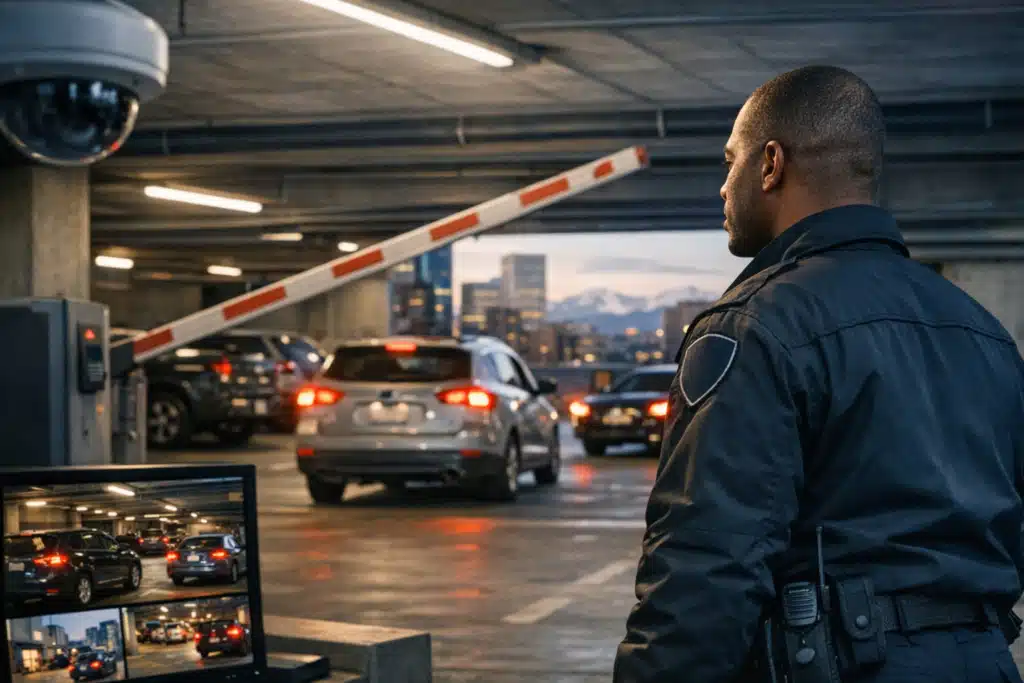
Parking garages are the top theft site in Denver mixed-use properties. During peak hours, gate arms stay up longer as cars stack up, letting non-residents tailgate inside.
Bike theft and catalytic converter theft both climb in these garages after 4 p.m.
Colorado Cannabis Compliance Pressure
If your building includes a dispensary, state law requires camera coverage of all limited-access areas and 40-day video retention. Peak retail hours put the most cash and product movement on camera at once.
A weak monitoring setup during rush periods risks both theft and a compliance violation.
How to Map Your Peak Hour Security Risks First
Fixing peak hour security starts with knowing your own traffic pattern. Two Denver buildings on the same block can peak at different times.
Follow this step-by-step audit:
- Pull 30 days of access logs. Identify the two-hour window with the highest door activity.
- Watch camera footage from that window. Count how many doors get propped or tailgated.
- Map every unmanned entry point. Note which face alleys or dim parking areas.
- Check lighting at 5 p.m. in winter. Denver sunsets before 4:45 p.m. in December leave entrances dark during rush.
- Log incident times. Match past thefts or trespassing reports to your peak window.
This audit shows exactly where guards or cameras belong. Most Denver properties find one or two doors drive the majority of risk.
On-Site Guards vs. Remote Surveillance During Peak Hours
Both approaches work, but they solve different problems. Many Denver mixed-use developments use a combination.
When On-Site Guards Win
A visible guard controls crowd behavior in real time. During a Capitol Hill building’s 6 p.m. rush, a guard at the main lobby stops tailgating that no camera can prevent alone.
On-site officers handle:
- Verifying residents and visitors face-to-face
- Stopping door propping before it starts
- Responding to disputes in retail spaces
- Directing delivery drivers to correct loading zones
When Remote Video Monitoring Wins
Remote surveillance covers more ground for less cost. One trained operator watches a garage, three side doors, and a loading dock at once.
Remote monitoring works best for:
- Parking garages during evening rush
- Rear entrances and alley doors
- After-hours retail closing periods
- Overnight coverage when peak traffic ends
Active monitoring adds live voice-downs. An operator can speak through a garage speaker the moment someone tailgates, which stops most incidents before they escalate.
The Combined Model Most Denver Properties Choose
A guard covers the main lobby during the 4-to-8 window. Remote cameras cover every secondary point. This keeps labor costs down while closing the gaps crowds create.
Practical Peak Hour Security Upgrades for Denver Buildings
Small changes cut risk fast. Property managers can start with low-cost fixes before adding staff.
Fix Access Control at the Doors
Install door-prop alarms that sound after 30 seconds. During peak hours, these stop the single biggest vulnerability in mixed-use buildings.
Add speed gates or turnstiles in residential lobbies. They slow tailgating without blocking legitimate flow.
Separate Retail and Residential Traffic
Route dispensary and retail customers to dedicated entrances. Keep residential access on a separate badge-only door.
This division shrinks the crowd at any single point during rush.
Harden the Parking Garage
Garage security drives most peak hour claims in Denver. Focus here first.
- Add license plate recognition at gate arms
- Install cameras covering every stairwell and elevator lobby
- Use motion-triggered lighting for winter evenings
- Post signage warning of active remote monitoring
Plan for Denver Winter Conditions
Snow and early darkness change your risk map from November to March. Ice slows response times and reduces visibility on outdoor cameras.
Use cameras rated for Colorado’s temperature swings. High-altitude sun glare and sub-zero nights break consumer-grade equipment fast.

 Posted on Google
What Peak Hour Security Costs a Denver Mixed-Use Property
Budget depends on your traffic and building size. Here is a realistic framework.
On-site guard coverage for a four-hour peak shift runs as a daily labor cost, scaled by number of officers. A single lobby guard covers most small developments.
Remote video monitoring costs less per covered area. One operator watches multiple feeds, which spreads the cost across many entry points.
Access control hardware is a one-time install with low ongoing cost. Door-prop alarms and speed gates pay for themselves after one prevented theft.
Cannabis operators should budget for compliance-grade cameras and 40-day storage. Under-spending here risks license penalties that dwarf equipment costs.
How to Coordinate Security Across Multiple Tenants
Mixed-use buildings have divided ownership of security duties. A retail tenant, an apartment operator, and an HOA may each control part of the property.
Clarify these responsibilities before an incident forces the question:
- Name one point of contact for building-wide security decisions.
- Write a shared protocol for who responds to alarms at each door.
- Agree on camera access rules that respect resident privacy.
- Set a joint plan for peak hour staffing costs.
Denver developments that skip this step lose time during incidents. A single coordinated plan removes that delay.
Conclusion
Peak hours expose every weak door, dim garage, and propped entrance in a Denver mixed-use building. Mapping your busiest window, combining guards with remote monitoring, and hardening access points closes those gaps. Winter darkness and cannabis compliance rules make the right setup even more important for local properties.
Twin City Security Denver builds peak hour protection plans for apartment communities, retail centers, and cannabis facilities across Denver. Call 303‑574‑0000 or email Denver@TwinCitySecurity.com for a Denver security assessment.
Sources
- Denver Police Department – Crime Information and Data
- Colorado Marijuana Enforcement Division – Marijuana Rules
- National Weather Service – Denver/Boulder Forecast Office
Mixed-use buildings in Denver face the highest security risks between 4 p.m. and 8 p.m. when retail shoppers, residents, office workers, and delivery drivers crowd shared entrances. Property managers can reduce vulnerabilities by combining on-site guards with remote monitoring and hardening access points.
- The 4-to-8 p.m. window creates blind spots as multiple user groups overlap at shared doors. Parking garages are the top theft site in Denver mixed-use properties during these hours.
- On-site guards handle real-time crowd control and stop tailgating at main lobbies. Remote video monitoring covers secondary entrances and garages at lower cost.
- Practical fixes include door-prop alarms, speed gates for residential lobbies, license plate recognition at garage gates, and separating retail and residential traffic to reduce crowding at single entry points.


