

What to Look for in a Security Guard for Your Denver Retail Business
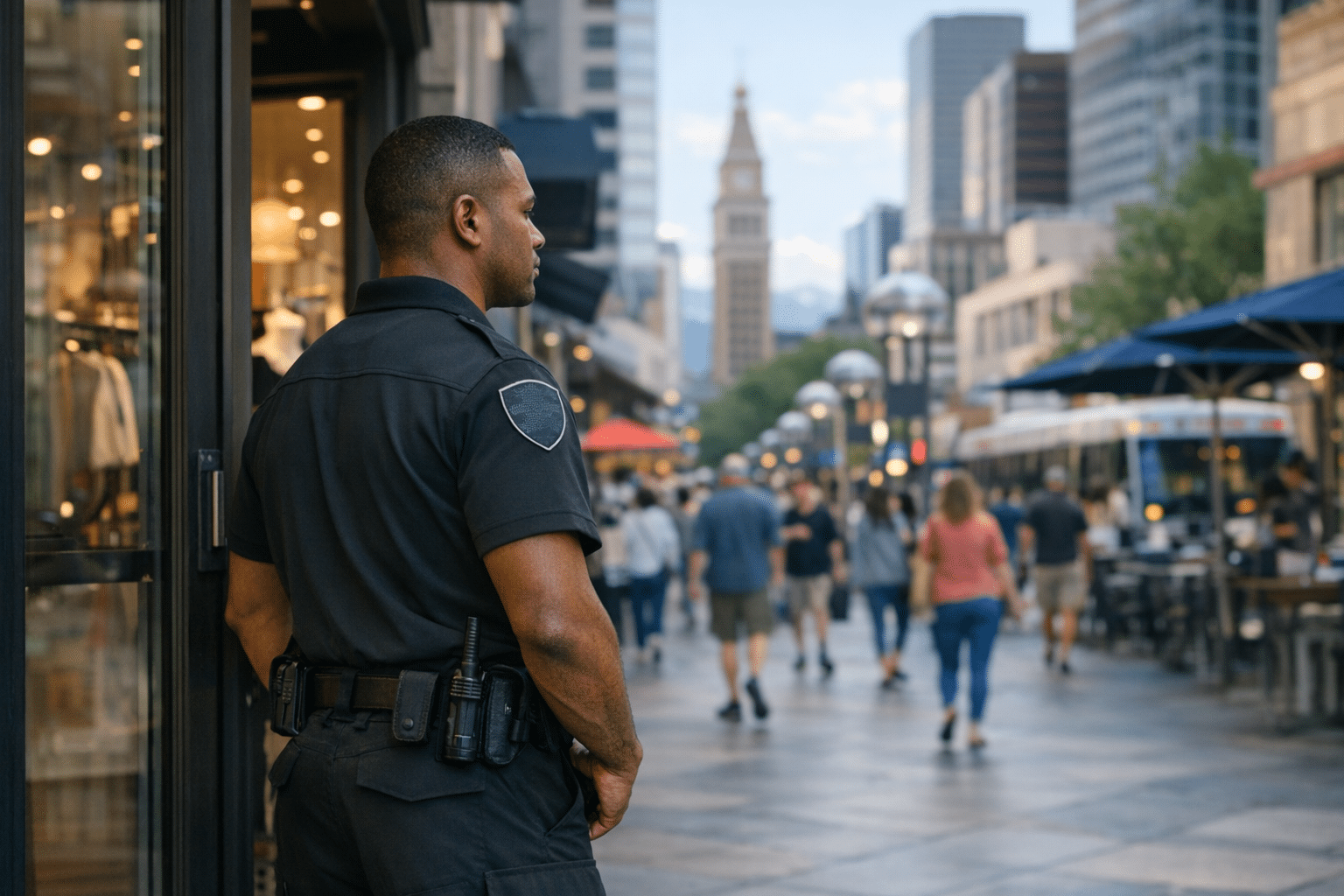
When hiring a security guard for your Denver retail business, prioritize candidates with retail-specific experience, strong observational skills, and knowledge of local crime patterns. Look for guards trained in loss prevention, customer service, and de-escalation techniques. Verify proper licensing, check references from similar retail environments, and confirm they understand Colorado's legal requirements for security personnel.
Denver Retail Crime Statistics Demand Strategic Security Planning
Denver retail businesses face retail security challenges that require experienced personnel to address effectively. Property crimes in retail districts like the 16th Street Mall and Cherry Creek increased 18% in 2023, with shoplifting and organized retail theft leading the statistics.
Finding the right retail security guard for your business involves evaluating specific qualifications, experience levels, and training certifications. The wrong choice can result in inadequate theft prevention, poor customer relations, or liability issues.
This guide covers essential criteria for hiring retail security personnel who can protect your merchandise, maintain customer safety, and handle Denver’s unique retail environment challenges.
Essential Qualifications for Retail Security Guard Personnel
Colorado requires all security guards to hold valid state licensing through the Private Security Licensing Unit. Your candidate must possess a current Colorado security guard license and pass background checks.
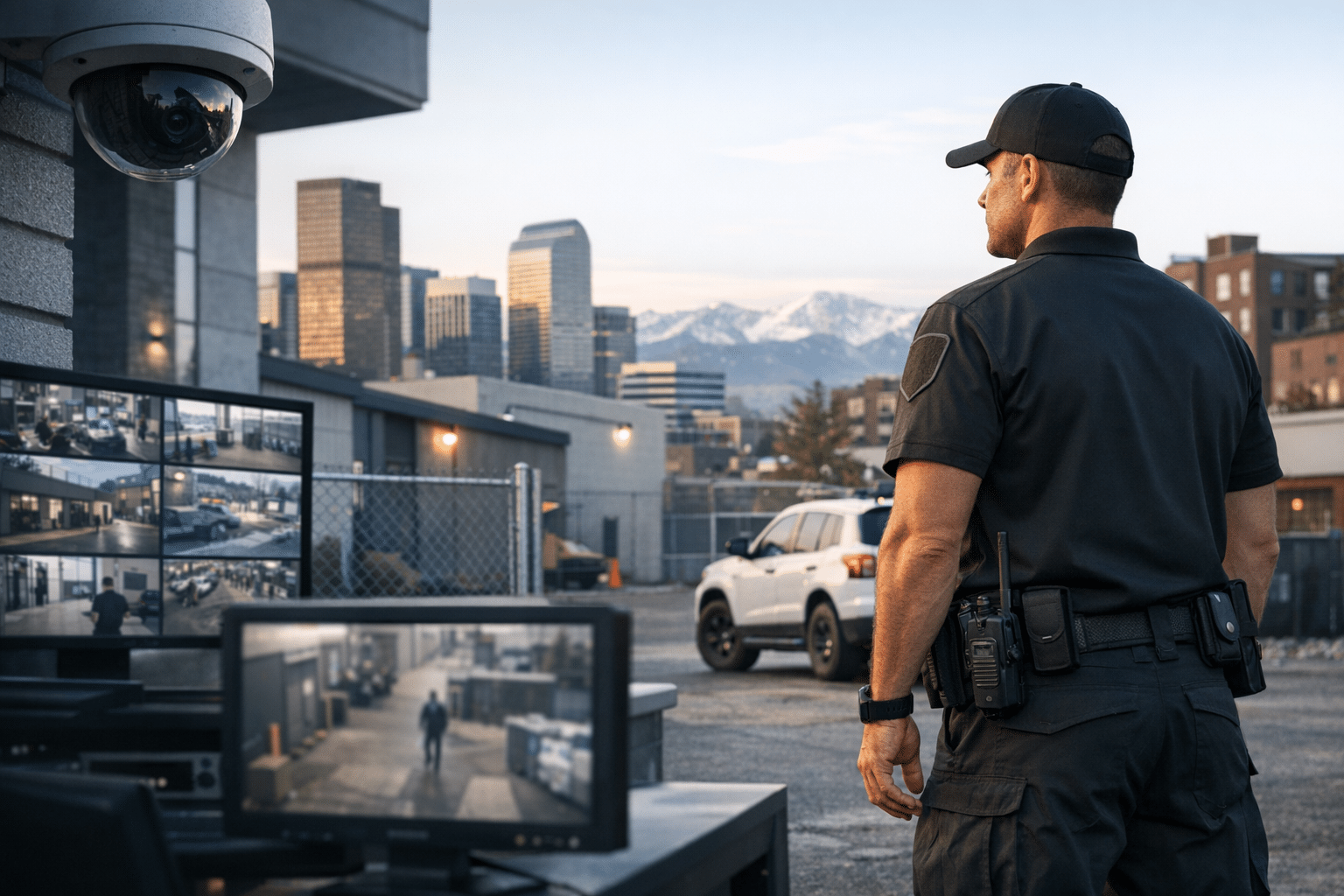
Required certifications include:
- Colorado security guard license (renewed every three years)
- First aid and CPR certification
- De-escalation training completion
- Loss prevention specialist certification (preferred)
Verify licensing status through Colorado’s online database before making hiring decisions. Unlicensed guards expose your business to significant liability risks.
Physical and Mental Requirements
Retail security work demands physical stamina for extended standing, walking, and potential pursuit situations. Guards must demonstrate clear communication skills and calm decision-making under pressure.
Mental alertness is crucial for identifying suspicious behavior patterns, monitoring surveillance systems, and coordinating with law enforcement when necessary.
Loss Prevention Experience and Training Background
Retail environments require guards with specific loss prevention expertise beyond basic security training. Look for candidates with documented experience in retail theft prevention and inventory protection.
Valuable experience areas include:
- Shoplifting detection and apprehension procedures
- Employee theft investigation techniques
- Point-of-sale fraud identification
- Organized retail crime recognition
- Inventory shrinkage analysis
Request specific examples of theft prevention cases the candidate has handled. Strong candidates can describe their role in reducing shrinkage percentages at previous assignments.
Technology Proficiency Requirements
Modern retail security relies heavily on surveillance systems, alarm networks, and communication devices. Your guard should demonstrate competency with digital security platforms and mobile reporting systems.
Ask about experience with video management software, electronic article surveillance systems, and incident reporting applications.
Customer Service Skills for Retail Environments
Unlike other security positions, retail security guards interact directly with customers throughout their shifts. Poor customer service from security personnel can damage your business reputation and sales.
Evaluate candidates’ ability to balance security enforcement with positive customer interactions. They should de-escalate situations professionally while maintaining store policies.
Communication and Conflict Resolution
Retail guards must communicate effectively with diverse customer demographics, store management, and law enforcement personnel. Strong verbal and written communication skills are non-negotiable.
Test candidates’ conflict resolution abilities through scenario-based questions about handling difficult customers, suspected shoplifters, or employee disputes.
Local Knowledge and Community Awareness
Guards familiar with specific neighborhoods understand local crime patterns, seasonal trends, and community dynamics. This knowledge proves valuable for threat assessment and prevention strategies.
Candidates with experience in areas like LoDo, Capitol Hill, or suburban shopping centers bring insights about regional security challenges and effective response protocols.
Weather and Seasonal Considerations
Colorado’s weather extremes affect retail security operations significantly. Guards must adapt their approaches for holiday shopping crowds, ski season tourism influxes, and severe weather events.
Winter conditions require guards who can maintain security effectiveness while dealing with icy parking lots, early darkness, and increased theft activity during holiday seasons.
Background Check and Reference Verification Process
Comprehensive background screening protects your business from negligent hiring lawsuits and ensures guard reliability. Never skip this critical step in your selection process.
Essential background check components:
- Criminal history review (felony and misdemeanor convictions)
- Employment verification for past three positions
- Reference contacts from previous security assignments
- Credit check for positions involving cash handling
- Motor vehicle records if driving duties apply
Contact references directly and ask specific questions about the candidate’s performance, reliability, and reason for leaving previous positions.

 Posted on Google
Interview Questions That Reveal Competency
Structure interviews to assess both technical knowledge and situational judgment. Use specific scenarios your business commonly encounters rather than generic security questions.
Effective interview questions include:
- Describe your process for approaching suspected shoplifters
- How would you handle an aggressive customer refusing to show receipts?
- What steps do you take when witnessing employee theft?
- Explain how you maintain alertness during quiet overnight shifts
- How do you balance loss prevention with customer service?
Listen for answers that demonstrate understanding of legal limitations, company policy adherence, and professional judgment.
Scenario-Based Assessment Techniques
Present candidates with realistic situations they’ll encounter at your location. Evaluate their problem-solving approach, legal knowledge, and communication skills through role-playing exercises.
Strong candidates will ask clarifying questions about store policies, demonstrate awareness of liability issues, and propose solutions that protect both merchandise and customer relationships.
Ongoing Training and Professional Development
Security threats evolve constantly, requiring guards who commit to continuous learning and skill development. Inquire about candidates’ recent training activities and professional improvement goals.
Look for guards who attend security conferences, pursue additional certifications, or participate in industry organizations. This commitment indicates professionalism and career dedication.
Specialized Training Opportunities
Consider candidates willing to pursue specialized training relevant to your retail environment. Examples include active shooter response, emergency medical response, or specific merchandise protection techniques.
Investment in guard training often yields returns through improved performance, reduced turnover, and enhanced security effectiveness.
Cost Considerations and Contract Terms
Quality retail security services require appropriate compensation to attract experienced professionals. Extremely low-cost options often result in high turnover, inadequate training, or poor performance.
Factor total costs including wages, benefits, training, uniforms, and equipment when comparing options. Reliable guards reduce losses that far exceed their compensation costs.
Contract terms should specify performance standards, reporting requirements, replacement procedures, and termination conditions to protect your business interests.
Making Your Final Selection Decision
Successful retail security hiring requires balancing multiple factors including experience, personality fit, and long-term availability. Avoid rushing decisions that could result in costly hiring mistakes.
Schedule working interviews or trial periods when possible. Observing candidates in your actual retail environment provides insights that traditional interviews cannot reveal.
Document your selection rationale to support your decision and guide future hiring processes. Consistent standards help build a reliable security team over time.
Twin City Security provides experienced retail security professionals who understand local crime patterns and customer service requirements. Contact our team at 303-574-0000 or Denver@TwinCitySecurity.com for a customized security assessment of your retail location.
Sources
- Colorado Department of Regulatory Agencies – Private Security Licensing
- Denver Police Department – Crime Statistics and Information
- National Retail Federation – Retail Security Survey
- U.S. Bureau of Labor Statistics – Security Guards Occupational Outlook
Denver retail businesses face rising property crimes, with an 18% increase in 2023 in areas like 16th Street Mall and Cherry Creek. This guide outlines key qualifications and criteria for hiring effective retail security guards.
- Colorado requires valid state licensing through the Private Security Licensing Unit, along with first aid, CPR, and de-escalation training certifications. Background checks and license verification protect businesses from liability risks.
- Retail security guards need loss prevention experience including shoplifting detection, employee theft investigation, and organized retail crime recognition. Technology proficiency with surveillance systems and reporting software is also expected.
- Customer service skills matter since guards interact with shoppers throughout their shifts. Local knowledge of Denver neighborhoods, seasonal crime patterns, and weather-related challenges helps guards respond effectively.


