

Why Denver’s Property Managers Should Consider Hybrid Security Solutions
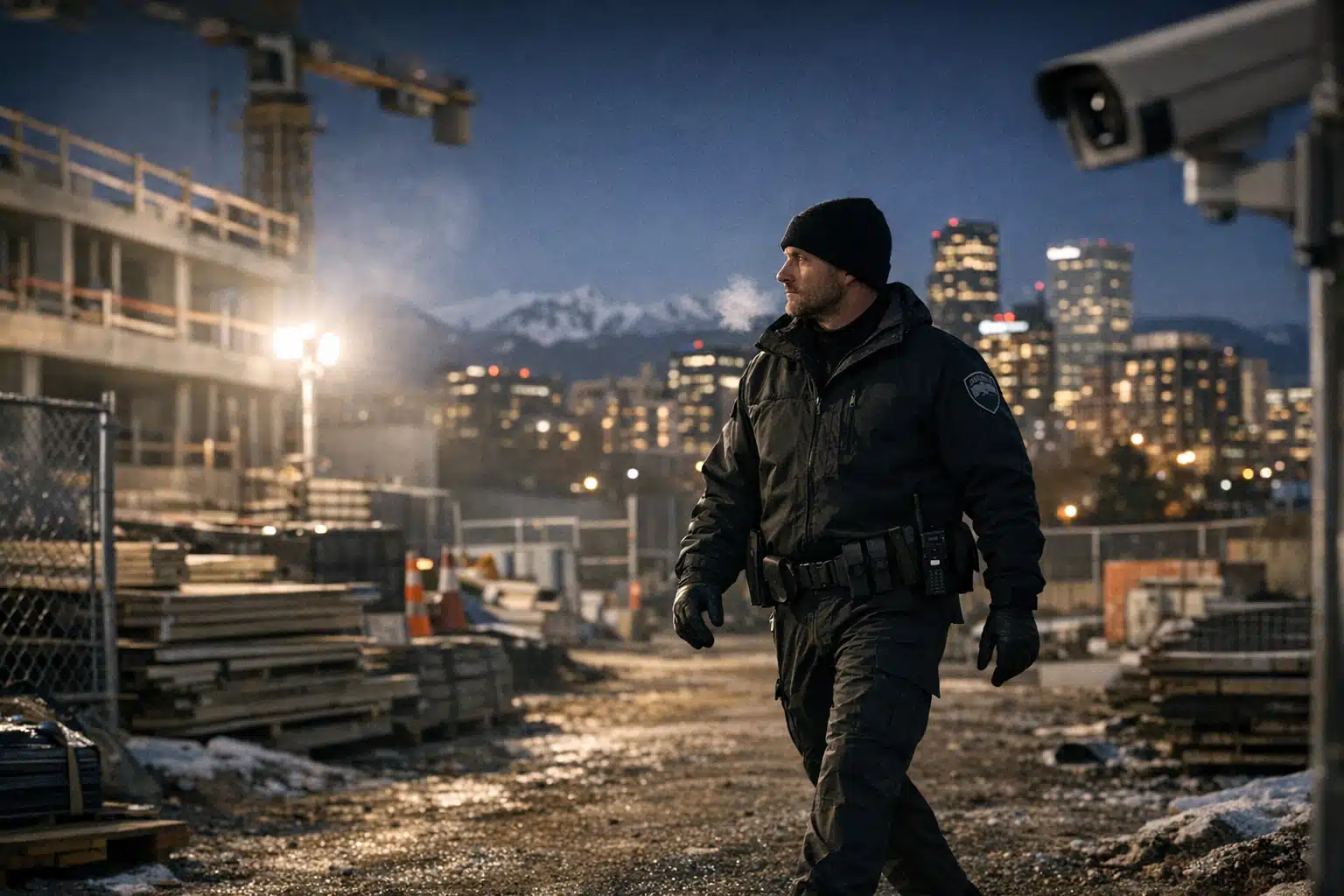
Hybrid security solutions combine multiple protective measures - such as on-site guards, remote video monitoring, access control systems, and alarm technology - into one integrated approach. This layered strategy allows property managers to address different security challenges while balancing cost efficiency with effective coverage across various property types and risk levels.
Denver Property Crime Is Rising, and Static Security No Longer Cuts It
Denver reported over 40,000 property crime incidents in a single recent year, according to city police data. That number puts real pressure on anyone managing buildings, lots, or mixed-use developments.
Hybrid security solutions pair trained on-site guards with remote video surveillance to close the gaps that either method leaves on its own. For property management teams across Capitol Hill, LoDo, and Aurora, this pairing answers a hard question: how do you cover more ground without doubling your budget?
This post breaks down what hybrid coverage looks like, where it fits Denver properties, and how to price it out.
What Hybrid Security Solutions Actually Mean for Property Managers
A hybrid model blends two layers that most Denver properties treat as separate purchases.
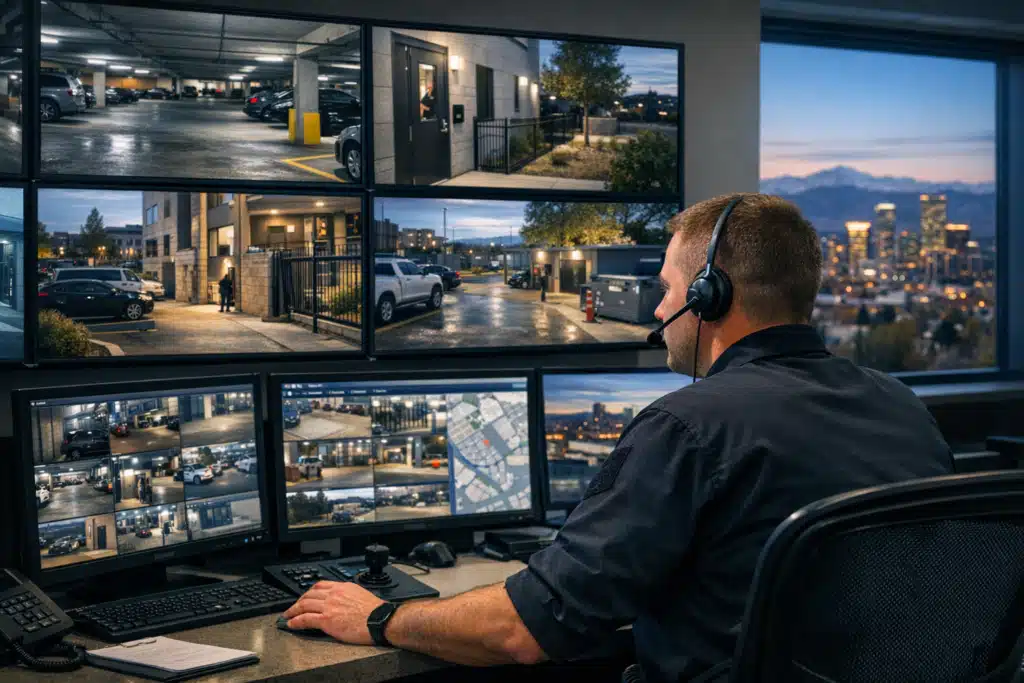
The first layer is human. Guards patrol, respond, and handle face-to-face situations that cameras cannot. The second layer is remote. Monitored cameras watch entrances, garages, and blind corners around the clock from an off-site center.
The point is not redundancy. The point is coverage.
Where Guards Win
- Confronting trespassers on a Highlands construction lot at 2 a.m.
- Escorting tenants to cars in a Capitol Hill parking structure
- Handling a lockout or medical event in real time
- Making judgment calls that software cannot
Where Remote Monitoring Wins
- Watching six camera feeds at once without fatigue
- Covering a large apartment perimeter cheaply overnight
- Recording verified evidence for police and insurance
- Triggering voice-down warnings before a crime escalates
A guard cannot be in four places at once. A camera cannot walk a tenant to her car. Put them together and each covers the other’s weak spot.
Why Denver Weather Makes Hybrid Coverage Smarter
Rocky Mountain winters change how security has to work. A guard doing foot patrols in a January storm loses visibility and slows down. Ice on a parking deck limits how fast anyone can respond.
Remote cameras with infrared and motion analytics keep watching when snow reduces what a person on foot can see. The guard then responds only where the camera confirms a real threat.
This cuts wasted patrols in bad weather and keeps your staff safer.
High-altitude sun and temperature swings also wear on equipment. Cameras rated for Colorado’s climate matter more here than in milder cities. We have replaced too many consumer-grade units that failed after one Denver winter.
Cannabis Facility Security Requires Both Layers by Law
Colorado cannabis rules make hybrid coverage close to mandatory. State regulations require video surveillance with retention periods and camera placement at every entry, sales floor, and grow room.
Cameras satisfy the recording rule. They do not stop an after-hours break-in on their own.
Dispensaries and grow operations in Denver stay targets because of cash and inventory. A monitored camera catches the entry attempt. A guard or fast law enforcement response stops the loss.
A Practical Cannabis Setup
- Fixed cameras meeting Colorado Marijuana Enforcement Division placement rules
- Off-site monitoring with live voice-down capability after hours
- Daytime guard presence during cash handling and deliveries
- Verified alarm response coordinated with Denver police
This structure meets state recording rules and adds the physical deterrent that regulations alone miss.
Why Denver Construction Sites Need 24/7 Hybrid Coverage
Construction theft hits Denver hard during building season. Copper wire, tools, and catalytic converters disappear from open sites in Highlands and RiNo overnight.
A single guard cannot watch a fenced multi-acre site alone. Cameras alone give you footage of a crime you already lost.
Hybrid coverage flips the equation. Monitored cameras with analytics detect movement across the fence line. Operators issue a live warning. A guard on patrol moves to the confirmed spot instead of guessing.
To protect your Denver construction site, follow these steps:
- Map every access point and material storage zone
- Place cameras with overlapping fields at the perimeter
- Add remote monitoring for overnight and weekend hours
- Schedule guard patrols during high-risk windows
- Post visible signage announcing active monitoring
Visible deterrence stops most opportunistic theft before it starts.

 Posted on Google
Matching Hybrid Coverage to Denver Neighborhoods
Different properties face different risks. A one-size plan wastes money in one place and leaves gaps in another.
Downtown and LoDo Offices
Foot traffic and nightlife bring loitering and vandalism concerns. Daytime guards manage lobbies and after-hours cameras cover garages and loading docks.
Capitol Hill Apartment Communities
Dense multi-family buildings deal with package theft and unauthorized entry. Monitored cameras at mail rooms and entrances plus scheduled guard rounds address both.
Aurora Retail and Warehouses
Large lots and back entrances need wide camera coverage. Guards respond to verified alerts rather than circling empty pavement all night.
How to Budget for Hybrid Security
Cost is the first question every property management team asks. Hybrid models save money by placing human hours only where they earn their rate.
Consider a mid-size Aurora warehouse. Round-the-clock guard coverage might run several thousand dollars weekly. Shift most overnight hours to remote monitoring and you keep protection at a fraction of that cost.
Pay for guards during risk windows. Pay for cameras during quiet hours.
Factors that shape your quote:
- Property size and number of access points
- Hours needing live guard presence
- Camera count and existing infrastructure
- Compliance requirements, especially for cannabis
- Local crime patterns for your block
Questions to Ask Before You Hire
Not every provider runs both layers well. Ask direct questions before signing.
- Do you own your monitoring center or outsource it?
- Are your guards licensed under Colorado requirements?
- How fast do operators respond to a verified alert?
- Can cameras issue live voice warnings?
- Do you coordinate directly with Denver police dispatch?
Answers here separate a real hybrid program from a camera vendor with a badge.
The Case for Integrated Coverage in Denver
Property crime keeps climbing, budgets stay flat, and weather adds pressure guards cannot always beat. Cameras and people each solve part of the problem. Together they solve most of it.
Twin City Security Denver builds hybrid programs that match your property, your block, and your compliance needs. Call 303‑574‑0000 or email Denver@TwinCitySecurity.com for a Denver security assessment and monitoring quote.
Sources
- Denver Police Department – Crime Statistics and Maps
- Colorado Marijuana Enforcement Division – Marijuana Rules
- FBI – Uniform Crime Reporting Program
Denver reported over 40,000 property crimes in a single recent year, pushing property managers to adopt hybrid security solutions that combine on-site guards with remote video surveillance for better coverage without doubling budgets.
- Guards handle face-to-face situations like confronting trespassers or escorting tenants, while remote cameras monitor multiple feeds without fatigue and provide recorded evidence for police and insurance claims.
- Denver's harsh winters reduce guard visibility and slow response times, making infrared cameras with motion analytics a smarter complement that confirms real threats before dispatching personnel.
- Colorado cannabis facilities require video surveillance by law, but cameras alone cannot stop break-ins - pairing them with guards or fast response creates both compliance and physical deterrence.


