

The Importance of Security Guards for Denver’s Summer Events
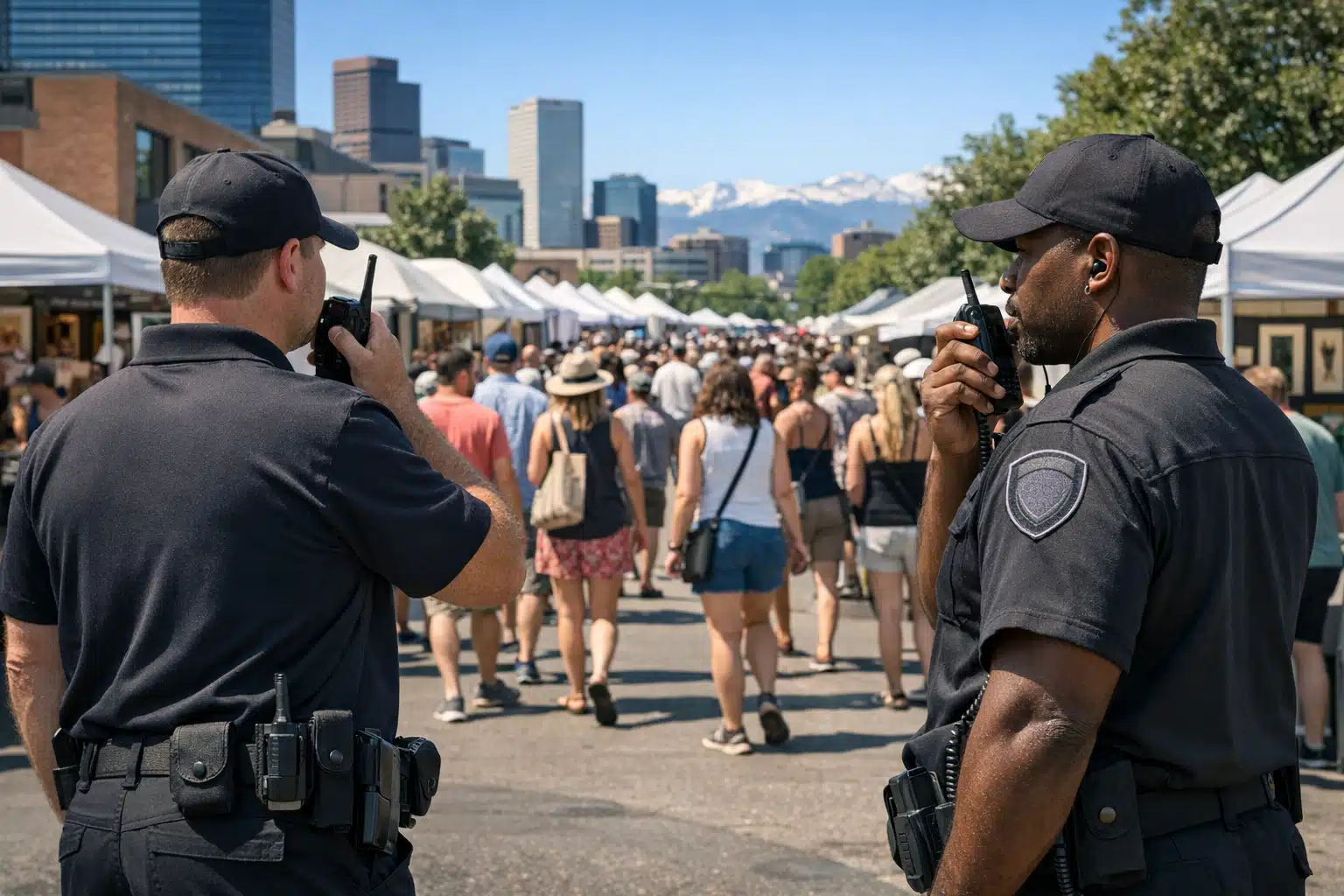
Security guards are important for Denver's summer events because large gatherings like the Cherry Creek Arts Festival and Civic Center Park concerts attract tens of thousands of visitors between May and September. Professional security helps manage crowds, prevent incidents, respond to emergencies, and create a safe environment where attendees can enjoy the festivities without concern.
Denver Summers Bring Crowds — and Real Security Risks
Denver runs on summer events. From the Cherry Creek Arts Festival to Civic Center Park concerts, the city fills with tens of thousands of visitors between May and September.
Event security becomes the difference between a smooth gathering and a costly incident. Open venues, alcohol sales, and dense crowds create risks that most organizers underestimate.
This post breaks down what summer events in Denver demand, where the real threats come from, and how to staff your venue correctly.
Why Denver Summer Events Face Heightened Security Demands
Summer festivals in Denver draw larger crowds than any other season. That density changes the math on everything from crowd flow to emergency response.
Three conditions raise the stakes at open-air Denver events:
- Alcohol service at beer gardens and food-and-drink festivals increases altercations and medical calls.
- High-altitude heat pushes attendees toward dehydration and heat exhaustion, straining medical response.
- Open perimeters at parks like Civic Center and City Park make access control harder than at ticketed indoor venues.
Denver sits at 5,280 feet. Afternoon sun and thin air hit visitors faster than they expect, and staff must watch for medical distress alongside security threats.
Crowd Size Multiplies Every Risk
A 500-person block party and a 15,000-person festival are different animals. Larger crowds mean slower evacuations, harder suspect identification, and longer response times.
Guards trained in crowd management read a crowd before it turns. They spot bottlenecks, intoxicated groups, and unauthorized entry attempts early.
Common Summer Event Threats in Denver Neighborhoods
Different Denver areas bring different challenges. Where your event sits shapes the security plan you need.
LoDo and Downtown Events
LoDo mixes nightlife, restaurants, and street festivals. Foot traffic stays heavy into the night, and intoxicated pedestrians raise the odds of conflict.
Downtown events near Union Station need visible guards at entry points and clear coordination with Denver Police for road closures.
Capitol Hill and Cheesman Park Gatherings
Capitol Hill hosts Pride and neighborhood festivals with open park layouts. These draw large, diverse crowds with limited fencing and multiple access points.
Perimeter control matters here. Without defined entrances, guards struggle to screen bags or manage capacity.
Highlands and Aurora Community Events
Family festivals in the Highlands and Aurora skew smaller but need child-safety planning. Lost children and parking conflicts drive most incident reports at these venues.
What Event Security Actually Covers at Summer Festivals
Event security goes far beyond checking IDs at a gate. A trained team handles prevention, response, and coordination across the entire venue.
Effective summer event coverage includes:
- Access control — screening entries, managing capacity, and stopping unauthorized access.
- Crowd management — directing flow, clearing bottlenecks, and preventing crush conditions.
- Conflict de-escalation — calming disputes before they turn physical.
- Medical support coordination — spotting heat illness and clearing paths for EMS.
- Perimeter monitoring — watching fence lines and blind spots at open-air sites.
- Emergency response — running evacuation plans during weather or threats.
Colorado summer weather adds one more layer. Afternoon thunderstorms and hail can force fast evacuations, and guards must move crowds calmly under pressure.
The Role of Remote Video Surveillance at Large Events
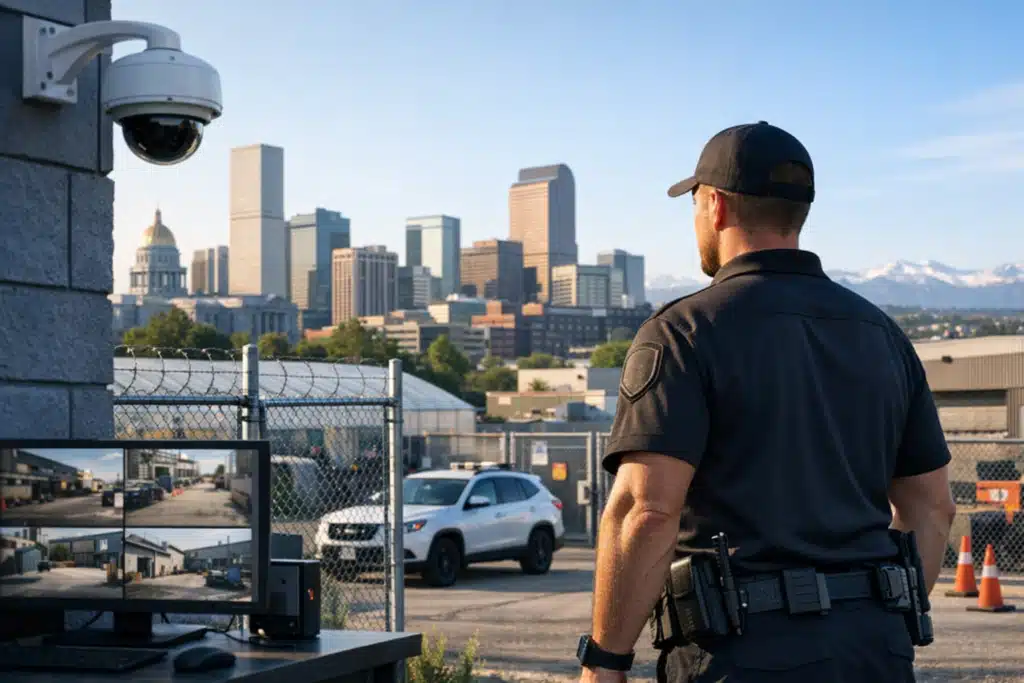
On-site guards cannot watch every corner of a 10-acre park. Remote video surveillance fills the gaps that foot patrols miss.
Cameras monitored by trained operators give organizers eyes on parking lots, back entrances, and equipment storage. Operators alert on-site guards the moment they spot trouble.
This pairing works for multi-day events. Overnight monitoring protects stages, vendor booths, and gear when crowds go home.
How to Plan Security for Your Denver Summer Event
Start security planning early — ideally when you book the venue. Waiting until the final weeks limits your staffing and coordination.
Follow these steps to build a workable plan:
- Estimate peak attendance. Guard counts scale with crowd size and alcohol service.
- Map the venue. Mark entrances, exits, stages, and blind spots.
- Identify high-risk zones. Beer gardens, cash handling points, and VIP areas need extra coverage.
- Coordinate with local authorities. Denver events may require permits and police notification.
- Set clear communication. Radios and defined roles keep the team synced during incidents.
- Plan for weather. Build evacuation routes for sudden storms.
How Many Guards Do You Need?
A common starting ratio is one guard per 100 attendees. Alcohol, cash, and open layouts push that number higher.
A ticketed 2,000-person concert with beer sales may need 25 to 40 guards across positions. A small daytime market might run fine with 4 to 6.
The right count depends on your venue and risk profile. A walkthrough with a security provider gives you an accurate number.

 Posted on Google
Colorado Regulations That Affect Event Security
Colorado requires licensing for armed security personnel, and Denver has its own permitting rules for large gatherings. Alcohol service adds Liquor Enforcement Division requirements.
Working with a Denver-based provider keeps you compliant. Local teams know city permit timelines and coordinate with the right agencies.
Cannabis-related events carry added rules under Colorado’s Marijuana Enforcement Division. Guards at these gatherings must understand possession limits and age verification.
Why Local Denver Experience Matters
Denver’s event calendar, geography, and weather create conditions that generic security firms miss. A team that has worked Civic Center concerts knows the traffic patterns and choke points.
Twin City Security Denver staffs summer events across the metro area. Our guards train for crowd management, heat-related medical awareness, and rapid weather evacuations.
We pair on-site officers with remote video surveillance for full-venue coverage. That combination protects attendees, vendors, and your equipment day and night.
Protect Your Next Denver Summer Event
Summer events reward good planning and punish weak security. Crowd size, alcohol, open venues, and mountain weather all raise the risk at Denver gatherings.
Book your event security early, staff to your real crowd size, and pair guards with remote monitoring for full coverage. For a Denver event security assessment, call Twin City Security Denver at 303‑574‑0000 or email Denver@TwinCitySecurity.com.
Sources
- City and County of Denver – Denver Police Department
- Colorado Department of Revenue – Marijuana Enforcement Division
- Centers for Disease Control and Prevention – Heat and Health
- Colorado Department of Regulatory Agencies – Licensing Information
Denver summer events face heightened security risks due to large crowds, alcohol service, high-altitude heat, and open venues. Twin City Security Denver provides trained guards and remote video surveillance to protect gatherings across the metro area.
- Summer festivals bring challenges like dehydration at 5,280 feet elevation, open perimeters at parks, and increased altercations from alcohol service. Different neighborhoods require tailored security plans based on their specific risks.
- Event security covers access control, crowd management, conflict de-escalation, medical support coordination, and emergency response during sudden weather changes. A common staffing ratio is one guard per 100 attendees.
- Planning should start early with venue mapping, high-risk zone identification, and coordination with Denver Police. Colorado requires licensing for armed personnel and specific permits for alcohol or cannabis events.


