

Enhancing Security for Denver’s Suburban Communities During Summer
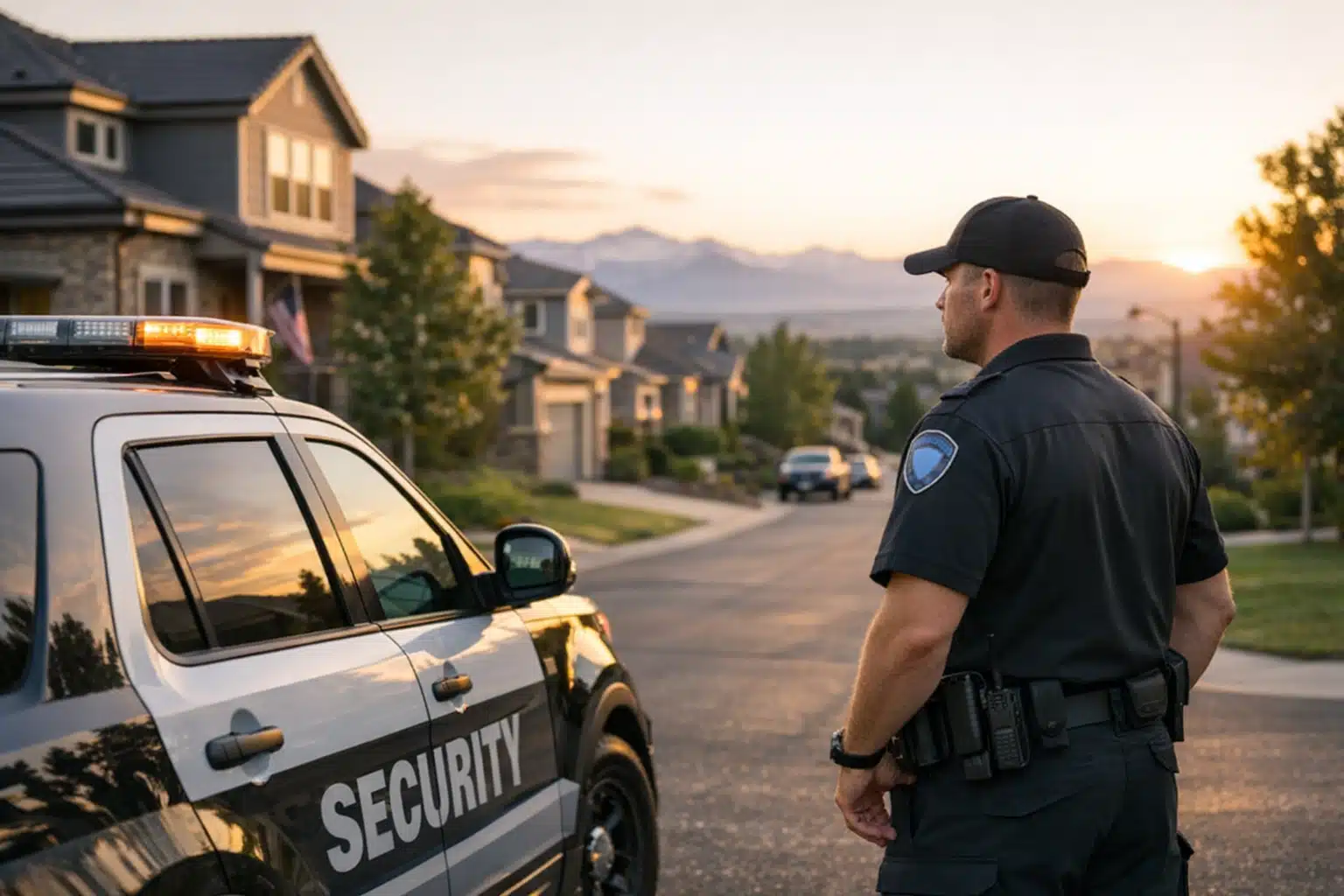
Denver suburban homeowners can improve summer security by installing smart locks and video doorbells, using timers on interior lights to simulate occupancy, and asking neighbors to collect mail and packages. Motion-activated exterior lighting and visible security system signs also deter burglars who target empty homes during vacation season in communities like Highlands Ranch, Aurora, and Parker.
Denver sees a measurable rise in home burglaries during June, July, and August. When families leave Highlands Ranch, Aurora, or Parker for mountain trips, empty houses become targets. Strong residential security during summer months protects both property and peace of mind across Denver’s suburban neighborhoods.
This post breaks down practical steps for protecting suburban homes and communities while residents travel. It covers patrol strategies, remote video monitoring, and neighborhood coordination built for Colorado summers.
Why Denver Suburbs Face Higher Summer Burglary Risk
Summer creates predictable patterns criminals watch for. School lets out, families schedule vacations, and driveways sit empty for days or weeks.
Suburban layouts add specific weak points:
- Detached homes with rear alleys give intruders private entry points.
- Fenced backyards block street visibility once someone climbs over.
- Uniform floor plans in newer developments help burglars predict where valuables sit.
- Long driveways and garages allow theft of tools, bikes, and vehicles unseen.
Communities like Green Valley Ranch and Stapleton grew fast, and many streets still lack coordinated watch programs. That gap matters most in July.
The “Empty House” Signals Criminals Read
Burglars scout before they strike. They look for signals that nobody is home.
- Uncollected mail and stacked packages on the porch.
- Overgrown lawns and unwatered flower beds.
- Closed blinds day and night with no light changes.
- Trash bins left out days after collection.
A single one of these signs invites closer attention. Several together mark a house as an easy target.
Residential Security Steps for Denver Vacation Season
Protecting an empty home takes layered planning, not a single lock. Follow these steps before leaving town.
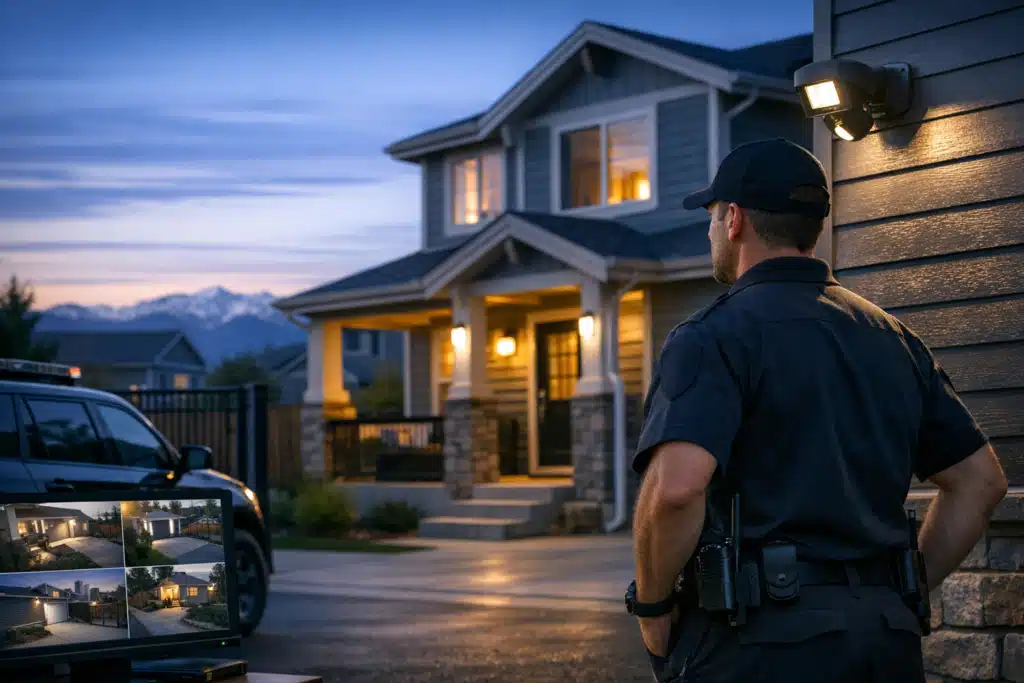
- Stage the home to look occupied. Use smart bulbs on timers that vary by room and hour.
- Pause mail and package delivery. Hold USPS mail and reroute Amazon shipments to a locker.
- Arrange lawn care. A mowed Aurora yard signals someone is watching the property.
- Install visible cameras. Doorbell and driveway cameras deter opportunistic thieves.
- Coordinate with neighbors. Ask one to move trash bins and park in your driveway.
- Schedule patrol checks. Marked security vehicles passing your street break burglar confidence.
Each layer removes an “easy target” signal. Together they push criminals toward less-protected homes.
Why Timers and Cameras Alone Fall Short
Smart home devices help, but they react after entry. A camera records a break-in; it rarely stops one.
Human patrol and live remote monitoring add response. When a monitor spots motion at 2 a.m. on an empty Parker street, a dispatcher can act within seconds.
How Remote Video Surveillance Protects Empty Suburban Homes
Remote video surveillance pairs cameras with trained operators watching feeds in real time. This model fits vacation-heavy summer months well.
Operators do more than record. They verify threats, issue live voice warnings, and call police with confirmed details.
Live Monitoring Versus Passive Recording
Standard home cameras store footage for review later. That footage helps after a theft but does not prevent loss.
Live monitoring changes the timeline:
- Motion triggers an alert at a staffed monitoring center.
- An operator reviews the feed and confirms whether a person poses a threat.
- Voice-down speakers warn intruders that they are seen and recorded.
- Verified alarms reach police faster than unconfirmed alarm calls.
Denver-area police prioritize verified alarms. Human confirmation cuts false-alarm delays that plague standard systems.
Coverage Points for a Suburban Property
Camera placement decides how much a system protects. For a typical two-story suburban home, position cameras at:
- The front door and driveway approach.
- The rear patio door and any alley-facing gate.
- Side yards between homes where fences hide movement.
- Detached garages storing tools, bikes, and vehicles.
Blind spots invite testing. Intruders probe fence lines and side gates first.
Neighborhood-Wide Security Coordination
One protected house helps that owner. A coordinated street protects everyone and lowers total risk.
HOA boards in communities like Ken Caryl and Reunion can arrange shared patrol coverage. Splitting cost across many homes makes guard patrols affordable per household.
Building a Summer Watch Plan
Community managers can organize protection before vacation season peaks. A workable plan includes:
- A shared calendar tracking which homes sit empty each week.
- Scheduled marked patrols at randomized times to avoid predictability.
- Central camera monitoring at entrances and mail cluster boxes.
- A single reporting line for residents to flag suspicious activity.
Cluster mailboxes draw thieves hunting checks and packages. A camera on that structure protects the whole block.

 Posted on Google
Summer Safety Beyond Break-Ins
Summer safety covers more than burglary. Vacant homes face other seasonal risks across the Front Range.
- Hail and wind damage from Colorado’s June and July storms can go unnoticed for weeks.
- Package theft rises with online summer shopping.
- Trespassing and loitering increase in vacant yards and community pools.
- Fire risk grows during dry, high-heat stretches.
Patrol officers catch problems early. A guard who spots a broken window after a hailstorm prevents water damage and later intrusion.
Pool and Common-Area Protection
Suburban HOA pools attract after-hours trespassers all summer. Unsupervised pools create liability and vandalism risk for the whole community.
Evening patrols and gate cameras keep common areas controlled. This protects residents who stay home as much as those who travel.
Choosing the Right Denver Security Partner
Not every provider knows Denver’s suburban terrain or Colorado weather patterns. Ask direct questions before signing.
- Do you offer both on-site patrols and live remote monitoring?
- Are your monitoring operators staffed locally and around the clock?
- Can you scale coverage for a full HOA or a single home?
- How do you handle verified-alarm dispatch with Denver-area police?
Twin City Security Denver builds vacation-season plans for suburban homes and communities across the metro. Coverage flexes from single properties to full neighborhood patrols.
Protect Your Home Before You Leave Town
Summer vacations should not leave your property exposed. Layered residential security, live video monitoring, and coordinated patrols keep Denver’s suburbs protected during peak travel months.
Contact Twin City Security Denver for a suburban security assessment or monitoring quote. Call 303‑574‑0000 or email Denver@TwinCitySecurity.com to plan coverage before your next trip.
Sources
- FBI – Scams and Safety Resources
- FBI – Crime in the United States (UCR)
- Denver Police Department – Official City Page
- National Weather Service – Denver/Boulder Forecast Office
Denver suburbs experience increased home burglaries during summer when families travel and houses sit empty. Twin City Security Denver offers layered protection through patrols, live remote video monitoring, and neighborhood coordination.
- Burglars look for signs like uncollected mail, overgrown lawns, and unchanged lighting. Staging a home to look occupied and coordinating with neighbors removes these easy-target signals.
- Live remote monitoring outperforms passive cameras because trained operators can verify threats, issue voice warnings, and dispatch police with confirmed details faster than standard alarm systems.
- HOA communities can split patrol costs across households and set up shared calendars, randomized guard routes, and camera coverage at entrances and cluster mailboxes to protect entire neighborhoods.


