

Protecting Denver’s Business Parks with Advanced Remote Surveillance Solutions
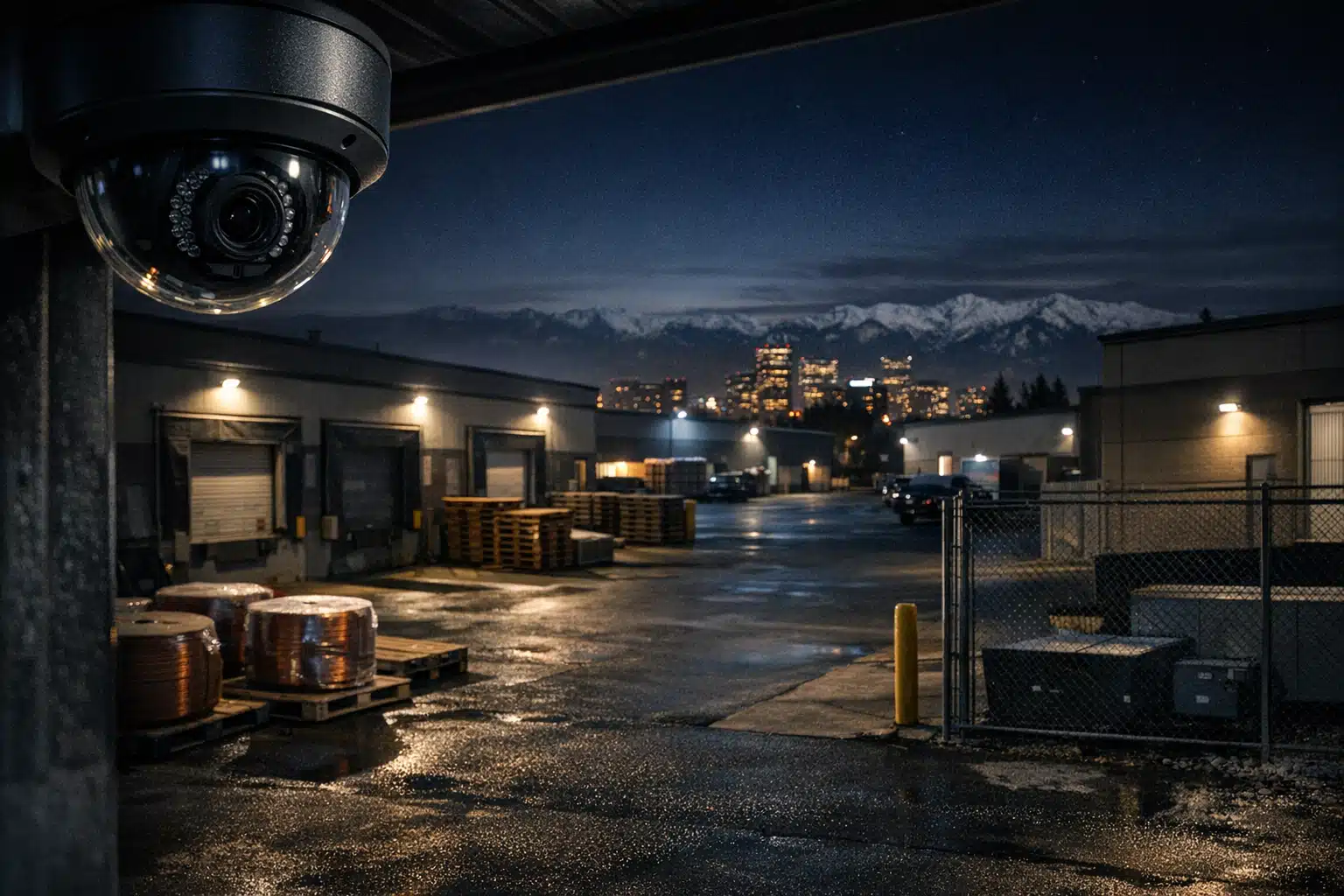
Remote surveillance protects Denver business parks by providing 24/7 monitoring through high-definition cameras, motion sensors, and real-time alerts. Trained operators watch live feeds and can respond immediately to suspicious activity, contact authorities, or activate deterrents like lights and audio warnings - all without requiring on-site security personnel during vulnerable overnight hours.
Denver Business Parks Face a Growing After-Hours Threat
Denver reported over 40,000 property crime incidents in recent years, with commercial areas hit hard after dark. Business parks sit empty from 6 p.m. to 6 a.m., leaving equipment, vehicles, and inventory exposed.
Remote surveillance gives Denver business parks eyes on every corner when no one is on-site. This post breaks down the specific risks these properties face and how live monitoring shuts crime down fast.
If you manage a multi-tenant park near the Denver Tech Center, Stapleton, or Aurora, the threats below likely sound familiar.
Why Business Park Security Differs From Standard Commercial Protection
Business parks carry risks that single-building sites do not. Multiple tenants, shared parking, and sprawling layouts create gaps that criminals target.
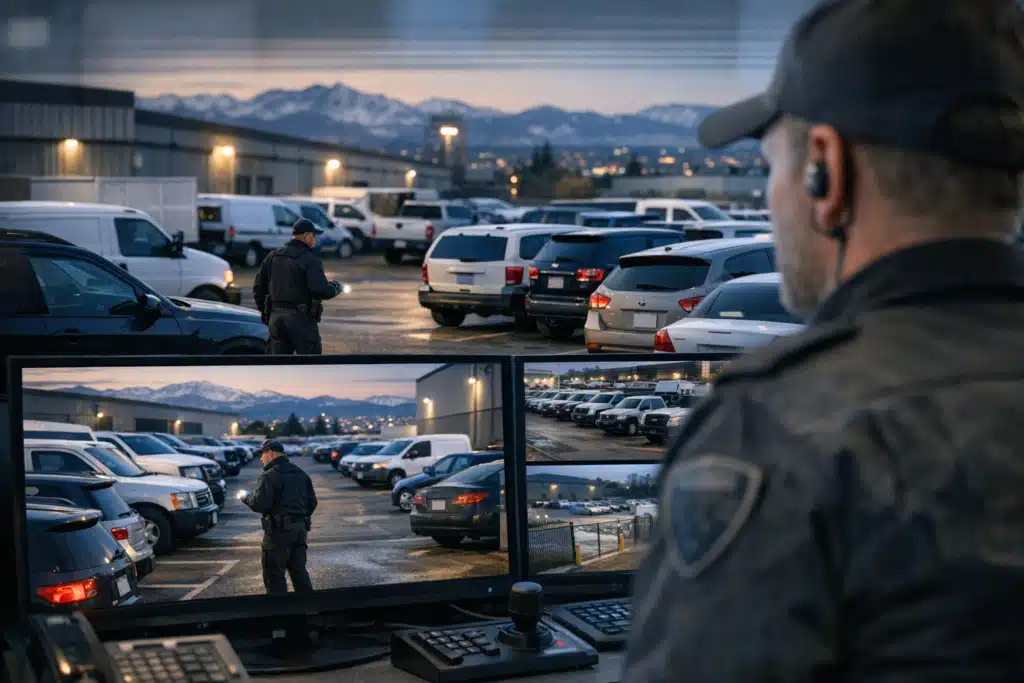
Business park security must account for wide perimeters, low foot traffic, and dozens of access points across several structures.
The Specific Vulnerabilities of Denver Parks
Business parks share common weak spots. Here are the ones we see most across Denver metro properties:
- Isolated loading docks where copper wire and pallets disappear overnight
- Shared parking lots that invite catalytic converter theft and vehicle break-ins
- Vacant suites between tenants that become squatter targets
- Poorly lit walkways between buildings on the property edge
- HVAC and electrical units on rooftops and side yards, prime for scrap metal theft
Catalytic converter theft alone cost Colorado drivers millions. Business park lots, full of parked fleet vehicles overnight, rank among the highest-risk locations.
How Remote Surveillance Protects Denver Business Parks
Remote surveillance uses live cameras monitored by trained agents off-site. When a camera detects motion after hours, an agent verifies the threat in real time.
This differs from passive recording. Standard cameras only help after a crime happens. Live monitoring stops it as it unfolds.
How the Monitoring Works Step by Step
To protect a Denver business park with remote surveillance, the setup follows a clear path:
- Site assessment. Agents map every entry point, blind spot, and high-value zone across the park.
- Camera placement. Units cover docks, lots, rooflines, and walkways with overlapping views.
- Analytics activation. Motion and object detection flag people in restricted areas after hours.
- Live verification. A monitoring agent reviews each alert within seconds.
- Voice-down response. Agents issue a live audio warning over on-site speakers.
- Dispatch. If the intruder stays, agents alert police or on-site guards immediately.
The voice-down step matters. A live warning that names what the intruder is wearing sends most trespassers running before police arrive.
Rocky Mountain Winter and the Case for Remote Monitoring
Denver winters test any security setup. Sub-zero nights, heavy snow, and long dark hours change how parks stay protected.
On-site guards face real limits when temperatures drop below zero. Remote surveillance runs the same at 5 a.m. in January as it does in July.
Cold-Weather Advantages of Live Cameras
- No patrol gaps. Agents watch every zone at once, even during a blizzard.
- Thermal detection. Infrared cameras spot movement in total darkness and snowfall.
- Reduced human exposure. No guard stands outside in dangerous wind chill.
- Snow-day coverage. Monitoring continues when roads close and staff stay home.
Denver averages more than 50 inches of snow annually. Empty holiday weeks near the Tech Center and Interlocken draw thieves who count on skeleton crews.
What Denver Business Park Owners Ask Before Hiring
Owners and property managers raise the same questions when weighing remote monitoring against guards. Direct answers below.
Is Remote Surveillance Cheaper Than On-Site Guards?
Live monitoring costs less than staffing guards around the clock across a large park. One agent covers multiple camera feeds at once, spreading cost across the whole property.
A guard covers one location. Cameras cover a 20-acre park from a single monitoring center.
Can It Cover a Multi-Tenant Property Fairly?
Yes. Coverage zones map to shared common areas and individual tenant frontages. Property managers receive incident reports that document each event by location and time.
What Happens When an Alert Fires?
An agent sees the alert, checks the live feed, and acts within seconds. False alarms from wildlife or blowing debris get filtered out before anyone is dispatched.
This cuts down on the fines Denver businesses pay for repeated false police calls.

 Posted on Google
Combining Remote Surveillance With On-Site Presence
Some Denver parks need both cameras and boots on the ground. High-traffic parks with retail tenants benefit from a hybrid setup.
Remote surveillance handles overnight and weekend coverage. A mobile patrol makes scheduled rounds during peak vacancy windows.
When a Hybrid Model Fits Best
- Parks with cash-handling tenants like credit unions or dispensaries
- Properties with recurring theft history that need visible deterrence
- Large campuses where response time by camera-only setups runs long
- Sites hosting events that draw crowds and temporary parking
Denver’s cannabis operators face strict state camera retention rules. Colorado requires facilities to keep video for 40 days. Live monitoring layers protection on top of that mandate.
Reducing Liability Across Shared Spaces
Business parks carry liability risk in shared lots and walkways. A slip, an assault, or a vehicle theft in common areas can land on the property owner.
Recorded and monitored footage protects owners in disputes. Documented response times show a park took reasonable steps to keep tenants safe.
Insurance carriers view active monitoring favorably. Some Denver property owners see lower premiums after adding verified live surveillance.
Getting Started With a Denver Business Park Assessment
Every park carries its own risk map. A property near Aurora’s industrial corridor faces different threats than an office park in the Highlands.
A walkthrough identifies blind spots, weak lighting, and the zones that need coverage most. From there, a monitoring plan matches the park’s layout and budget.
Conclusion
Denver business parks stay exposed after hours, and remote surveillance closes that gap with live, verified response. It protects wide perimeters, survives Rocky Mountain winters, and costs less than full guard staffing across large properties.
Twin City Security Denver builds monitoring plans matched to your park’s layout and risk. Call 303‑574‑0000, email Denver@TwinCitySecurity.com, or visit https://www.twincitysecuritydenver.com for a Denver business park assessment.
Sources
- Denver Police Department – Crime Information and Statistics
- Colorado Marijuana Enforcement Division – Rules and Regulations
- National Insurance Crime Bureau – Catalytic Converter Theft Data
- National Weather Service – Denver/Boulder Forecast Office
Denver business parks face high property crime risk after hours, with over 40,000 incidents reported in recent years. Remote surveillance offers live monitoring that stops crimes as they happen rather than just recording them.
- Business parks have unique vulnerabilities including isolated loading docks, shared parking lots prone to catalytic converter theft, vacant suites attracting squatters, and exposed HVAC units targeted for scrap metal.
- Live monitoring works through camera analytics that detect motion, with agents verifying threats in seconds and issuing voice warnings that often send intruders running before police arrive.
- Remote surveillance costs less than round-the-clock guard staffing, runs reliably through Denver's harsh winters, and can combine with mobile patrols for high-risk properties.


