

Maximizing Security During Denver’s Spring Festivals and Events
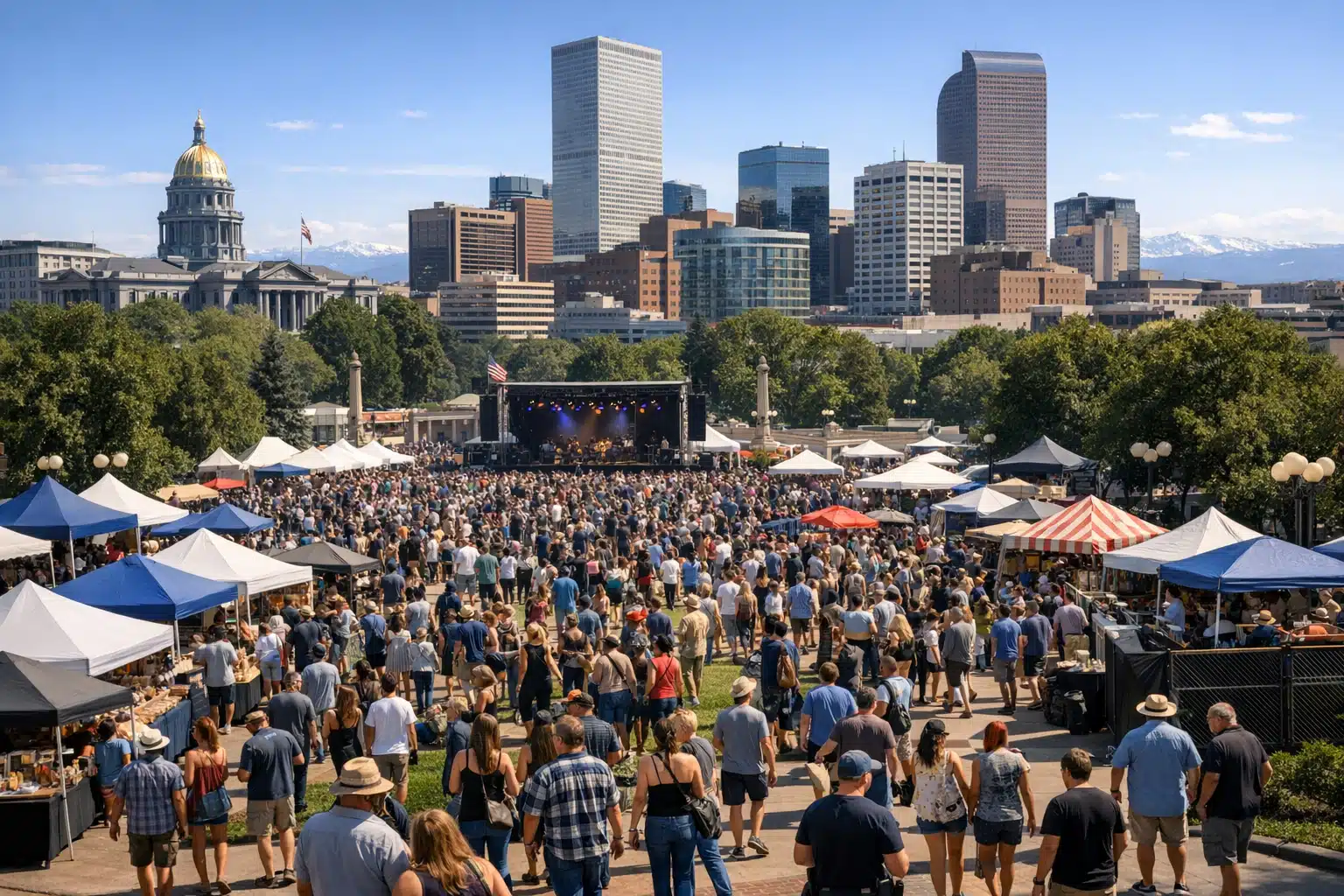
Maximizing security during Denver's spring festivals requires specialized planning due to the concentration of over 40 major outdoor events between April and June. Effective strategies include deploying trained security personnel, establishing clear perimeter controls, coordinating with local law enforcement, implementing crowd management protocols, and using surveillance technology to monitor large gatherings throughout the compressed festival season.
Denver’s Unique Spring Festival Security Landscape
Denver hosts over 40 major outdoor festivals between April and June, compressing three months of events into a season that other cities spread across five months. This concentration creates event security challenges that require specialized planning and resources.
The Mile High City’s altitude affects crowd behavior differently than sea-level events. Alcohol hits harder at 5,280 feet, and dehydration occurs faster, leading to more medical incidents and aggressive behavior.
Weather volatility adds another layer of complexity. Denver’s spring can deliver 70-degree sunshine followed by snow within hours, forcing rapid crowd movement and evacuation protocols that standard security plans don’t address.
Critical Event Security Vulnerabilities in Denver Spring Festivals
Most festival organizers underestimate three key security gaps that plague Denver’s outdoor events:
Perimeter Control in Open Venues
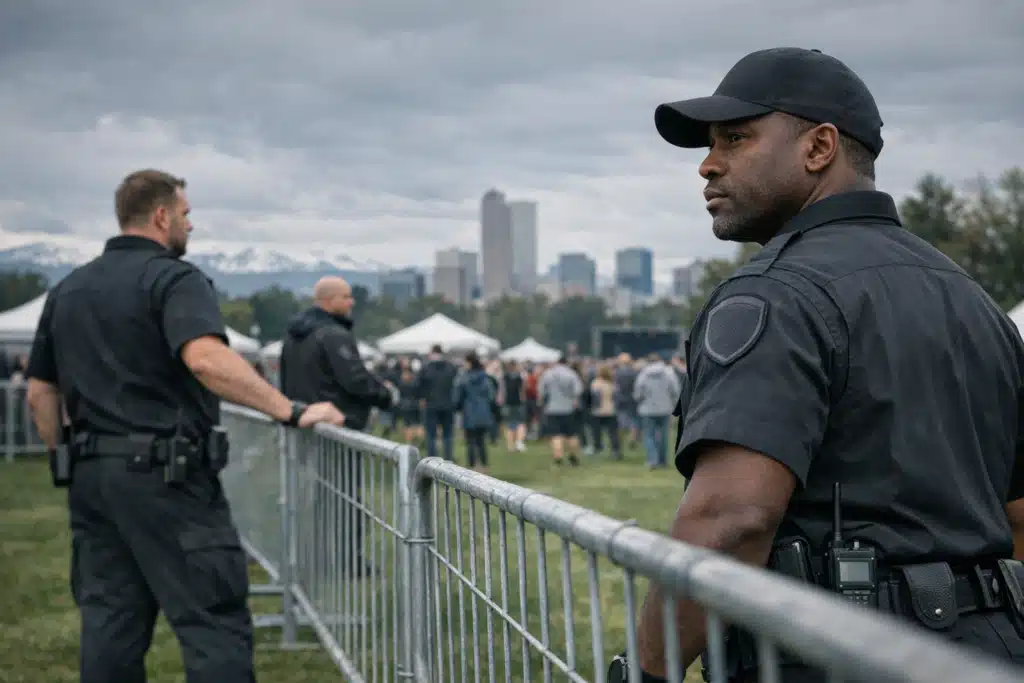
Denver’s popular festival locations like Civic Center Park and City Park lack natural boundaries. Unlike enclosed amphitheaters, these spaces require artificial perimeter creation using barriers, fencing, and strategic guard placement.
We’ve observed unauthorized entry attempts increase by 300% at open-air venues compared to bounded locations. Event security teams must position guards every 50 feet along perimeter lines to maintain effective crowd control.
Multi-Level Crowd Management
Denver’s terrain creates elevated viewing areas that become unauthorized VIP zones. Festival-goers climb hills, trees, and nearby structures to avoid admission fees or restricted areas.
Security cameras positioned at ground level miss 60% of perimeter breaches occurring from elevated positions. Effective surveillance requires elevated camera placement and mobile patrol units.
Weather-Related Evacuation Challenges
Spring weather emergencies happen fast in Denver. Lightning storms can appear within 15 minutes, requiring immediate crowd dispersal from open areas.
Standard evacuation plans fail when crowds exceed 5,000 people. Security teams need pre-positioned personnel at all exit points before weather warnings occur.
Comprehensive Security Planning for Spring Festivals
Effective festival security starts 60 days before the event with venue assessment and threat analysis specific to Denver conditions.
Pre-Event Security Assessment
Every Denver festival venue presents unique challenges based on location, surrounding neighborhoods, and access points:
- Downtown venues (16th Street Mall, Union Station) face higher theft rates and require coordination with RTD security
- Park locations (Washington Park, Sloan’s Lake) need wildlife management and water safety protocols
- Neighborhood festivals (South Broadway, Tennyson Street) require resident access maintenance and parking enforcement
- Industrial areas (RiNo, River North) present limited lighting and emergency vehicle access challenges
Guard Deployment Strategy
Denver’s festival security requires a 1:100 guard-to-attendee ratio for events under 2,000 people. Larger events need specialized team structures:
- Perimeter guards – Fixed positions every 50-75 feet depending on venue layout
- Roving patrols – Mobile units covering interior zones every 15 minutes
- Entry/exit specialists – Trained in crowd flow management and emergency evacuation
- Command coordination – Central communication hub with direct police and medical contacts
Remote Surveillance Integration for Large Scale Events
Festival security becomes cost-prohibitive using guards alone for events exceeding 3,000 attendees. Remote surveillance systems multiply security coverage while reducing personnel costs.
Strategic Camera Placement
Denver’s outdoor festival environments require weather-resistant cameras positioned to overcome common blind spots:
Primary coverage zones include main stages, vendor areas, and alcohol service locations where 80% of incidents occur. Secondary cameras monitor perimeter breach points and emergency evacuation routes.
Mobile camera units mounted on 20-foot poles provide elevated coverage that fixed installations cannot match. These units relocate throughout the event based on crowd density and incident patterns.
Real-Time Monitoring Benefits
Remote monitoring teams identify potential problems 5-10 minutes before on-ground personnel notice them. This advance warning prevents minor issues from escalating into major incidents.
Professional monitoring services maintain direct communication links with Denver Police and Fire departments, reducing emergency response times from 12 minutes to 4 minutes average.
Managing Alcohol-Related Incidents at Altitude
Denver’s elevation amplifies alcohol effects by 25-30% compared to sea-level consumption. Festival security must account for increased intoxication rates and related behavioral issues.
Enhanced Incident Response Protocols
Standard intoxication signs appear faster at altitude. Security personnel need training to recognize altitude-enhanced impairment symptoms:
- Confusion and disorientation occurring after fewer drinks
- Faster onset of aggressive or unpredictable behavior
- Increased dehydration leading to medical emergencies
- Higher fall risk due to balance issues
Medical response teams should be positioned within 200 feet of all alcohol service areas, not the standard 400-foot distance used at sea-level events.
Weather Emergency Procedures
Denver spring weather creates unique security challenges that coastal festival security companies often mishandle.
Lightning Protocol Implementation
Colorado experiences the third-highest lightning strike rate in the United States. Outdoor events need immediate evacuation capabilities when storms approach.
Security teams monitor weather radar continuously during events. When lightning appears within 10 miles, evacuation begins immediately. Standard 6-mile warnings used elsewhere provide insufficient safety margins at Denver’s elevation.
Rapid Temperature Change Management
Spring festivals face 40-degree temperature swings within hours. Security must manage increased medical incidents and crowd behavior changes as conditions shift.
Cold weather increases crowd density around heated areas, creating crush risks. Hot weather spreads crowds but increases dehydration and heat-related medical emergencies.

 Posted on Google
Cost-Effective Security Solutions
Festival organizers typically budget 8-12% of total event costs for security services. Denver’s compressed festival season and specialized requirements often push costs higher without proper planning.
Hybrid Security Models
Combining on-site guards with remote monitoring reduces total security costs by 30-40% while maintaining comprehensive coverage.
Remote cameras handle routine surveillance, allowing guards to focus on direct crowd interaction and incident response. This approach works best for events with defined perimeters and predictable crowd patterns.
Multi-Event Service Agreements
Festival organizers running multiple spring festivals can reduce per-event security costs through season-long service contracts.
Equipment like temporary cameras, barriers, and communication systems transfer between events, eliminating repeated setup costs.
Vendor and Contractor Coordination
Large festivals involve 15-30 different vendors and contractors, each requiring security coordination and access management.
Credentialed Access Control
Security teams must verify and track all vendor personnel throughout event setup, operation, and breakdown phases. Unauthorized individuals often attempt entry by impersonating legitimate contractors.
Digital credential systems work better than paper passes for multi-day events. Real-time access logging helps track vendor movements and identify security breaches quickly.
Equipment Protection Protocols
Festival equipment theft peaks during setup and breakdown when security attention focuses on crowd control rather than asset protection.
Sound equipment, staging materials, and vendor merchandise require dedicated security coverage separate from crowd management teams.
Emergency Services Coordination
Denver festivals must coordinate with multiple emergency response agencies: Denver Police, Denver Fire, Denver Health paramedics, and sometimes Jefferson County or Adams County services for events near city boundaries.
Communication Protocol Setup
Security command centers need direct radio communication with all emergency services. Cell phone communication fails during large events due to network congestion.
Dedicated emergency vehicle access routes must remain clear throughout events. Security personnel need specific training on maintaining emergency access even during peak crowd periods.
Medical Emergency Response
Altitude-related medical incidents occur 40% more frequently at Denver festivals compared to sea-level events. Security teams coordinate with medical personnel for faster response to altitude sickness, dehydration, and breathing difficulties.
Event security planning should include medical staging areas positioned for rapid ambulance access, not just convenient locations within the festival footprint.
Post-Event Security Considerations
Security responsibilities continue after festivals end. Equipment breakdown, crowd dispersal, and venue cleanup present ongoing security challenges.
Intoxicated attendees leaving events create public safety issues in surrounding neighborhoods. Security teams coordinate with local law enforcement to manage crowd dispersal patterns that minimize community impact.
Asset protection during breakdown requires dedicated security coverage. Valuable equipment becomes vulnerable when crews focus on rapid teardown schedules.
Denver’s spring festival season demands specialized event security approaches that account for altitude effects, weather volatility, and compressed scheduling. Successful festival security combines trained personnel with advanced surveillance technology and comprehensive emergency planning. Contact Twin City Security Denver at 303-574-0000 for customized festival security assessments that address your event’s specific challenges and requirements.
Sources
- National Weather Service Boulder – Lightning Safety
- CDC – Altitude Illness Prevention
- City of Denver Parks and Recreation – Event Permits
- FEMA – Special Event Security Planning
Denver hosts over 40 major outdoor festivals between April and June, creating unique security challenges due to altitude effects, weather volatility, and compressed scheduling that require specialized planning and resources.
- Altitude amplifies alcohol effects by 25-30% compared to sea-level events, causing faster intoxication and more medical incidents. Security teams need enhanced protocols and medical response positioned within 200 feet of alcohol service areas.
- Open venues like Civic Center Park lack natural boundaries, with unauthorized entry attempts increasing 300% compared to enclosed locations. Effective coverage requires guards every 50-75 feet and elevated camera placement.
- Spring weather can shift 40 degrees within hours, and Colorado has the third-highest lightning strike rate nationally. Evacuation must begin when lightning appears within 10 miles rather than the standard 6-mile warning.
